Netflixable? Teens hate it when “There’s Someone Inside Your House”

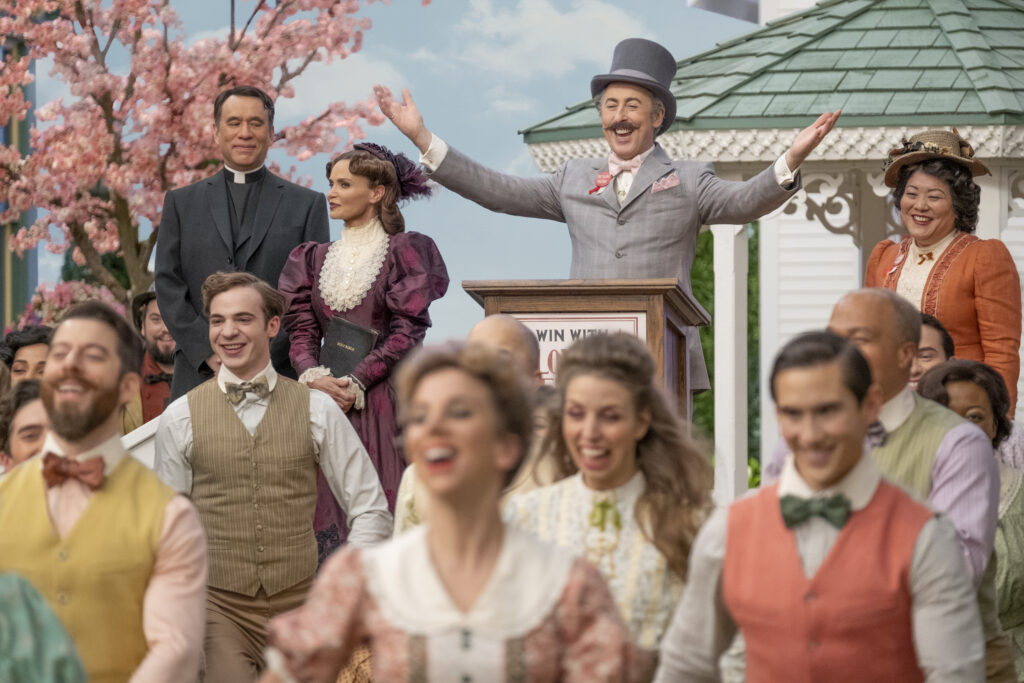
The movie production instincts are on the money, as far as “There’s Someone Inside Your House” goes. Every generation needs its “Scream,” so let’s adapt YA novelist Stephanie Perkins’ book and get it on Netflix where all the YAs’ll see it.

That’s why the biggest names on this project were producers James Wan, the “Saw/Conjuring/Malignant” horror mogul, and Shawn Levy (“Free Guy”).

The movie? Well, it’s a “Scream” knockoff, all right. “Scream” without the horror movie jokes. “Scream” with a lot less terror. “Scream” without much we could call “fun.”

It’s not half bad. But it’s not quite half-good, either.

In Osborne, Nebraska, the parents and their kids are all about corn, “God, His game (football) and his glory.”

That’s what a football player (Zane Clifford) sings through the tears — the Osborne High fight song — in tribute to his dead teammate (Markian Tarasiuk) whom we’ve seen trapped in his house and butchered in the somewhat blase opening scene.

The school and even the town are littered with suspects. But it’s not until a second death that anybody gets truly concerned.

That’s a big of-its-moment take-away from “There’s Someone Inside Your House.” This is America today, and school and football must go on — violence, pandemic, attempted coup, crisis actors invading school board meetings be damned.

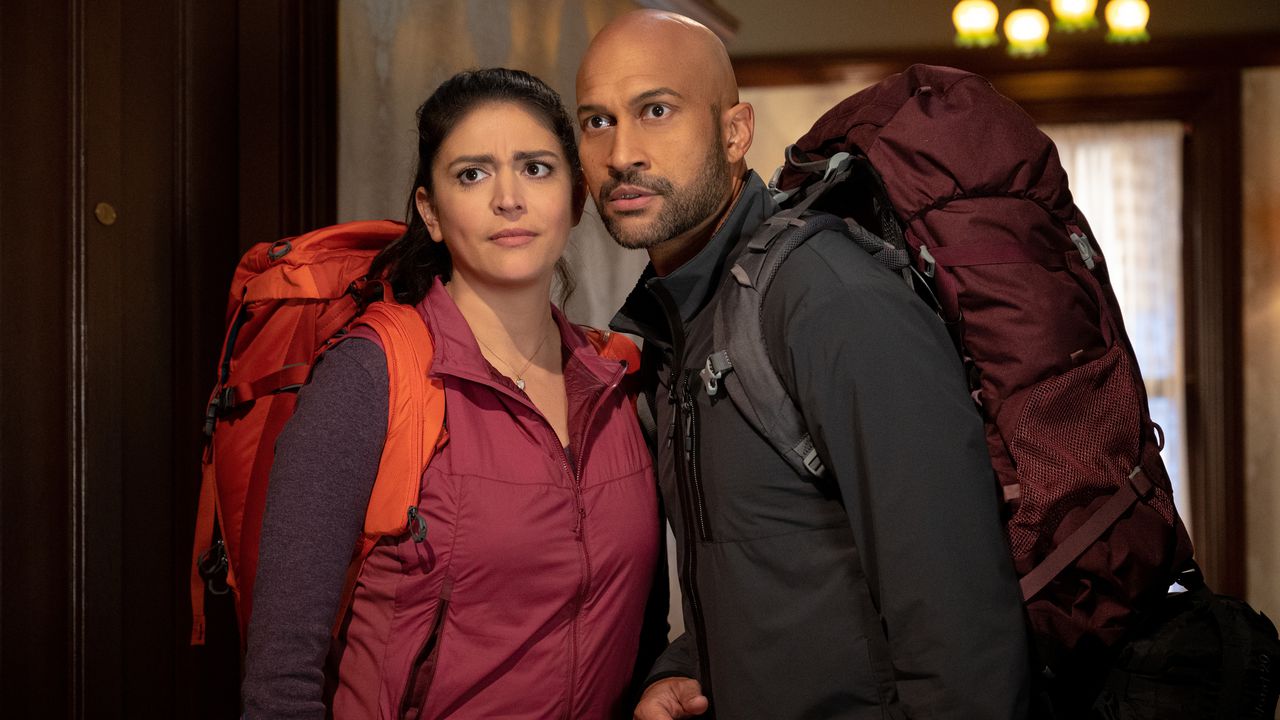
The “outcast” kids — Makani (Sydney Park), her BFF Alex (Asjha Cooper), trans pal Darby (Jesse LaTourette), rich kid Zach (Dale Whibley) and Rodrigo (Diego Josef) have their theories. Everybody in school does.

But as classmates keep dropping, their “secrets” exposed on email blasts just as they’re hacked up by a nut-with-a-knife in a mask (custom made to match the victim’s face) and hoodie, the “whodunit” here never gets traction. We’re all distracted by the “secrets.”

No, not the gay footballer or the trans teen. Everybody knows them. It’s the “secret” bullying, the hazing rituals that got out of hand, the closeted white supremacist and the nervous kid on medication who have something to worry about.

Whatever the virtues of the source novel, screenwriter Henry Gayden and director Patrick Brice (“Creep,” “The Overnight”) miss a lot of opportunities to riff on this latest “Me” generation and its excesses.

Surely the student council president (Sarah Dugdale) isn’t the only one who makes this tragedy, and the organized mourning for it, all about “her.”

“There’s Someone” can be praised for its inclusion. A Pacific Islander lead (Park), a gay kid, a trans kid, the Hispanic classmate, the brassy African-American who gets to declare “I’m DONE talking about who I think did it. I KNOW who did it!” But when you do little with the characters, or with who they “represent,” your movie looks an awful lot like “checkbox casting.” You’re populating your picture with “types,” not people.

Even the set piece murders — in a cathedral, in a “secrets” party where the kids are to reveal their secrets and thus disempower the killer, in a corn maze — all play as flat, like a balloon that the air went out of just before “ACTION!”

That makes the entire enterprise feel like, well, an “enterprise,” a thriller “produced,” not cleverly scripted or directed, or compellingly acted.

Rating: TV-MA, bloody violence, drug use, sexual situations, profanity

Cast: Sydney Park, Asjha Coooper, Jesse LaTourette, Théodore Pellerin, Dale Whibley, Sarah Dugdale

Credits: Directed by Patrick Brice, scripted by Henry Gayden, based on the novel by Stephanie Perkins. An Atomic Monster film on Netflix.

Running time: 1:36

Posted in Reviews, previews, profiles and movie news | Comments Off on Netflixable? Teens hate it when “There’s Someone Inside Your House”

Movie Review: Getting the awful word out via “The Auschwitz Report”

Before the term “Shoah” was coined, before “Holocaust” was became the worldwide term for the mass murder of European Jews, Gypsies, Slavs and homosexuals of many races, the “denial” was well-established.

Then, as now, Nazis pretended the murder of millions wasn’t happening. And the world, ready to believe human beings couldn’t do this to other human beings, clung to that denial. Even the International Red Cross was slow up on the uptake — tricked, fooled and conned by the German regime that carried out the slaughter.

The Auschwitz Report” is a gripping, myopic and sober-minded Czech/Slovak co-production about two men who kept count of the “transports” coming in, noting how many were “blown…through the chimneys” of Auschwitz-Birkenau, and wrote it down.

They drew diagrams, maps of the complex.

They stole labels of Zyklon B, the pesticide developed from a banned WWI gas that Germans and their minions used to suffocate millions with infamous “German efficiency.”

And in 1944, they escaped and attempted to bring this news, their proof, to the world.

Slovak filmmaker Peter Bebjak, who did the thriller “The Line” and has numerous Slovak and Czech TV credits, hurls us into Auschwitz, into the harrowing existence of “scribes” Rudolph Vrba (Peter Ondrejicka) and Alfréd Wetzler (Noel Czuczor). No back story to speak of, just nightmares built on the waking nightmare of their borrowed time in this most infamous death camp of all.

Bebjak and his fellow screenwriters sketch in the people, Jews and Gypsies, a Franciscan friar (Jan Nedbal) and their Nazi tormentors (Florian Panzner, Lars Rudolph, Christoph Bach) and all but bury their characters and themselves in the vast, anonymous killing machine of Auschwitz-Birkenau.

Because that’s what this movie is about, a machine no one in the world would believe existed. Wetzler and Valer (Vrba’s real name was Walter Rosenberg) were a mismatched pair — one given to weeping and despairing, the other stoically cool and determined to succeed, to get word (in Czech, Slovak and English) of this place to the Allies so that “important people will send planes and blast this place into oblivion.”

With so many Holocaust stories, so many filmed accounts of the horrors of the camps, Bebjak found his fresh angle by focusing not just on the peril of the escapees — hidden under lumber palettes by fellow inmates — but of those threatened, tortured and summarily shot for not giving up their location.

The Franciscan — imprisoned for reasons never explained — is among those tormented by Lausmann (Panzner), another in a long line of Germanic sadists, this one given to lashing out on hearing he’s lost a son on The Russian Front by having prisoners buried up to their necks so that he can bludgen them at will, or ride his horse over their exposed skulls.

Lausmann and other officers keep the inmates of the same barracks as the escapees outside, standing, starving in the April cold, for a day and night as he interrogates, beats and even shoots those selected for questioning.

No one talks.

“The Auschwitz Report” includes some wrenching choices the men in that barracks face, and an emotional rendition of the unthinkable — two men escaping from the slaughter, getting help from locals (by the spring of 1944, civilians had to figure the jig was up for the Aryan goose-steppers) and trying to convince a skeptical Red Cross official (John Hannah of “Four Weddings and a Funeral”) of their proof.

The film’s third act is somewhat anti-climactic, even if it does have the novelty of being among the few depictions of how hard it was to convince the world this was going on.

Czuczor, Ondrejicka and Panzner sketch in their characters as best they can. But this Slovakian submission for the Best International Film Oscar focuses more on broad strokes, on recreating horrific history and on doing it justice.

That narrow focus is both a strength and a shortcoming of “The Auschwitz Report.” Yet it’s still a piece of “never forget” history we haven’t seen before, and its closing credits — a sea of intolerant voices, from Hungary, Brazil and Mar-a-Largo — underscore the fear that “it’s happening again” and the need to change history, while we still can.

Rating: unrated, graphic violence, nudity

Cast: Noel Czuczor, Peter Ondrejicka, Florian Panzner, Jan Nedbal, Lars Rudolph, Christoph Bach and John Hannah

Credits: Directed by Peter Bebjak, scripted by Peter Bebjak, Tomás Bombík and Jozef Pastéka, inspired by the memoir by Alfred Wetzler. A Samuel Goldwyn release.

Running time: 1:34

Posted in Reviews, previews, profiles and movie news | Comments Off on Movie Review: Getting the awful word out via “The Auschwitz Report”

Movie Preview: The latest from the director of “Tangerine” and “The Florida Project” — “Red Rocket”

A dramedy about a porn star who comes home to his small town?

This one opens in Dec.

Posted in Reviews, previews, profiles and movie news | Comments Off on Movie Preview: The latest from the director of “Tangerine” and “The Florida Project” — “Red Rocket”

Movie Preview: An indie Western about a woman wronged — “The Flood”

This one earns limited release Nov. 2.

Posted in Reviews, previews, profiles and movie news | Comments Off on Movie Preview: An indie Western about a woman wronged — “The Flood”

Movie Review: A Grim Fairy Tale from Iceland — “Lamb”

A parable about parenting and a grim fairytale about grief and the Natural Order of Things, “Lamb” might be the oddest film you settle in for this year.

Special effects technician turned director Valdimar Jóhannsson conjures up an Icelandic story both bizarre and familiar, a piece of folklore both ancient and creepily current. It’s a gloomy, provocative tone poem of life, death, fog and sheep.

This Swedish/Norwegian/Polish production is about a farm couple (Noomi Rapace and Hilmir Snær Guðnason) as unchanging as the overcast skies on their corner of the coast. So entrenched are their routines — tending sheep and the gear it takes to run the farm — that they don’t talk a lot.

Their first words are downbeat lunchtime banter about a news story about the possibilities of time travel.

“I like it fine in the here and now,” Ingvar says, shutting down that chat.

“This year is better than last year” Maria says, trying again later.

“Which makes it better than the year before,” he says, shutting that down as well.

But as they busy themselves helping their ewes give birth in the barn, one lamb’s difficult arrival gives them pause. They exchange a look. And the next thing we know, Maria is hand feeding it and tucking it into a metal tub converted to a bed in their bedroom.

Ingvar? He seems to ponder this for a bit, and then fetch a baby’s crib out of storage. “Ada” is going to be sleeping in their room, long term. Ada will be joining them for meals.

Something was missing from their lives, possibly taken from them. And now they have a replacement.

But the unease we feel about all this is compounded by memories of the film’s opening scene. Something taking growling breaths stalking through the fog, scaring off a herd of ponies and getting the wide-eyed, panicked attention of the sheep in the barn.

The trusty sheep dog growls and whines, expressing his own unease, and not just as this odd living arrangement his people have settled into.

And that ewe bleating at their window? You can guess whose birth mother she is.

It takes an untimely visit from Ingmar’s musician-brother (Björn Hlynur Haraldsson) to broach the subject of this New Normal his brother and sister-in-law have adopted, that includes reading bedtime stories and taking baths with Ada.

They’re “playing house with that animal,” and need reminding. “It’s not a child!”

You have to get past the bizarre premise and shed any notion that what you’re seeing is a conventional horror movie and accept “Lamb” on its own terms, the way Maria and Ingvar expect brother Pétur to accept their “blessing.”

Jóhannsson maintains a chilling mood even as the viewer runs through every fable in our collective memory and figures out where this is going.

Only we don’t. Not entirely. The script’s surprises are mostly subtle, its “twists” just to the left or right of our expectations about how this “unnatural” tale plays out.

The acting, too, is subtle — reserved. Whatever this trio work out between them, it probably won’t involve shouting or shooting. Then again…

That understatement and the lack of big frights make “Lamb” a chiller you appreciate more than embrace, ponder more than wholly understand.

Whatever transpires or is left unexplained, Jóhannsson never loses track of the mood he sets out to establish, that of a frosty folk tale that suggests that not everything we do to cope with grief is healthy, acceptable and should be dressed up as a little girl.

Rating: R for strong bloody images, sexuality/nudity.

Cast: Noomi Rapace, Hilmir Snær Guðnason and Björn Hlynur Haraldsson.

Credits: Directed by Valdimar Jóhannsson, scripted by Sjón and Valdimar Jóhannsson. An A24 release.

Running time: 1:46

Posted in Reviews, previews, profiles and movie news | Comments Off on Movie Review: A Grim Fairy Tale from Iceland — “Lamb”

Movie Review: “Sweet Thing” comes of age in a broken home

“Sweet Thing,” the latest film from veteran indie filmmaker Alexandre Rockwell is an ambling, self-consciously arty and yet utterly conventional coming-of-age drama starring his children, Lana and Nico.

If you only remember his breakthrough film, 1992’s wry “In the Soup,” it can feel like a departure. But considering the quixotic filmography that followed — “13 Moons,” “Louis & Frank,” “Pete Smalls is Dead” — and the fact that his largely unseen previous film (“Little Feet”) also starred his kids, “Sweet Thing” fits that artist-groping-for-a-story-and-a-means-of-filming-it cliche.

Because this dreamy drift through a troubled childhood traffics in cliches.

Billie (Lana Rockwell) was named for Billie Holiday, and she sings and plays the ukulele. She’s a young teen who is the primary caregiver of her little brother Nico (Nico Rockwell).

That’s because Dad (Will Patton) staggers from pocket-change job to pocket change job. Literally. He’s a drunk, and gets money for booze if not food for his kids by wearing a panda suit for a Chinese restaurant.

“I got you a treat,” he slurs in a more sober moment. “Don’t ask me where I got it. That’s between me and the surveillance camera!”

Mom ditched them, so Billie and Nico are scrambling to sell stuff — aluminum cans, an old toilet — for cash, or drum up business for a local used tire shop by sticking nails under parked cars.

This impoverished corner of suburban, coastal Massachusetts where they live (New Bedford was the filming location) has rocky beaches and slums, and the junkyards are full of boats.

Billie has visions of an older woman and the security she symbolizes. Grandma? Maybe. Because we meet Mom (Karyn Parsons), and she’s moved on. Vague “we’ll get together” promises are all she offers. Dad’s confrontations with her new man, Beaux (M.L. Josepher) aren’t helpful.

There’s a hint of something even darker than the alcoholism that haunts their father. Is he abusive? And when they finally end up staying with Mom when Dad gets locked up to sober up, those worries are renewed. Beaux is a bully, among other failings.

Luckily, they have a new friend, Malik (Jabari Watkins) to goof around with, and when the chips are down, count on if they have to run away. He’s sweet on Billie and her curly blonde locks.

Rockwell immerses us in the sort of warm “poverty porn” that such films too-often traffic in. “The Florida Project” and “Beasts of the Southern Wild” managed that “a romanticized child’s view of down and out” far better.

Here, the threats to childhood come from every direction, yet the kids can’t quite be stirred from their waking dream. They swim, wander, struggle and bond.

Rockwell stages some grimly realistic moments of adult humiliation — their father’s and their mother’s.

Mostly, he’s just filming kids being kids — walking railroad tracks, climbing onto abandoned boats, sitting in a dimly-lit hovel singing or picking out a tune.

He shot in black and white and uses old fashioned iris-in/iris-out transitions at times, reinforcing this “dream of childhood” idea.

To be honest, that’s not enough.

“Sweet Thing” starts from natural empathy at the sight of seeing kids struggling, but refuses to grapple with that.

The few way stations on this overly-familiar wander through “picaresque” don’t make you feel much of anything, just a vague sense that “Oh, that’s pretty” and “that scene was nice” from “there’s no food in the house” to intimations of molestation, all the way to Rockwell’s cop out of an ending.

The kids are generally unaffected and “real,” the setting is novel and the black and white heightens to sense of “grit” even if this is far from “gritty.” “Sweet Thing” just never amounts to much that’s sweet, or magical or tragic or sad.

Rating: unrated, violence, sexual abuse

Cast: Lana Rockwell, Nico Rockwell, Jabari Watkins, Karyn Parsons, M.L. Josepher and Will Patton.

Credits: Scripted and directed by Alexandre Rockwell. A Film Movement release.

Running time: 1:31

Posted in Reviews, previews, profiles and movie news | 4 Comments

Movie Review: Polyamorous and Bi, she lives for “Lust Life Love” and in that order

“Lust Life Love” sets out to be a “Polyamorous Sex in the City” with a lot more sex, a bit less glamour and no fun at all.

Writer, co-director and star Stephanie Sellars takes a shot at lifting her acting career and writing career out of short films with a movie inspired by her short-lived “Lust Life” column in a now defunct free weekly in New York back in 2006-7. But when you’re focused on sex and romance as a topic and narrating, in voice-over, your column (a blog, here), you can’t help but invite comparisons to Sarah Jessica Parker and Kim Catrall’s finest hours.

Veronica (Sellars) ponders the polyamorous imponderables on her popular blog. She wants to know “Is true love a reason to be monogamous?” She wonders if “three people can come together in mutual desire and not fall apart.”

Anybody who has ever seen a screen romance or rom-com on TV or film knows the answer. But as the old joke goes, every generation has to announce its reinventing sex, romance, family, child-rearing or what have you. And whether its “Harry Met Sally” or “Friends” or “thirtysomething” or “Sex and the City,” the “Eureka!” moment comes when they realize they haven’t reinvented anything.

So “Lust Life Love” puts the polyamory fad — if indeed one can call it that — out there and in the spotlight. Veronica, who identifies as bisexual, juggles her pierced and tattooed girlfriend (Jeanna Han) with this hunky young Latino artist (Rolando Chusan) she poses for, and beds on occasion.

And then there are the others she picks up — solicits, etc. — and uses as fodder for her column. The opening scene of “Lust Life Love” is her sharing lust with a couple she’s just met.
They’re the first people she uses the phrase, “no pressure, no expectations” with.

But we quickly figure out, through her repeated usage (and the fact that others in her “world” use it), that it’s their version of “just kidding.” Of course there’s pressure. And it’s all about “expectations.”

Veronica’s life, as a character, revolves around sex — sex parties (orgies), casual pick-ups, flirtations that don’t stop when she learns this new fellow Daniel (Jake Choi) is married.

Veronica may play semantics games with “swingers” and “key parties,” something her parents (Susanna Fraser and Bill Irwin) joke about from “back in OUR day.” But we, like they, see through her kidding-herself BS.

As she and a third person (Makeda Declet) form the “not a couple, a triad” that finishes off Daniel’s marriage, we can see the red flags, the lie in her “It is enlightening to see my partner through the desires of another.” Somebody’s about to get jealous.

“Lust Life Love” makes Veronica her new beau Daniel’s tour guide into this world of alleged “heartbreak insurance,” “the advantage” seen in a sexual/romantic arrangement that allegedly doesn’t leave one shattered if one person in the “triad” breaks things off.

The “parties” may be masked or unmasked, they’re still orgies. The club “Chemistry” where they sometimes meet their hookups and longer-term relationships isn’t labeled “a sex club.” But a generation older than these hipsters sees them for what they are.

Are they not teaching kids about the ’70s in school? At all?

Her mother remembers. She wonders why her daughter doesn’t write children’s books. But a fan who recognizes her on the street asks an even more insulting question.

“Have you ever considered porn?” “No,” she snaps. “Have you?”

Still, when the notorious blog gets the attention of video website producers, Veronica’s dismissal of “sex workers” seems premature. She’s staging “parties,” hook-ups and coupling (tripling) for the camera.

But when you’re wading into all this like you’re the first person to ever dabble in something your generation merely added a new name to, “self-knowledge” is just one of many “knowledges” you lack.

Sellars puts it all out there in this film, and comes off as competent both as an actress and screenwriter. It’s the gap between “competent” and “compelling” that trips her up.

The many sex scenes in “Lust Life Love” scream “INSECURITY,” as in there’s no confidence in either the scripted interior lives of the characters or the cast’s performance of them. When you limit your story to just “Lust” and “Love,” the life you depict can’t help but seem shallow and contrived.

Rating: unrated, sexually explicit, profanity

Cast: Stephanie Sellars, Jake Choi, Makeda Declet, Jeanna Han, Rolando Chusan, Susanna Fraser and Bill Irwin.

Credits: Directed by Benjamin Feuer and Stephanie Sellars, scripted by Stephanie Sellars. A 1091 release.

Running time: 1:36

Posted in Reviews, previews, profiles and movie news | Comments Off on Movie Review: Polyamorous and Bi, she lives for “Lust Life Love” and in that order

Documentary Review — “Cleanin’ Up the Town: Remembering Ghostbusters”

If you have any fondness at all for the movie, the myth that was “Ghostbusters,” here’s the definitive “How we made that” documentary about the comic blockbuster of 1984.

Me? I got the warm fuzzies for actor and co-writer Harold Ramis, who died after “Cleanin’ Up the Town: Remembering Ghostbusters” was finished but who is the sympathetic, frank and charming heart of the movie — then, and way back in ’84.

Filmmakers Anthony and Claire Bueno use clips from the Ivan Reitman comedy, still shots, animation, storyboards and fresh interviews with cast members — stars, co-stars, supporting and bit players — as well as producers, visual and sound effects wizards and master puppeteers to give us a Compleat History of this seminal piece of ’80s cinema.

The nostalgia isn’t just for Ramis and the movie itself, which was quite sweet for an undemanding high-concept all-star farce. The effects team reminds us that all these ghouls and oozing ectoplasm, beasts and “terror dogs” were created before “digital effects” were around.

Sculpted models, tactile tactical ghostbusting gear, cards flying out of a library’s card catalog, rubber claws grabbing and groping Sigourney Weaver once she gave the effects crew permission — “Go ahead, make my day!” — “Ghostbusters” and this documentary remembering it are practically a museum exhibit on the art of optical and practical effects.

That final rooftop scene set was Cecil B. DeMille scale. But nothing was tougher than getting the Stay Puft Marshmallow guy — a character performer in a big foam rubber suit — right.

Weaver recreates her “New York theater” style comic audition. William Atherton recalls, with some chagrin, the way schoolkids would holler “Dickless!” at him, an insult improvised by Murray on set. Ernie Hudson recalls with “I’m over it, NOW” annoyance at how his character was originally written, then stripped down rather than let him have as many funny moments as the other original ghostbusters.

Tracking down the bit players who played the college kids Bill Murray’s Dr. Venkman is “testing” and shocking in an early scene is a coup, and makes up for the absence of Murray and Rick Moranis, the only two principals who didn’t sit down for interviews. Here’s Alice Drummond, that first spooked librarian, and many other single scene stars show up.

We hear how John Candy “agented himself” out of the role eventually taken by Moranis, see audition tapes of Darryl Hannah and Denise Crosby (“Star Trek: The Next Generation”) and are told how “Slimer,” the most distinctive blobby ghost, is a tribute to another planned co-star, John Belushi who died before Dan Aykroyd’s original futuristic sci-fi comedy pitch was bought by Columbia. Akyroyd, Ramis and director Reitman then rewrote it into the comedy that owned much of 1984 at the box office.

The title comes from a tune by the Bus Boys (seen in Walter Hill’s cop-buddy picture “48 Hrs.” from the era) used in the film. Not as famous as Ray Parker Jr.‘s title song, but another piece of the picture’s tableaux.

And to think it all started in Dan Aykroyd’s head, grabbing a piece of family lore — his great grandfather Samuel Aykroyd was a Kingston, Ontario dentist and “psychic researcher,” something that his descendent fixated on, dug into, embraced the research and memorized the jargon of that world long before ever getting the idea that maybe that could be a movie.

Rating: unrated

Cast: Harold Ramis, Dan Akroyd, Sigourney Weaver, Ray Parker, Jr., Ivan Reitman, Ernie Hudson, Richard Edlund, Sheldon Kahn, Annie Potts and William Atherton

Credits: Directed by Anthony Bueno, scripted by Anthony Bueno and Claire BuenoA Screen Media release.

Running time: 2:08

Posted in Reviews, previews, profiles and movie news | Comments Off on Documentary Review — “Cleanin’ Up the Town: Remembering Ghostbusters”

Movies as Language Immersion, Cartoons can teach you Spanish?

I can’t count the number of movie or TV characters I’ve run into in American or international films or TV who explain their flippant fluency in American English with the line, “I learned it watching Hollywood movies.” It’s an accepted truism, considered proof of Hollywood’s broad cultural reach.

And it’s not just American English that can be absorbed via this idea that if you’re exposed to a language by hearing it and reading subtitles.

That’s one of the reasons I review so much international cinema here, why I coined the phrase “Around the World With Netflix.” Films and TV series can teach you about a culture, prep you for travel there, and they can serve as a primer in the language they’re spoken in as well.

Put your pandemic binge-watching to good use. Turn the subtitles on and watch every film from every place you’re dying to visit in its original language.

I’m not likely to pick up much Mandarin, or Swedish or Russian just from watching films in those languages. But as part of a more concerted effort to pick up a little Portuguese, Greek, German or French, immersing yourself in films and TV programs in those languages is a great way to speed up the process of learning how to listen and interpret as you do.

I watch all my futbol on Spanish language TV, and if you see a LOT of Spanish language films reviewed here, that’s one reason for it. Language learning for many of us has a big visual component, and apps and downloadable audio tutorials don’t give you that. Mastering Spanglish is a must in North America. Going deeper into it is not just common sense. It makes travel easier, to say nothing of improving your appreciation for Spanish language cinema and TV.

And if you’re starting from square one with a language, it makes sense to begin with shorter shows aimed at younger viewers, shows like the futbol-oriented “Hollie e Benji” (Italian), the wildly popular “Les Aventures de Tintin” (French) or “El Chavo” (Spanish) have a decent sized vocabulary and plenty of repetition, just the ticket for assembling those first building blocks in a new language.

There is a LOT of this content, if you know where to look. For instance, Spanish cartoons for beginners are everywhere.

It can be a challenge, even if you’ve studied a language in school and been exposed to it off through friends, travel and film over the years, to make out what native-speaking characters, speaking at the normal or sometimes manic speed of “real” conversations, are saying. Eugenio Derbez enunciates like a professor of languages, Catherine Deneuve has the plummy locutions of an upper class grande dame and Marion Cotillard practically translates every word she speaks with her expressive face.

But the best children’s programs compensate for that, especially those from the various public broadcasting services around the world. The French and Spanish are fanatics for fluency, recognizing it as the ultimate building block to a happy, fulfilling lives and cohesive societies.

So whenever you’re taking an “Around the World With Netflix” or Topic or Amazon streaming trip, turn those subtitles on. The dubbed versions of films and series miss the nuances and idiomatic colors of a language. And if you’re not picking up words, sentences and distinct turns of phrase yet, dig around for online language instruction with a video element. There’s a lot to be said for the teaching possibilities of your average foreign language cartoon.

Posted in Reviews, previews, profiles and movie news | 1 Comment

Documentary Preview: “Kurt Vonnegut: Unstuck in Time”

And so it goes…Nov. 19?

Fascinating figure, captivating writer, a great subject for a biographical documentary.

Posted in Reviews, previews, profiles and movie news | Comments Off on Documentary Preview: “Kurt Vonnegut: Unstuck in Time”