
Tricks and traps and poison and old friends and high stakes.
This one features RZA and Liam Hemsworth in support and hits theaters Nov. 16, streaming shortly thereafter.
My review of “Poker Face” is linked here.
Tricks and traps and poison and old friends and high stakes.
This one features RZA and Liam Hemsworth in support and hits theaters Nov. 16, streaming shortly thereafter.
My review of “Poker Face” is linked here.
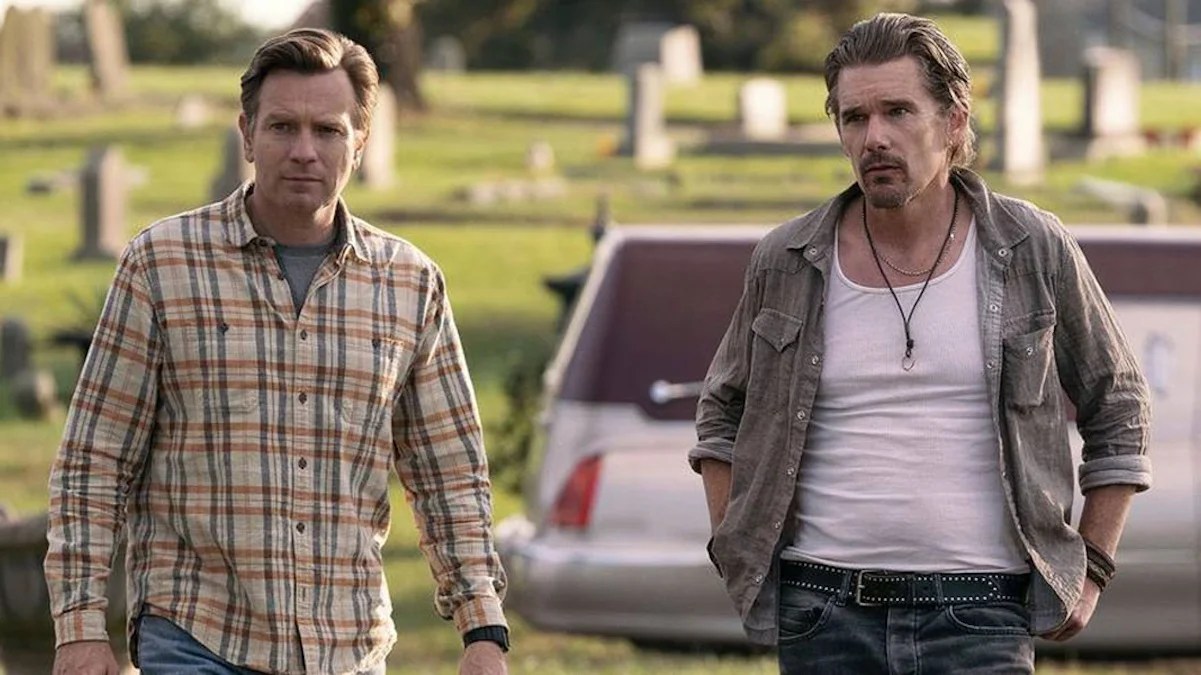
The simple pleasure of seeing Ethan Hawke and Ewan McGregor paired-up as brothers by different mothers does the heavy lifting of “Raymond & Ray,” a downbeat dramedy about their dead father’s last wish.
It starts out as an estranged-sibling melodrama, drifts into road picture territory and grows more contrived the closer we get to that “last wish.”
But “contrived” is kind of the brand of the creator of TV’s “In Treatment” and such films as the all-star cast “Mother and Child.” Rodrigo García likes to mix things up, add characters and obstacles and plot twists, and he squeezes a TV season’s worth of those into the second and especially the third act of this picture, which sets out to touch you and satisfies itself with a string of “Didn’t see THAT comings.”
Raymond (McGregor) shows up at Ray’s cabin door just as his latest bedmate is making her exit. They aren’t close, and they were even more removed from their father. But at least Raymond got word that he has died.
“His last wish was that his sons attend his funeral,” Raymond relates. But the other son that their father named Raymond, Ray, isn’t sentimental enough to consider that. The fact that their “monster” of a dad gave them the same names speaks to how he “messed with” them. And now he’s demanding a little control, post mortem. But Raymond insists.
“I want to know what it looks like to put him under ground.”
“It’s gonna take a lot more than a hole in the ground to get the old man outta your head.”
They drive to Richmond, and bits of background come out. Raymond’s just lost his third marriage. Ray is a recovering addict, a jazz trumpeter a long time between gigs. Neither is flush with cash, and the damned funeral home wants “embalming” and “makeup” fees “because that’s what your father wanted.”
The half-brothers find themselves dealing with a string of funeral home folks expressing “Sorry for your loss,” a lawyer pal (John Ortiz) of their dad’s with yet more “conditions” their father left them, and the landlady (Maribel Verdú of “Pan’s Labyrinth”) who apparently was the old man’s last lover.
Everybody they meet seems to know the late Benjamin Harrison, from the funeral director (Todd Louiso) who put him in a coffin in accordance with his “Jewish heritage,” to Dad’s last nurse (Sophie Okonedo, quite good), whom ladykiller Ray seems to identify as his “type,” to the preacher (Vondie Curtis-Hall, terrific) who helped with Ben’s arrangements and will preside over his service.
Because “Our father wasn’t Jewish. He converted for 30 minutes once.”
Everybody has a warmer, more forgiving picture of the old man than the sons who refused to see him for years and years. And every demand that he makes in his will tells them that he’s still the manipulative bastard they distanced themselves from all those years ago.
“What was he like as a father?” “The worst.”
As Raymond and by extension Ray shrug and go along with this, we see the sad adults their father made of them, “two grown-ass men whose lives didn’t pan out.”
That movie is actually pretty interesting. The acting is quite good and the family dynamic solid, if a tad predictable. But the manipulations and complications that García layers on top of that story, at the long, graveside second half of “Raymond & Ray” are not. They start out cute and transition to cutesie, and “Raymond & Ray” goes right off the rails.

Rating: R for language and some sexual material.
Cast: Ewan McGregor, Ethan Hawke, Maribel Verdú, Sophie Okonedo and Vondie Curtis-Hall.
Credits: Scripted and directed by Rodrigo García. An Apple TV+ release.
Running time: 1:45
The first four or five times one hears a snippet of the story of how 1920s and ’30s singing, dancing and acting sensation Josephine Baker was a French spy of great repute during World War II, the only rational reaction is “Say what now?”
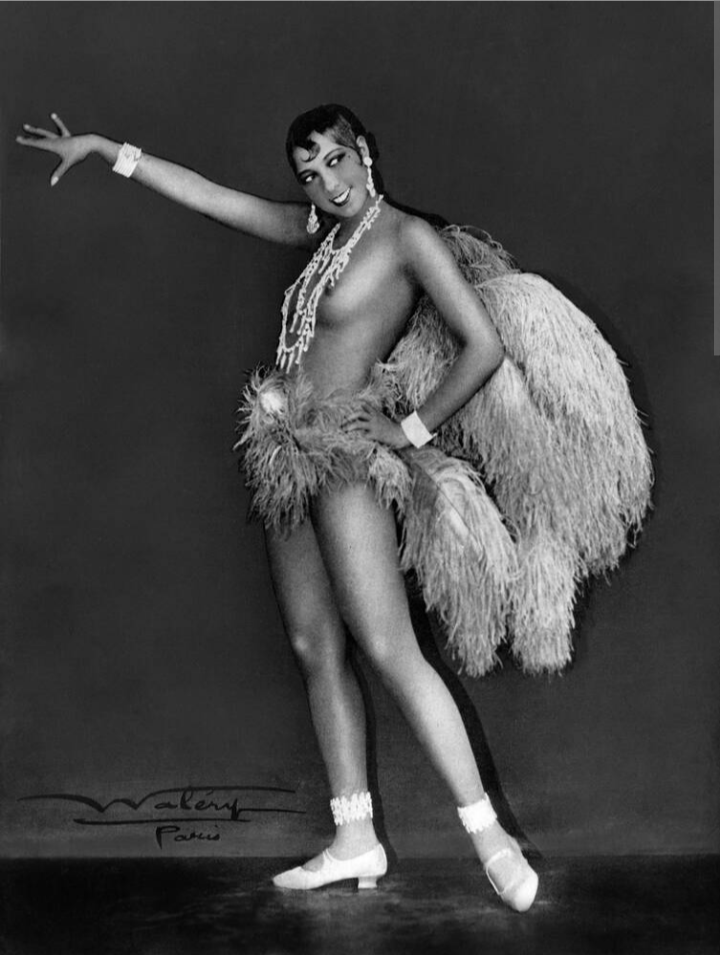
An African-American starlet, perhaps the most famous performer in Europe between the wars next to Marlene Dietrich, infamous for her daring states of undress on the stage, the Madonna of her Age, a spy? For the her adopted France against the racist, ruthless, torture-first/murder later Nazis? How could it be? It’s not like she blended in…anywhere.
It’s always been hinted at in various Baker biographies, and became a hook for such books as more and more facts and secret files of the Brits, Americans and French became open. But the details were still as scanty as Baker’s notorious “banana dance” costume and the like. She was honored and lauded by the French, but they only gave so much information about what she did and Baker herself, a St. Louis girl, frustrated New York chorine who remade herself as a sensation in Paris.
She loved France and tried to give something back to the country that liberated her from Jim Crow and made her a global sensation. Baker modestly accepted the accolades and let us wonder what earned her the Legion d’Honneur recognition.
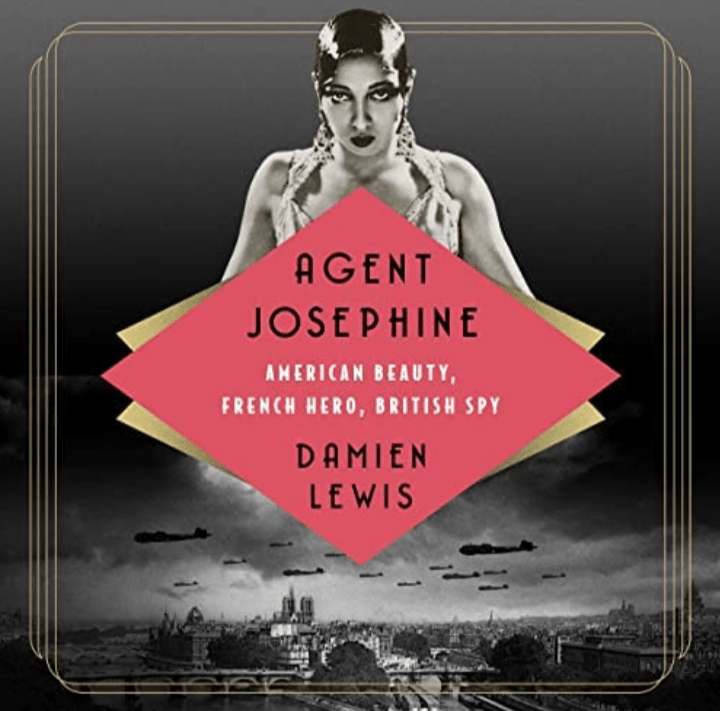
Reading the latest book, “Agent Josephine: American Beauty, French Hero, British Spy,” by Damien Lewis, with fresh details of what she accomplished, crossing paths with Brits, traveling in the same world as British spy Ian Fleming, taking the same and even greater risks, it’s hard not to see a movie begging to be filmed and every young Black actress on every continent salivating at the chance to play the superstar, sex symbol and spy.
I mean, damn. She was a pilot who flew food aid to the Low Countries, an actress who sold out operas, stage revues and one-woman shows, who made films in France and was one of the world’s most famous faces — and bodies — from the Jazz Age on into the age of TV. Her various returns to America were often fraught, as the same racism that she’d fled was slow to change and as a big star, she deserved better than she ever got at home.
So she made France one of her “Two Loves” (“J’ai Deux Amours”) as her signature song put it. And she worked for both the intelligence agencies of both loves — France and her native United States, as well as Britain during the war.
As Lewis, who has published many books on WWII espionage, makes clear, Baker was a quick study who, thanks to her access to the well-heeled and politically-connected all over Europe, hit the ground running as an “Honourable Correspondent” for the Deuxieme Bureau, the French secret service of the interwar-to-WWII years.
She accepted no pay, and for her first assignment, gave the French and the Brits a heads-up that Mussolini was certain to join in if Hitler invaded France. The exotic Baker could score gossip and real intel from Italians, Spaniards and Moroccan officials thrilled to be in her presence.
When the worst happened and Germany overran France in 1940, she elected to stay behind. Need French intel about German agents and German plans for North Africa, Spain’s possible joining the Axis, etc? Baker was the one who suggested this or that “concert tour” where she’d be expected to perform, and travel with so much luggage that mountains of secrets — some written in invisible ink over her musical arrangement sheets — would slip by any “inspector” who had the audacity to check.
“I’m the last person they’d suspect,” she said, more than once. Even though she swore not to sing in France until the Nazis were ousted, even though she remained outspokenly antifa, even if she and her French control-agent and later lover were watched, Baker risked her neck, time and again for la belle France.
The book is heavy on context and facts, with a little speculation filling in around the edges. Being a veteran of this corner of non-fiction, Lewis treats as routine moments, bits of drama and intelligence coups that could play as electric scenes in the hands of a good screenwriter, an accomplished director and the right starlet.
I’ve read other Baker books. This one has more the most thorough accounting of her war exploits, but lacks much in the way of feeling for its heroine/subject. We don’t feel we know the woman behind the icon. Lewis lets Baker sit on the periphery of this story for long stretches as he pieces together where she was and what she did.
A long hospitalization that turned her room into a safe meeting spot for spies, a plane crash as she was being flown back into France, gathering Intel, entertaining the troops and singing for concentration camp survivors, Baker cut a wide swath through the war.
France loved Baker, and her work to free the country was always going to be lauded. I figured they’d overstated the case just to honor their favorite adopted daughter. Not so. Baker got into it, sweet-talked the fascist Franco’s diplomat brother, this connected Italian or that Portuguese, Frenchman, Moroccan or whoever and made great contributions to the fight to liberate France.
She did it, sometimes over the prissy turf-war tantrum-tosser DeGaulle, who wanted control of everything and everyone fighting to evict the Germans in his or her own way. Baker came up with work-arounds when higher-ups made light of her aid, turned tours into intel-gathering exercises, and kept a menagerie of exotic pets with her the whole time, from Paris to her Chateau Milande (home of a museum to Baker’s life and exploits) to Casablanca and Marrakesh and beyond, on through VE Day.
That’s a life unlike any other, and a movie waiting to happen. There was a decent TV movie about her entire life made in the ’90s, and friends in France tell me there’s quite the Josephine Baker revival going on right now.
SOMEbody is going to make this film about the diva-spy, in Hollywood, France or elsewhere. I dare say there are actresses who already own the rights to this book or earlier ones. C’mon, Hollywood. Don’t let the French beat us to it.
The title is right there in the research. “The Honourable Correspondent.”
“Agent Josephine:;American Beauty, French Hero, British Spy,” by Damien Lewis. BBS Public Affairs publishers, 466 pages. $32.
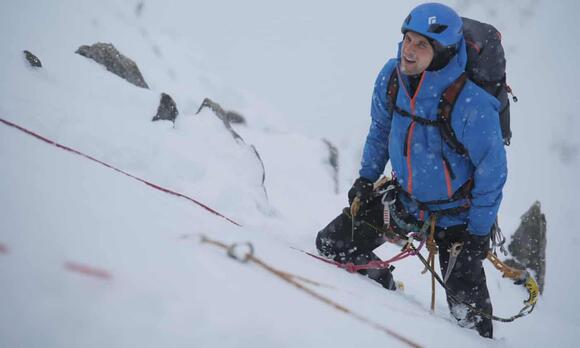
The climbing footage is striking and the Alpine settings breathtaking in “Summit Fever,” a mountaineering thriller that also boasts some of the most stark and startling deaths the genre has ever seen.
Sure, there are formulaic touches and in its more melodramatic moments, lapses into pure cinematic popcorn. I could’ve done without the veteran climber screaming “Give us a f—–g chance!” at a storm raging around him and his battered mates in one sequence.
It all gets to be a bit much, to be honest. The film’s final act drags on as we — and the climbing characters — are battered with every predicament in the book, from a sudden storm and plunging temperatures to hypothermic hallucinations and violent conflict among the climbers.
But hand it to writer-director and climbing enthusiast Julian Gilbey. He shows us the good, the bad and the unendurable in this one, a movie that questions the “died doing what he/she loved” ethos of the sport and illustrates just how ugly a body looks, broken from a fall and frozen in the snow.
Freddie Thorp of Netflix’s “Fate: The Winx Saga” heads a cast of great screen beauties as Michael, a recent graduate heading to work in Dad’s Big Insurance firm in London, but tempted into the Alps by his even-hunkier climbing buddy/trainer Jean Paul, aka “JP” (Michel Biel of “Dunkirk” and TV’s “Baptiste”).
“You can worry about next year NEXT YEAR.” Come on, “one mountain, one week.” They’ll do the Matterhorn, the Eiger and Mont Blanc in the same summer.
Once he arrives in Chamonix, Michael falls in with JP and the grand old man of their crew, California-born climbing guide Leo (Ryan Phillippe), as well as Leo’s climbing girlfriend Natascha (Hannah New) and the skiing non-climber who used to be JP’s girlfriend, the fetching Isabel (Mathilde Warnier).
They’re pressed for time, and in the season of the year when snow melts and ice walls give way with thunderous cracks. And climbing has turned into an extreme sport with TV coverage, “speed records” and sponsors amping up the energy, the stakes and the danger level.
“Safety always” might be Leo’s motto. But times have changed. “Vanity is a deadly thing to bring into these mountains.”
We get a hint of what drives Michael’s “Summit Fever” as Leo treats him to some nasty “You need a fresh diaper?” hazing and JP seems hellbent on realizing his dream.
“I’m not sharing my headstone with some mountain, JP.” Or is he?
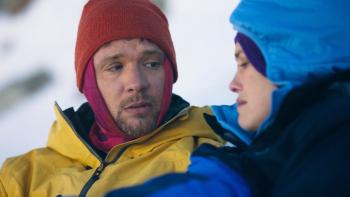
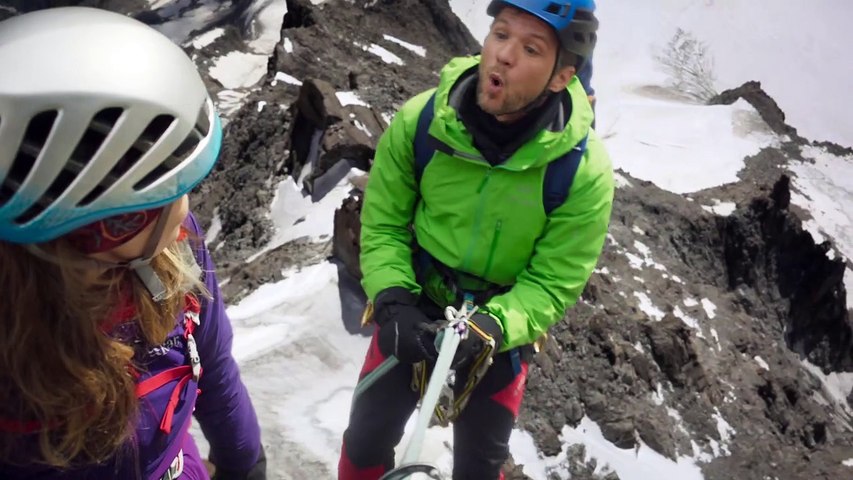
I liked a lot of what goes on here, the camaraderie, the depictions of mountaineering technique, even the deluded, over-compensating pub “wakes” for the many who fall in this killing season. Whoops and drinks all around, and on to the next peak.
“They died doing what they loved,” they convince themselves.
“They died screaming,” Michael mutters, bringing everybody down, but everybody back to Earth as well.
Gilbey goes to some pains of showing us the different peaks and their challenges, mixing that in with the budding romance between Michael and Isabel, and the death that haunts the kid-climber with every swing of his ice-axe.
It all gets to be a bit much and goes on too long, but the acting’s decent, the melodrama manageable and the climbing on a par with the best sequences ever filmed. Meet it on its own level and “Summit Fever” isn’t bad, and certainly not as bad as most couch-potato critics have been saying.

Rating: R, violence, profanity
Cast: Freddie Thorp, Mathilde Warnier, Michel Biel, Hannah Ne, and Ryan Phillippe.
Credits: Scripted and directed by Julian Gilbey. A Saban Films release.
Running time: 1:55


“Shady Grove” is another “city folks trapped in a cabin in the woods” tale, this one with a pregnant couple partying with their best friend, when a demonic cult interferes. You know how demonic cults are about pregnant women.
It’s a cumbersome, lumbering thriller that fails to build suspense or much in the way of horrific momentum. The filmmakers are more invested in sex-in-the-shower scenes and cute banter than the perfunctory killing to come.
Throw in some indifferent acting — few people summon up any sense of terror — and you’ve got yourself a loser, even if the film’s a take-off on the ill-fated rural romance of that famous old folk song that gives the community where all this takes place its name.
Niki McElroy (who co-wrote this) and Todd Anthony are a couple that’s just gotten back together long enough for her to get pregnant and him to get over her brief lesbian dalliance. Juhahn Jones plays Eli, their on-the-make pal, the one that invites some pretty locals for a fireside party at their rental in the forest.
But as the dark settles in and the paranoia over “that smell” coming from the locked pantry grows, the burlap deer-antlered hoods come out. Let the wild rumpus start.
Comic actor Jones of “The Starving Games” and “You Married Dat” has young Chris Tucker energy that he shows off in flinging lame come-on lines at every woman in sight and “Mr. Light-Skinned-Man…thinks he’s a Cherokee” zingers at his best friend.
Victoria Baldesarra makes a pretty villainess, and a pretty uninteresting one.
The action is stunningly static, the murders something of an afterthought and the logic illogical, starting with the “smores” campfire party being set in broad daylight.
And the slaughter, when it finally starts in earnest, is by-the-book and dull and features the fakest looking blood this side of Heinz 57.

Rating: Unrated, graphic violence, sexual situations
Cast: Niki McElroy, Todd Anthony, Juhahn Jones, Jackie Ritz, Becky Hayes and Victoria Baldesarra
Credits: Directed by Dale Resteghini, scripted by Nathan Dalton and Niki McElroy. A Gravitas Ventures release.
Running time: 1:35


One reason I avoid any Twitter, Facebook etc. “Name one movie you’ve watched more than five times” meme in its many forms is simple mathematics. There are scores upon scores of movies I’ll stop to watch a bit of while channel surfing, and far too many that I’ve seen more times than I can count.
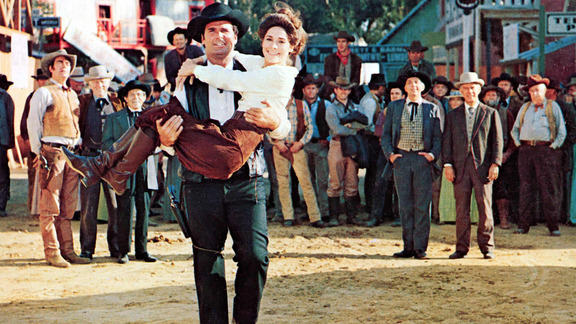
“Support Your Local Sheriff!” is a genuine guilty pleasure, a reminder that a “classic” doesn’t have to be a masterpiece. It’s a perfectly crafted amiable Western farce from the late 1960s that was so popular it spawned a sequel — “Support Your Local Gunfighter” — which for my money, is even funnier and aging even better.
It’s a cinematic time capsule, a dash of Old Hollywood just as New Hollywood was cleared for takeoff.
James Garner and Joan Hackett were the stars. But damned if every character actor still holding a SAG card, many of them Golden Age of Hollywood veterans, didn’t draw a check to populate this blend of Western lore and TV and film Western tropes, ripe for a poke in the ribcage.
Harry Morgan and Kathleen Freeman, the venerable Henry Jones and Oscar winner Walter Brennan, future Oscar nominee Bruce Dern and fellows with “faces” — Willis Bouchery, Gene Evans, Walter Burke and Dick Peabody– all show up, shaved or unshaved, wearing hats and duds they could’ve used in a dozen other films. Each does what she or he is known for — the diminutive Morgan bellowing, Freeman screeching, Brennan scowling. And the result just tickles more with the passage of time.
The great service to the cinema that star/producer Garner and director Burt Kennedy do in the film is giving veteran bit player Jack Elam, who often played shifty (and wandering) eyed heavies, a co-starring role. Playing perfectly credible, befuddled comic relief, he parlayed his turn in both of the “Support Your Local” films into a persona transformation, from “High Noon” henchman to lovable “Old West town character.”
The story is an upending of the “town tamer” trope that so many Westerns popularized. Garner plays Jason McCullough, a dashing saddle tramp “just on my way to Australia” who stops in a town turned violent and wild thanks to a gold strike. He samples the local mayhem, and inflation, and takes the only job advertised that seems suitable — sheriff.
Morgan, Jones, Burke and Bouchery play the cagey town fathers who try not to let on how deadly the place really is, and what happens to everybody who takes the job of sheriff.
Hackett (“Will Penny,” “Only When I Laugh”) plays Prudence, “Prudy,” the mayor’s willful, ill-tempered and accident-prone daughter, who reluctantly accepts the wary attentions of the “handsome” stranger with the wry wit and way with a gun.
And Elam is “the town character” promoted to deputy when he refuses to let Jason get gunned down by the henchmen of murderous screw-up Joe Danby (Dern at his whiniest). That means Pa Danby (Brennan) will have to intervene, and a real OK Corral showdown is in the offing. Or so you’d think.
The script and Garner do their damnedest to show Jason as an unflappable, confident and faintly contemptuous anti-hero. He may be as base and greedy as everybody else. He’s got gold fever, after all. And he’s lazy (“prospecting” is hard work, which he passes on to his deputy). But when it comes to these yahoos he’s surrounded by, he’s droll. Very droll.
“What’s your name?” “Jason McCullough. What’s yours?” “Joe Danby. And you had better REMEMBER it.”
“Oh, I’ll remember it, Joe. That’s about all I’m gonna do the rest of my life is go around rememberin’ your name.”
Garner’s comic Western chops are a lot more polished here than he was on TV’s “Maverick” a few years prior. It’s a performance laced with cocksure glowers and testy comebacks, the best of them exchanged with Dern, who has never been funnier on screen.
The gags in this oater are time-tested and could easily have been groaners. But Garner and director Kennedy — he did John Wayne’s “The War Wagon” and “The Train Robbers,” as well as “Dirty Dingus McGee” — make every quip perfectly-timed, every sight gag hilariously simple.
And Elam, standing in the spotlight for one of the few times in his long and storied career, just sparkles in support, his every gesture a carefully considered and clumsily comical exaggeration.
Westerns were pretty much done by 1969, thanks to decades of over-exposure on screen and on TV. The only films to break through in the genre were typically mold-breaking ultra-violent Italian productions starring Eastwood or directed by Peckinpah, or the last roundups of John Wayne.
“Support Your Local Sheriff!” also broke the mold, and lives on, mainly as a grand G-rated comic celebration of the Western “types” it affectionately sends up and the character actors who made such films the cinematic comfort food of generations.

Rating: G, with lots of gunplay, smoking and whisky sipping.
Cast: James Garner, Joan Hackett, Jack Elam, Walter Brennan, Kathleen Freeman, Harry Morgan, Henry Jones, Walter Burke, Willis Bouchery, Gene Evans, Dick Peabody and Bruce Dern. A United Artists release on Amazon, many other streaming platforms.
Credits: Directed by Burt Kennedy, scripted by William Bowers. A United Artists release on Tubi, Amazon, Youtube, etc.
Running time: 1:32


There is no “concrete” evidence that what happened in January of 1996 in the city of Varginha, Brazil was caused by an alien spacecraft. Well, none that’s presented in director James Fox‘s latest UFO documentary, “Moment of Contact.”
There are no photographs, no “crash” debris, not even local TV coverage at the time provided much more than what some folks told interviewers then, folks who repeat their stories for Fox and crew 26 years later, about what they saw.
Fox has an eyewitness take us to a non-descript piece of land, where after some hunting around, he shouts (in Portuguese with English subtitles) “It was here! HERE!”
Fox interviews the current mayor of Varginha, and asks him the same loaded and pointless question he peppers young people on the street with. “Do you believe” that a UFO crashed here, that there were survivors, that the military perhaps with US help, spirited them away?
Absolutely, the mayor of a city with a UFO monument and saucer-shaped museum says. I mean, his nephew’s girlfriend saw things. She did.
At one point, the producer of “UFOs: 50 Years of Denial,” the director of “I Know What I Saw” and the slightly-more-credible “The Phenomenon” walks away from one more credulous, zero-skepticism promotional chat and gushes “I didn’t believe” this “event” really happened “when I first came here,” but NOW…
Two miracles can be associated with that moment and that line. One is that Fox’s nose didn’t grow and sprout Pinocchio leaves. The other is that I was able to get my eyes to return to normal from rolling that far back in my head.
This is where we are as a culture. Waiting for real verifiable proof from legitimate news organizations and governmental entities, which are showing up video and saying “something” is definitely up. Meanwhile, it’s open season for hustlers, true believers and video charlatans.
The most generous way to characterize Fox’s nakedly exploitive films is that they’re all part of an “ongoing investigation,” that he’s poking around at famous UFO landmarks, dramatically breaking locks to get to an “encounter” site, struggling to ask one question (a REALLY stupid one) of a threatening, armed and standoffish man allegedly involved in transporting an alien from a hospital to a military base, with a goal in mind.
Alas, that goal seems no closer at the end of each and every credulous, lazy, over-hyped documentary.
He landed Peter Coyote as his films’ narrator with “The Phenomenon,” and Coyote’s back here, working “allegedly” into the narration just enough to not kill his association with real historian/documentarian Ken Burns.
The sister of a policeman who allegedly “captured” an alien who died within days of holding the creature in his arms waves a medical examiner’s report that mentions (supposedly) an “unidentified toxin,” but this is skimmed-over briefly. A cardiologist who treated the dying man appears on camera to verify that as the only close-to-concrete evidence that the film has in it.
But we’re told, in the opening narration, that NORAD (North American Aerospace Defense Command) warned Varginha that something was headed there/happening there. And no effort to document or confirm that claim is made, no attempt to get NORAD on the record. Perhaps Fox wouldn’t have liked their answer.
Instead, the hype goes on, with Fox and sometimes, by extension, Coyote, breathlessly referring to this or that fresh witness having “disappeared…for 26 years.” No, they (allegedly) just didn’t do media interviews about what they say they saw.
Fox disciplines himself to equivocate, here and there. “Allegedly” gets used more in the latter parts of “Moment of Contact” than in the early scenes.
“There’s nothing more significant than THIS story….if it was true.”
And a few of “the usual suspects” among UFO researchers, here and from Brazil, weigh in, adding more and more hearsay onto the layers of it we’ve seen (illustrated recreations) and heard, couching it as “expertise.”
Journalists call this “circle jerk” confirmation bias.
What ALL of these UFO films desperately need is hard scientific push-back. There’s video of a small light dancing and drifting down into the city at one point, and no one is here to suggest it could be anything but “alien” in nature. It looks like a Chinese lantern drifting on the eddies of a city breeze. A real weather expert could have punctured this balloon (another possibility) in a flash.
Something happened in Varginha, and we’d all like to know what it was. But a “researcher” who spent three hours on somebody’s “Konkrete” podcast claiming he discovered “proof,” who takes a generic alien PAINTING made of what three teen girls (re-interviewed here) say they saw, and swoons at “seeing the original…illustration…holding it in my HANDS” isn’t going to be the fellow to provide answers.
“The truth is out there.” And a lot of hucksters are going to keep cashing in on vague, credulous claptrap like “Moment of Contact” until somebody smarter and more credible hands us actual “proof” about what’s going on.

Rating: unrated
Cast: James Fox, assorted experts and witnesses and others involved in the Varginha, Brazil “encounter”
Credits: Directed by James Fox. A 1091 release.
Running time: 1:48
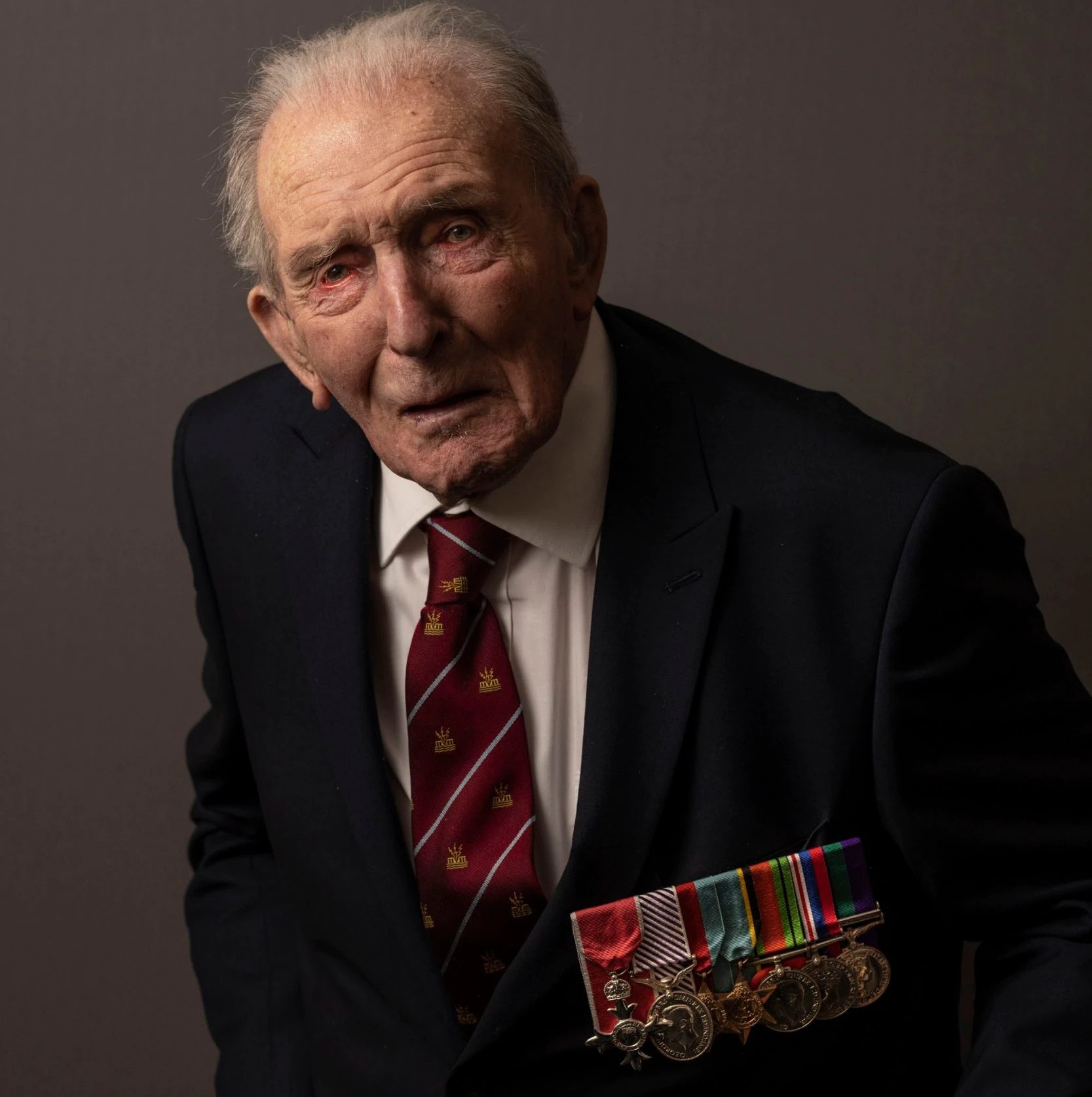


They’re very old men, now — all in their ’90s — and very few in number. The world war killed almost one in two airmen from their ranks, and the 75 or so intervening years have taken almost all those who survived.
But the few living pilots, navigators, gunners, radio-men and “bomb aimers” (how the Brits labeled bombardiers) gathered for one more remembrance of their duty, the perils they faced and the “dirty” work of bombing the enemy’s cities from their “Lancaster” bombers in a new documentary from the folks who made “Spitfire.”
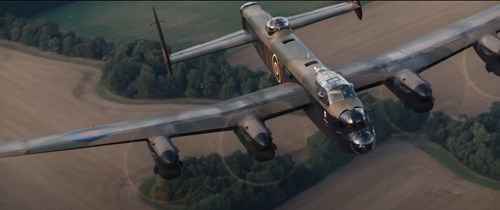
“Lancaster” is a wide-ranging appreciation of one of the finest aircraft of World War II, a graceful Rolls-Royce powered marvel that carried the heaviest payloads of the European theater as Britain’s instrument for “taking the war to Germany” for air raids — often at night — that leveled many a Germany city.
Although most of those interviewed express regret for that nature of that sort of combat, they and the filmmakers take pains to remind us of the context — a global fight to the death over the concept of “freedom.”
“If that’s the game we’re in, that’s the game we’re in,” one crewman reasons. “There’s no second prize in war,” another reminds us. “You either win or you lose.”
The surviving aircrew can be reflective of their horrors of war, of how they couldn’t “think about” their deadly duty and what it might mean to the hundreds of thousands of civilians impacted by it. They’d note “the empty chairs” of their own losses, and the way the German aggressors introduced city bombing and eventually came to “reap the whirlwind” they unleashed, as Bomber Command’s dogged and pragmatic leader Sir Arthur “Bomber” Harris put it.
Filmmakers David Fairhead and Ant Palmer interview scores of airmen, British women who did much of the world of building the planes and working radar plotting and communication with the RAF, and a German woman who survived the firebombing of Dresden.
They lean on archival military combat and testing footage, newsreels and snippets from several films made about this service, most famously 1955’s “The Dam Busters,” which recreated one of the most celebrated feats the Avro Lancaster and some of those who crewed them achieved, an exploit explained in further depth here.
And they make sure to include gorgeous aerial footage of one of the two flyable Lancasters still in existence, taking us inside to show us what this aged veteran or that one remembers about being squeezed into this noisy, cramped “”flying bomb-bay” that could feel “like a living thing” in flight.
As nostalgic as Britons have been and remain over their “keep calm and carry on/finest hour” years, Palmer and Fairhead recognize that generations have come and gone since the war, and make their film a thorough overview of the entire experience — strategy, design and deployment of the aircraft, but also the “strange world” of someone removed from the slaughter they were causing, who “fought my war from five miles up.”
A Jamaican crewman, Canadians and others talk about their experiences, the camaraderie that developed within the six-man crews, the tactics deployed to evade night fighters (the Brits bombed mostly at night, the U.S.Army Air Force mostly bombed during daylight) and anti-aircraft fire.
Berlin, Cologne, Hamburg, D-Day, Peenemunde and Dresden are targets explained at length.
A crewman recalls the pressure of “trying to pick a pilot who was going to get me through the war,” the staggering losses that came from raids on Berlin and the “dambusting” raid on the industrial Ruhr region. Almost to a one, they talk about the fact that they never talk about this service with family or friends who weren’t in it with them.
And many of them complain that this is because of the “politics” Prime Minister Winston Churchill played with their service, distancing himself from decisions he made about wiping out cities because “precision bombing” was pretty much a myth that didn’t outlive the war and the exigencies of shortening the conflict, “helping the Russians” pre-D-Day and the like.
“Lancaster” briskly covers a lot of ground, making it a most watchable overview of a subject that whole documentary series and a library’s worth of books have been devoted to. And it’s a valuable document as well, getting many of these survivors on film one last time as they remember the context, the stakes and the deadly work they volunteered to do the last time the world faced a global threat from fascist totalitarianism.

Rating: unrated
Credits: Directed by David Fairhead and Ant Palmer. A Gravitas Ventures release.
Running time: 1:50
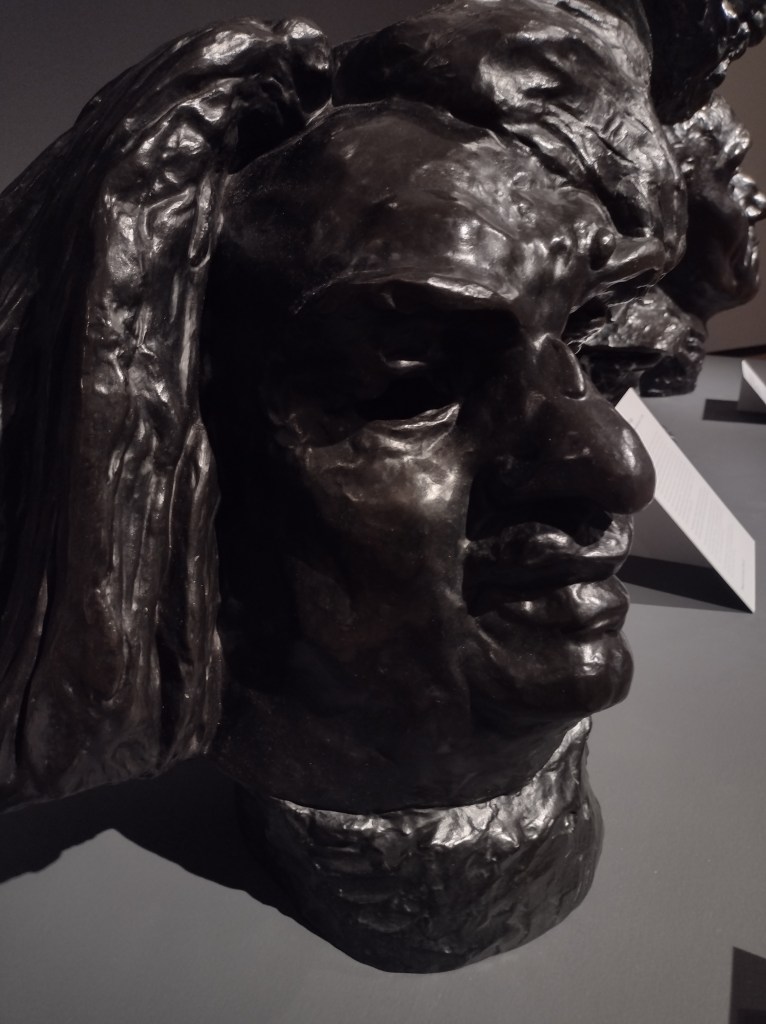
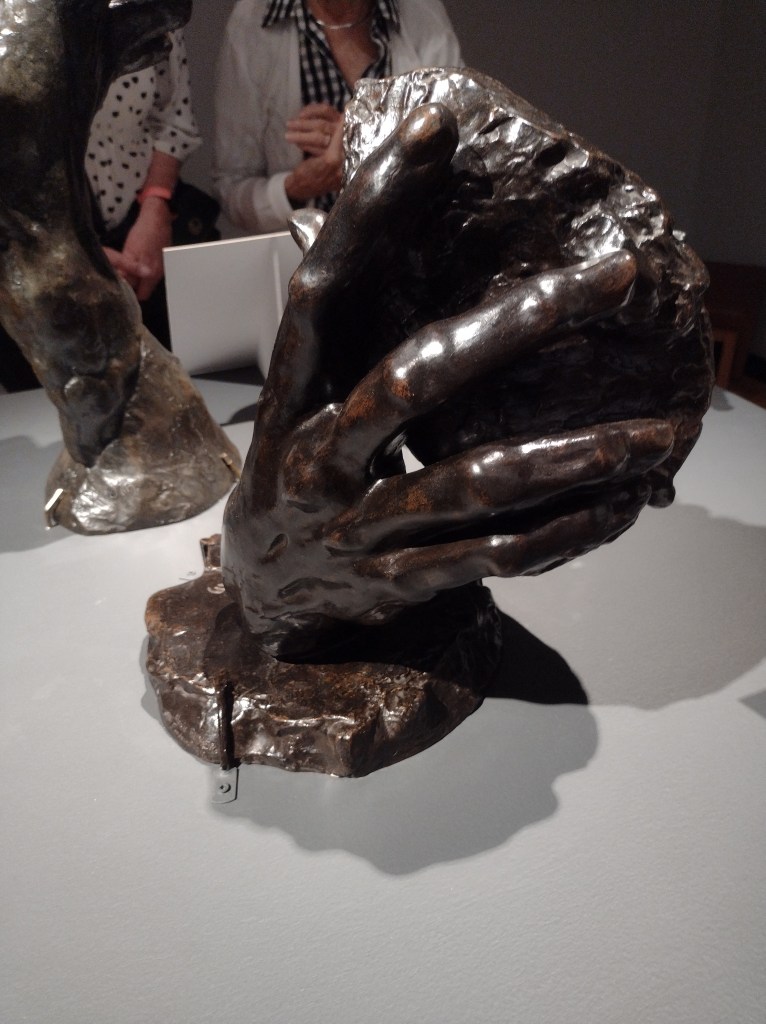
Auguste Rodin was the subject of a biopic that came out in 2017, which no one saw, and a character in many films about French art of the late 19th and early 20th century, the various accounts of the life of his and other artist’s muse and fellow art “Camille Claudel,” for instance.
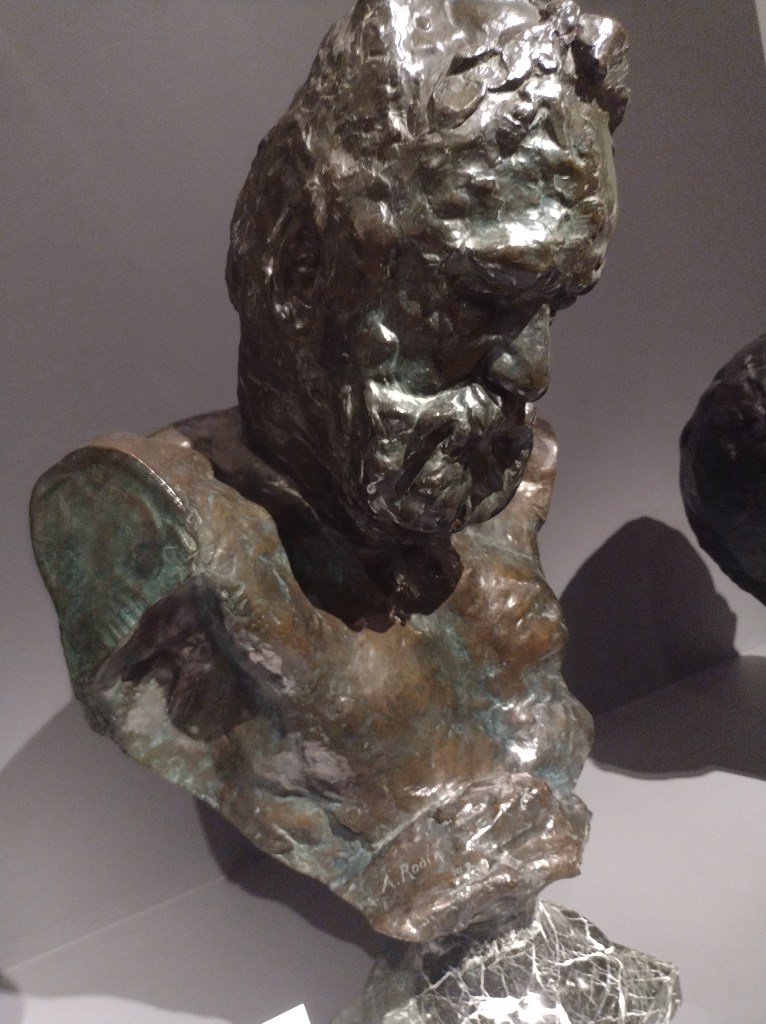
Below is one of several sculptures he did of the famous writer Balzac. Busts of composer Gustav Mahler and novelist Victor Hugo are also in the exhibition.
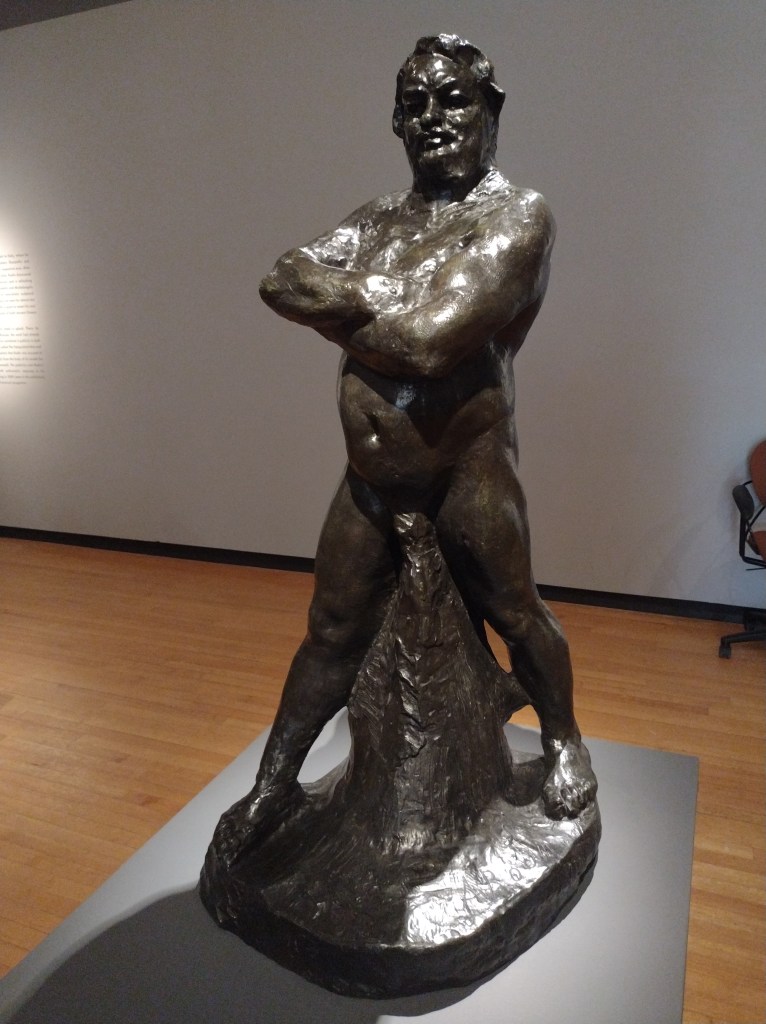
Huge exhibit, almost as many pieces as the Musee Rodin had on display the one time I visited that in Paris some years back.


What a sad and sappy seize-the-day satire “The Loneliest Boy in the World” turns out to be.
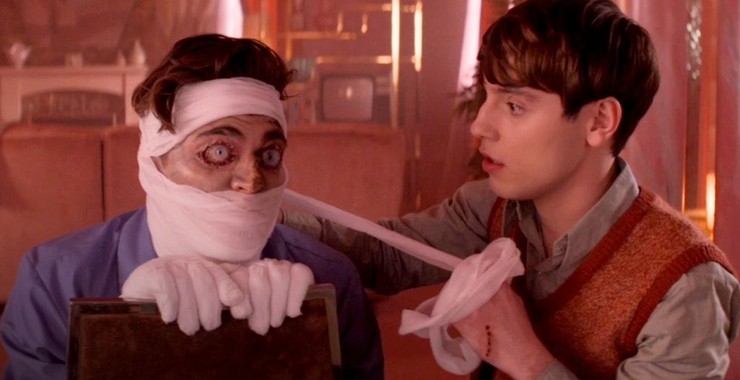
A candy-colored zombie comedy set in the bubble-gummy ’80s, it’s about a guy who grew up so sheltered he can’t connect to the real world. Friendless, he’s faced with the choice of living on in his late mother’s Bubblicious pink house, or being moved to an institution if he can’t make friends.
So he starts digging up fresh corpses from the local cemetery that can pose (literally) as “friends.” And guess what? They become the living dead!
Oliver, played as a lost, optimistic soul by Max Harwood (“Everybody’s Talking about Jamie”)) is being monitored by two shrinks — a cynic (Evan Ross of “The United States vs. Billie Holiday”) and his more sympathetic colleague (Ashley Benson of “Spring Break” ). They know his mother (Carole Anne Watts) died in a bizarre accident, and they’re sure she didn’t prepare him for living in this world.
If they knew he watched “Alf” religiously, showing up at her grave to relate each week’s plot to her, that wouldn’t help.
“Hah! WILLIE!”
The fact that he’s mercilessly bullied by the local jocks also seems like a barrier to independent living.
But while Oliver struggles to relate to cute stranger Chloe (Tallulah Haddon), the comical gravediggers tip him that there are fresh bodies aplenty, thanks to a nasty plane crash we’ve witnessed. Next thing we know, Oliver’s filled his house with “friends” who might be “the perfect family,” “just like on TV.”
Ben Miller and Susan Wokoma were older adult parental victims, obnoxious little English girl (Zenobia Williams) could be his sister. There’s even a Frankenweiner, “Ninja.” And Mitch (Hero Fiennes Tiffin, last seen in “The Woman King”)? He could be his “wingman” with Chloe.
If only they’d stop be corpses and start acting like a family! So they do.
The sight gags show off some pretty creative makeup, once we get past the scalding this corpse or posing that one bits. Living dead dining/drinking sight-gags, lost limbs and progressive decomposition can keep a family from being all it can be.
But as he continues to cope with bullies, shrinks and attempts at dating Chloe, they humanize and socialize the awkward lad living with the living dead, motoring around town in his late mom’s pretty-in-pink Chevy Blazer.
“I might be dead, but I’m not stupid” is the extent of the wit, here. As for profound life advice? Maybe Oliver needs to get on with his life, stop reciting “Alf” episodes to his mother’s pink tombstone.
“I can’t miss that show!”
“Sure you can.”
There simply isn’t enough to this beyond the ’80s nostalgia, which is as played out as zombies as a movie genre. We’ve had zombie invasions, zombie TV series, zombie war films, zombie romances (“Warm Bodies”) and zombie period pieces (“Pride & Prejudice & Zombies.” From the first, there’s always been some social commentary and satiric intent in the best of these films.
Not in “The Loneliest Boy in the World.” A charming-enough mostly-British cast riffing on ’80s TV (“Alf” was HUGE in Europe.) “families” adds nothing to the genre and hardly seems worth the effort to get everyone so beautifully made up.
Rating: R for language and violent content.
Cast: Max Harwood, Hero Fiennes Tiffin, Ashley Benson, Tallulah Haddon, Carole Anne Watts, Evan Ross, Ben Miller and Susan Wokoma.
Credits: Directed by Martin Owen, scripted by Piers Ashworth. A Well Go USA release.
Running time: 1:30


