A cheerfully amoral Hollywood “ghost hunter” huckster baits an AirBnB flat with “evil” artifacts and monitors the attacks on the guests in via hidden cameras in “Lair,” a stumbling but sometimes chilling thriller set in London.
But it’s not what you think.
Well, sleazeball “Dr.” Caramore (Corey Johnson) says he’s doing it to help the legal defense of a friend and colleague (Oded Fehr) in prison for clubbing his wife and child to death with such an artifact. It’s just that as the creep show begins and the first blood is spilled, there’s no way anything he does seems legal, moral or the least bit sensible.
And any chance the movie has of coming off is tossed away in an incompetently mis-ordered finale that guts whatever suspense was building for an “aftermath” where “what finally happened” is unimaginatively and dully explained via an interrogation and flashback within it.
Johnson (“United 93,””Captain Phillips” and “The Mauritanian”) makes a colorful fraud caught up in a double homicide in which he is almost implicated. He didn’t do the killing, as the testy lawyer (Alexandra Gilbreath) for his imprisoned friend (Fehr) notes. But he set it up and put the “possessed” and “evil” artifact in his house.
“It’s a CHUNK of TREE,” he protests, ridiculing her “Christian” take on what happened. Her religion has “more than one and a half billion followers the world over,” she spits back.
“So does Dwayne F—–g Johnson!”
He enlists a production assistant to wire up a convenient flat, puts up an ad and a same sex couple (Alana Wallace, Aislinn De’Ath) come into town for the weekend. Maria (De’Ath, and is that a perfect horror name or what?) has just split from her husband, bringing rebellious teen Joey (Anya Newall) and tiny tyke Lily (Laura Mount) with her.
But there’s nothing like a rebellious teen and, you know, demonic assaults that most of them cannot see to put a strain on a new couple.
Johnson’s acerbic take on a classic Hollywood vulgarian is the most fun element in play here. A quick temper and a quick way with a cutting quip makes us wait for the next nasty exchange.
“Listen lady, I don’t have the time or the crayons to explain this to you.”
The attacks have a barely-glimpsed quickness that makes the early ones more effective than those in the finale, in which we see beastly transformations and graphic butchery.
“Lair” isn’t quite working as the “strain on the family” horrors play out, and bodies are covered up. It falls utterly apart in the equally-slow-footed third act, finishing the botch-job begun in the first.
Rating: unrated, bloody violence, sexual situations, pot use, profanity
Cast: Corey Johnson, Alana Wallace, Aislinn De’Ath, Anya Newall, Sean Buchanan, Lara Mount and Oded Fehr.
Credits: Scripted and directed by Adam Ethan Crow. A 1091 release.
The problem with film titles is that they’re not protected by copyright. It’s not unheard of to have films with the same title roll out in the same year, confusing viewers and muddying the chances of either film finding its audience.
There’s a new British film that premiered in the Toronto Film Festival this year to some fanfare, which considering John Michael McDonagh (“The Guard,””Calvary”) adapted it for the screen, and Oscar winner Ralph Fiennes, along with Jessica Chastain, Matt Smith and Caleb Landry Jones star in it, is to be expected.
That isn’t the film titled “The Forgiven” that’s just popped up on Netflix. This is the well-intentioned character drama about South Africa’s Truth and Reconciliation Commission, and features Oscar winner Forest Whitaker doing an empathetic and impassioned interpretation of Archbishop Desmond Tutu, squaring off with Eric Bana as a “psychopathic” SSA (state security police) cop, a convicted mass murderer, in infamous Pollsmoor Prison.
Roland Joffé of “The Killing Fields” and “The Mission” directed this somewhat staid, uneven and generally downbeat drama. Its centers of action are Tutu’s navigating the treacherous personal and political currents outside that prison, where his fact-finding and public testimony interrogations are under fire from veterans of the just-ended Apartheid regime in South Africa, and inside the prison, where one of the most notorious inmates, Piet Blomfeld (Bana) has baited him with a feigned interest in “forgiveness.”
Blomfeld’s spitting fury, f-bombs and racist slurs reveal that he has more interest in enflaming the racial hatred that anchored his belief system than in any “biased” reconciliation. It’s all Tutu can do to get him to stop calling him “boy,” even if turning that to a more pious “father” seems out of reach.
But the Archbishop has weeping parents like Mrs. Morobe (Thandi Makhubele, terrific) begging for closure, “just a bone” from her missing “disappeared” child, and fellow commissioners (Terry Norton) seeking details of something called “Operation Hacksaw.” If the Nobel laureate Tutu can appeal to this man’s “humanity,” maybe Blomfeld can be redeemed, at least in part.
There are plenty of still-serving, still-intimidating state police like Hansi Coetzee (Morné Visser) who don’t want that can of worms opened. And with Blomfeld in a prison population where murderous gangs are just waiting for a target to take out, the clock may be ticking on this “offer.”
Whitaker’s impersonation is quite good, considering the size difference between the diminutive Tutu (5’4″) and himself. Facial prosthetics and a wig help. But a great actor goes beyond that and mimicking a voice to get at the man’s innate decency and compassion.
How can I pray for her when I don’t know what happened?” he pleads to Blomfeld, seeking answers about the woman’s missing child even after his reasoning — “We either learn to live together in this country, or we die together in this country” — fails.
Bana plays Blomfeld as a curled fist, deaf to reason or compassion, hatred driving his every action.
The scenes concerning the often fractious meetings and hearings of the commission, covered in the earlier drama “In My Country,” are rather drab when compared to their one-on-one confrontations. And the prison scheming and violence is standard issue prison thriller stuff, nothing new to see there, either.
Far more interesting is the less-developed side of this story, the actual rounding up of clues, digging for mass graves and facing police intimidation pretty much every step of the way on the country’s march towards the truth. And the film’s prologue, setting up our story in the distant past, showing one character’s disappearance and another’s formative childhood moment, is solid and gripping.
Joffé and his film’s intent are beyond reproach, but his patient, stolid storytelling style, emphasizing character over action here, kind of sucks the life out of the movie, something the occasional Whitaker vs. Bana fireworks cannot compensate for.
This “Forgiven” isn’t the even more obscure African film from 2016, and it’s not the Moroccan tale that McDonagh, Fiennes and Chastain have in store for us. And sad to say this one isn’t epic or memorable enough to merit other filmmakers fleeing from that title in the near future.
In other words, more confusion and “Forgivens” are coming until that happens.
Rating: R for disturbing/violent content, and language throughout including some sexual references
Cast: Forest Whitaker, Eric Bana, Terry Norton, Morné Visser, Thandi Makhubele
Credits: Directed by Roland Joffé, scripted by Michael Ashton and Roland Joffé. A Saban Films/Lionsgate production on Netflix.
The idea of Northern California as a marijuana growing paradise imbedded itself in the culture long before “Humboldt” visited it and made it a joke over a dozen years ago.
A sea of towering trees hiding patches of the weed that turned old hippies into independent “entrepreneurs,” it’s a green Garden of Eden that gave birth to a thriving, cash-only economy.
But along came all these states that started legalizing the stuff. That took away not just the outlaw cachet of it all, but made competing damned near impossible in a Brave New World of Pot Taxes, Pot Regulation and a supply chain that had to vouch that its supply is “legally grown.”
Damned government killjoys. And by the way, generations of enthusiasts have been saying that’s exactly what would happen the moment “legalized pot” became the standard. The cartels would have to move on. Smuggling, dumping bales of “square grouper” off the coast of Florida, for instance, just doesn’t pay in an era when Tommy Chong and Willie Nelson and others have their own brand-name-bud, on sale in much of the country.
“Freeland” is a simple, intimate drama about one grower facing the end of her way of life in this Edenic part of the world. Well-acted, simply-plotted and surprisingly poignant, it could be about any way of life, any chosen profession, that becomes endangered in a heartbeat thanks to “change” some see coming and others hope to wait out.
Krisha Fairchild stars as Devi, pushing 60 and a veteran of “32 years in the business.” Still striking, with long hair that long ago turned silver, you can tell her story at a glance. She moved to Humboldt County and environs at the tale end of the “off the grid, back to the land” hippy movement. Yeah, she was in a commune, and yes it was called “Freeland.”
But like others who stuck it out, she realized the way to make a living out here where the neighbors are scarce and the law is scarcer was to plant, breed, harvest and market marijuana.
She and a few other old timers stick around, but she’s got a young workforce (Frank Mosley, LilyGladstone and Cameron James Matthews). She pays them in cash at the end of each week, and every so often, she meets a guy (Robert Parsons) in an RV with Nebraska license plates and makes an exchange — cash for cannabis.
Like everybody else in this business, she enjoys her handiwork, and everybody’s in agreement that this “new strain” she’s come up with is one of her best. But she’s no sooner decided on a vulgar name for it than the walls close in around her and the Big Arm of the State is slapping enjoinders on her gate and fines on her business.
Others have gone legal, spent the money on permits. Devi, who doesn’t use banks, must have figured she could get to the finish line — retirement — before the roof caved in.
She’s been warned that “once they legalize there” (Nebraska) the jig would be up. But the state and the county aren’t giving her the luxury of waiting for that to happen. Her expiration date has been moved up.
“Freeland” follows her as she reminisces in between frantic efforts to get permitted, unload her current crop and hang on just long enough to get back on an even keel.
Filmmakers Kate McLean and Mario Furloni come from documentary backgrounds, so it’s not surprising that they rest their debut features film on closely-observed details and on Fairchild’s Earth Mother presence.
Devi works her crop and turns over stalks in her drying house. She trims the buds and packs the product. And then she gives it a quick blast of air freshener, before trundling if off to her small town post office.
Fairchild (she starred in “Krisha” and “American Folk”) is the personification of the strong, independent working class woman of the land, and of the Flower Child in Winter. Her Devi has her life just so, with a system she’s made work for her. And when it blows up on her, she doesn’t let her workers, neighbors or anybody else see her cry. But we do.
Furloni and McLean keep their story lean and mostly melodrama free. Past tales of violence among the weedoisie, back-stabbing and ratting each other out for a competitive edge don’t figure here. This threat is less violent, more bureaucratic.
Our heroine’s seen the signs, had ample warning. She just didn’t act.
The suspense comes from the risks we see her taking, the ways a bad situation could turn much worse if this gambler’s last throw of the dice goes awry.
Fairchild lets us see regret in this performance, and a bittersweet nostalgia for the world she first moved to, the reasons she came and the people she loved back then.
It’s not epic, not heightened drama or even all that tragic. But “Freeland” is a film many can identify with, even if you’ve never picked up a pipe or bong. It’s a universal story, a timeless tale about anybody who’s napped a little too long and woken up to realize the working world has changed and might have no place for you in it.
The animation is a riot of colors wrapped around the graceful sway of South American dancers, some of the most glorious animated dance since Walt Disney’s “Fantasia.” “Encanto” is simply gorgeous to look at, almost from start to finish.
But I didn’t care for the film, and I’ve been struggling to process the reasons for two weeks since seeing it, trying to hit on exactly where it seems lacking.
Could it be Lin-Manuel Miranda fatigue? I haven’t been nuts about any screen musical he’s scored since “Hamilton.” And right from the jumbled, raced-through incoherence of the opening number, in which our heroine, Mirabel (voiced and sung by Stephanie Beatriz) is singing about her “Family Madrigal” at great speed because she doesn’t want to dwell on the fact that unlike every relative she’s named, she has no “miracle given to our family,” a “special gift,” the tunes are forgettable/forgotten before the notes have drifted off the soundtrack.
Perhaps the patchwork, not-about-anything story (five credited writers contributed, two tried to wrestle it into a screenplay “plot”) hung me up.
Dazzling voice casts don’t matter, and the Colombians, Colombian Americans and others represented here have to work with the script they were given. Just hiring someone who sounds like a matriarchal version of Salma Hayek seems a cheat.
But it’s still Disney. Even when they miss they don’t often miss by much.
Our story takes place in an unnamed corner of South America where somebody dies fleeing violence in a river crossing. Disney says that it’s “Colombia,” so why not? Like “Raya,” the culture celebrated here is more vague than simply defined. They’ll fix that with a press release. Again.
Mirabel and the Madrigal family live in an enchanted villa on the outskirts of a quaint town where the locals rely on their generosity and their “gifts.”
Sister Luisa (Jessica Darrow) is super strong, and sister Isabella (Diane Guerrero) is so “perfect” that she makes flowers bloom and trails blossoms where ere she goes.
Mirabel’s firing blanks.
There are also “gifted” aunts and a shape-shifting uncle (Wilmer Valderamma), cousins, nieces and nephews and a matriarchal Abuela – “grandmother” (María Cecilia Botero) who keeps traditions and family lore alive in their magical, helpful house where the table sets itself and the moment you see the prancing, dancing alarm clock you know where they got that idea from.
Vague events conspire to make Mirabel’s missing gift stand out and cause the house to lose its luster and magic. Her relatives start losing their “gift.” She must sift through family history, poke around the many rooms behind each gifted family member’s illuminated door to find a way to save them, perhaps one involving the missing uncle she’s never met, Bruno.
Is she “just as special as the rest of us” or is her special gift problem solving? Because maybe she could take a pass at the screenplay, if that’s the case.
The clutter of characters gives away a certain “Let’s just add more” flavor to the screenplay’s problem-solving. Let’s introduce a toucan sidekick for Mirabel’s “Heroine’s Journey,” and uh, decide we’re not going to do the usual Disney things with him. And that’s typical.
Some trippy visuals on that journey and the best efforts of funnyman John Leguizamo along the way don’t produce anything that I’d call a laugh. A few sight-gags with the muscle-sis and shape-shifting uncle just lie there.
Maybe this will play to the very youngest audience, but that’s what we say about animation that’s not anything anyone over eight will get much out of.
I found “Encanto” more aggravating than entertaining, felt I learned nothing about the culture Disney says it’s celebrating and felt the dread welling up for Lin-Manuel’s work in the upcoming “tick…tick…BOOM.”
Disney’s “Coco” and Netflix’s “Vivo” had it all over “Encanto” in terms of story, heart, gags and music. This film looks finished but plays as “We’re still working story kinks out.”
Rating: PG, for some thematic elements and mild peril.
Cast: The voices of Stephanie Beatriz, María Cecilia Botero, John Leguizamo, Angie Cepeda, Diane Guerrero, Jessica Darrow, Wilmer Valderamma
Credits: Directed by Jared Bush, Byron Howard and Charise Castro Smith, scripted by Jared Bush and Charise Castro Smith. A Walt Disney release.
He and his little sister just lost their dad, and Jules has decided “I hate Christmas” in the bargain.
Now his widowed mother’s moved them to Belgium, where Jules can keep Grandpa, his father’s father, company in his toy shop. When the sour, grieving kid stumbles across a magical snow globe on the shelves and figures out that it teleports the bearer to any place on Earth in an instant, Jules (Mo Bakker) does the math.
“Are you…Santa?” he asks his gramps (in Flemish with English subtitles, or dubbed into English).
“Now’s not the time,” Grandpa (Jan Decleir) grumps. Busy season and all that.
But he confesses, and the next thing we know, the kid who hates Christmas is drafted into helping his ailing grandfather cover his appointed rounds. Only reluctantly. Nothing less is expected of another generation of “The Claus Family.”
This shiny little Belgian bauble has more sparkle than spark, as the kid relapses into sullen sadness repeatedly, the “logistics” of The North Pole seem like a half-hearted cheat and the warm fuzzies never, for once second, set it.
The elves are tiny (forced camera perspective) people, and the North Pole is basically inside Santa’s snow globe. An elevator takes the kid into the complex’s subterranean warehouses, where the quartet of elves — or in this case Jules — help Santa stuff his sack and teleport from house to house, city to city, filling orders, if he can make out “this four-year-old’s handwriting.”
Broken-hearted Jules keeps pouting “I want to go home,” and can’t shake his grief. Santa’s “He just needs to believe in Christmas again” doesn’t sound therapeutic at all.
Meanwhile, mother Suzanne’s (Bracha van Doesburgh) new job is at a failing cookie factory is turning into a Cookie Revolution, as the workers try to get the tyrannical boss to try Suzanne’s dazzling Christmas cookie recipes.
There’s nothing wrong with a downbeat take on the holidays. Kids mourn, too, after all. The holidays are sentimental by nature, and wistful sadness can be a part of that.
But this gorgeous-looking Christmas card of a movie has all the action of a snow globe. There’s little that’s light or fun, even among the cranky, cracking-under-deadline-pressure elves.
Director Matthias Temmermans is content to let all of the limited action and muted emotions pass before our eyes as a tableaux, a movie that should bounce moves at the pace of a glacier made of cookie dough.
It’s so pretty that it almost fills the bill as holiday TV babysitting for little kids, and so slow that they’re almost guaranteed to not sit still for it.
Rating: G
Cast: Mo Bakker, Jan Decleir, Bracha van Doesburgh, Eva van der Gucht, Sien Eggers and Stefaan Eggand.
Credits: Matthias Temmermans, scripted by Matthias Temmermans and Ruben Vandenborre A Netflix release.
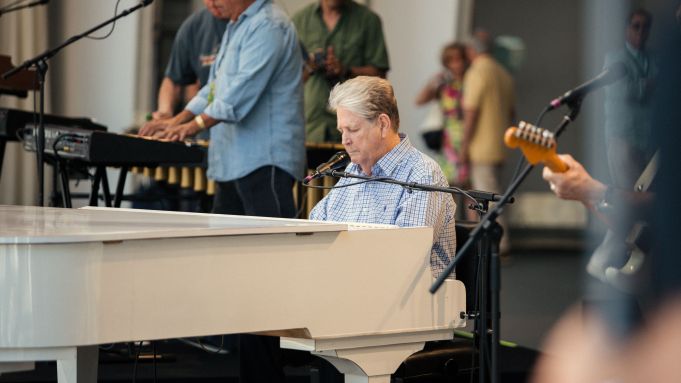
Brian Wilson‘s never had much of a poker face. And the decades, the long battle with mental illness, hasn’t changed that.
In “Brian Wilson: Long Promised Road,” the Beach Boys icon and Hall of Famer can be frank and unguarded, even when he’s drifting into “scared” and anxious. Pushing 80, he forgets things he’s just heard but remembers an awful lot from “way back when,” many timelines of “way back when.”
Gently questioned, catered to, flattered and indulged in this uplifting and sweet-spirited documentary, he’s an inspiring sight to anyone who knows what he’s been through and knows others going through mental struggles.
“Long Promised Road,” taking its title from a lesser-known tune by the band, is a celebration of the glorious third act of a performer whose struggles became legend, whose victimhood became notorious and whose “genius” no longer requires quotation marks.
As the movie makes plain, his “auditory hallucinations” and anxiety attacks manifested themselves early, forcing him to quit touring just as his band was reaching its peak. So he threw himself into “turning the studio into another instrument” in the ensemble, and in a friendly, informal rivalry with The Beatles, produced some of the landmark albums of the 1960s, famous for their aural invention and musical complexity.
He fell into a spiral as the band’s relevance faded, a deadly blend of mental illness and drugs that could easily have killed him and made his problems sad tabloid fodder.
Then, in 2004, coming out the other side of his schizoaffective disorder and the loss of confidence that his relations with the band and an album he hadn’t finished brought on, he took up touring again — with a vengeance. And the concerts became love-ins, the music he started recording again was critically acclaimed.
Filmmaker Brent Wilson (no relation) follows Wilson and a friend, Rolling Stone journalist Jason Fine, as they take us into the routines of his life these days — meals at a familiar deli, studio time with his longtime band — and on a road trip around the Southern California landmarks of his life.
And fans, from Elton John to Nick Jonas, Springsteen to legendary producer Don Was, sing his praises.
“He had an orchestra in his head,” Elton John marvels. “The Beatles had George Martin to do (orchestrations, arrangements and producing) for them. Brian just had himself.”
Brian and the band’s masterpiece, “Pet Sounds?”
“In terms of musicality,” Bruce Springsteen opines, “I don’t think anybody’s touched it, since.”
Don Was, who has worked with Wilson in the studio, sits at a mixing console and hears a little of “God Only Knows.” “I don’t know what that is,” he says, confused about exactly what instruments were used in this arrangement. “Flutes? With reverb?”
That’s the first of several jaw-dropping musical moments in the movie, that one of the most storied music producers of our time can’t figure out what this “kid” of 22-24 was doing in a 1960s recording studio back in the analog era.
A half century of 1960s cheesy to achingly candid later TV interviews are sampled here. But the clever hook this film hangs on is seeing Wilson today, with a most sympathetic interviewer — Fine — driving him to Paradise Cove and Laurel Way, to old houses and bits of Brian Lore, setting the record straight and peeling away the image, gossip and fiction from his story.
“Everyone says you stayed in your bedroom for years,” Fine says of Wilson’s most infamous crack-up. “You didn’t do that.”
“Nooo. Just a couple of weeks.”
We see Wilson’s house back in the days when he made his music room a “sandbox,” literally — with a piano parked in the middle of the sand. In another room, he kept an Arabian Nights tent.
“What’d you do in there?”
“Smoked grass, ate peanut butter and jelly sandwiches.”
We see every hint of nostalgia, pain and regret cross Wilson’s face, just sitting in the front seat of Fine’s SUV. Waves of anxiety hit him without warning.
“What do you do when you get scared?” he asks his friend.
Fine probes the relationships Wilson had with his tyrannical dad Murry and controlling psychotherapist Eugene Landy, and gets the eldest Wilson brother to open up about his late bandmate siblings Dennis and Carl. Brian tears up upon hearing Carl’s vocals on the Beach Boys collection Fine keeps on his car stereo and the film cuts back back and forth between Carl’s concert rendition of “God Only Knows” and Brian’s version in concerts in recent years.
And when Brian reveals he’s never heard drummer-surfer-brother Dennis’ “lost jewel” solo LP “Pacific Ocean Blue,” Fine treats him to a bit of it.
“Wanna hear more?”
“I wanna hear it ALL!”
“You were really good friends with Dennis…”
“Because we used to snort cocaine together. He’d buy me cocaine…I like his song, ‘Forever,’ so beautiful…Big heart.”
The concert footage here reminded me of the warm Glen Campbell documentary, “I’ll Be Me.” Wilson fills the stage with musicians, and while he’s in fine voice and right at home, you get the feeling they’re there to ensure that everything comes off perfectly — supporting, admiring, protecting and performing with him all at the same time.
The portrait that emerges in “Long Promised Road” is that of a gentle soul who’s never been anything less than an open book. When he hears from Fine that Jack Rieley, the manager who brought the band back to relevance in the early ’70s before an acrimonious split, died a couple of years before, Brian breaks down into tears.
He is effusive in complimenting prickly cousin and lead singer Mike Love’s voice, and muted in his criticism even of those who wronged him.
And you realize that maybe the film biography of a few years back, “Love & Mercy,” didn’t wholly do him justice because really, who would believe anybody could be this gentle, upbeat and a bonafide genius to boot.
Rating: unrated, drug use discussed, profanity
Cast: Brian Wilson, Don Was, Bruce Springsteen, Linda Perry, Gustavo Dudamel, Melinda Wilson, Nick Jonas, Elton John, Jason Fine
Credits: Directed by Brent Wilson, scripted by Jason Fine, Brent Wilson and Kevin Klauber. A Screen Media release.
More engrossing that it has any right to be, “Repeat” is a “what lies beyond” thriller with a touch of pathos and a decent third act twist, and a lot of quiet discussion, debate and marriage breakdown preceding it.
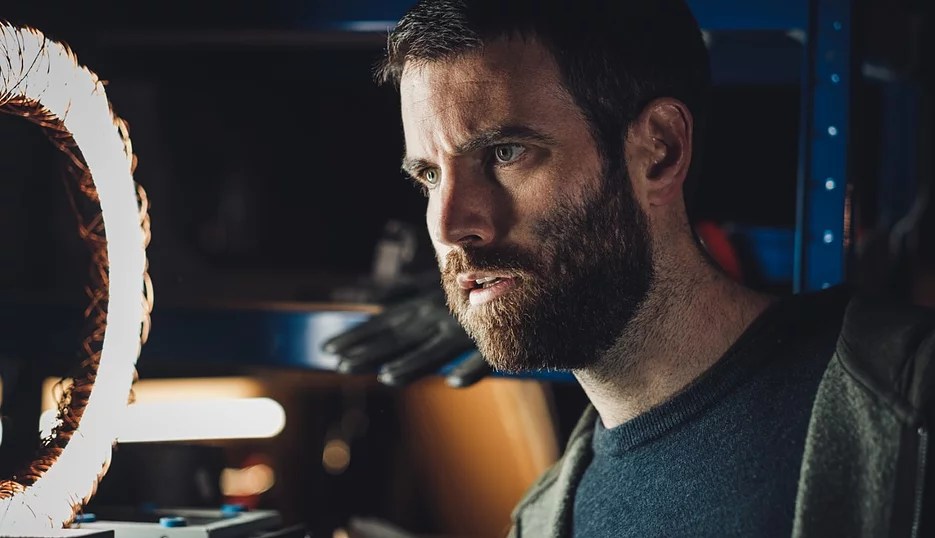
It’s a low-tech “technology” tale from the UK, about a cognitive brain researcher (Tom England) whose studies on people’s theta waves make him wonder about the static he’s hearing from this transceiver he has hooked up to his brain study coil. At some point he decides he’s speaking to the dead, that “The end is just the beginning.”
The stumbling, non-linear plot takes us from his secretive, off-campus early work — paying students to be test subjects — to a year and a half later. His schoolgirl daughter has disappeared, his marriage (Charlotte Ritchie plays wife Emily) is in couples counseling and his university is fretting that he might bring shame to them all.
Because he’s still doing the research off campus. He’s holding public “demonstrations” at theaters and pubs. And he’s letting volunteers from the audience speak with loved ones who’ve passed.
The best effect in this Grant Archer, Richard Miller film is the crackly disembodied voices of the dead-and-somewhat-confused-about-where-they-are. The cheesiest special effect is the glowing, copper-covered magneto coil that is the source of most of the magic tech.
We know, just from the whole “missing daughter” plot point, that Ryan will use his gadget to try and figure out what happened to his little girl. What we can’t guess, not entirely, is what he’ll find.
England makes an effective, emotionally-repressed workaholic lead and Ritchie isn’t bad in support.
But their chemistry is tepid, the big emotional moments are all muted and the pathos of contacting missing daughter Samantha (Ellila-Jean Wood) lacks anything remotely like that “Ghost” punch in the heart.
And without that, all you’re left with is a cheap looking gadget, some chilling sound “from beyond,” and plot twists that feel like too much of the movie that’s played out before their arrival, a pulled-punch.
Rating: unrated
Cast: Tom England, Charlotte Ritchie, Joshua Ford and Ellila-Jean Wood
Credits: Directed by Grant Archer and Richard Miller, script by Richard Miller. A Gravitas Ventures release.
“A Cop Movie” is a gimmicky docu-drama about Mexican policing, a film that invites you to see through the gimmick and find its greater truth.
But that “truth” isn’t exactly a shock. And the gimmick impacts how we relate it to that “greater truth.”
In and out of Mexico, people have stereotypes in mind when they hear that phrase “Mexican police.” “A Cop Movie” tries to get at some of the reasons for the stereotypes, the degree to which they’re true and just how bad things are for uniformed representatives of the government whose duty is supposed to be keeping people safe.
We follow around two officers, 17 year veteran María Teresa Hernández Cañas, who joined the force as a teenager, and Jose de Jesus Rodriguez Hernandez. Both took up the work as “something to do” for a living after high school. She’s the daughter of a policeman, he joined at the same time as his brother.
After opening with a grabber of a scene, Teresa showing up in a bad neighborhood where a woman in labor has been waiting for an ambulance for two hours and is then forced to assist in a child birth with “no first aid training,” Alonso Ruizpalacios’s film practically clocks out. He treats us treats us to long, somewhat tedious voice-over narration about the internal debate within Teresa’s family about her decision, her father’s tough love efforts to dissuade her, then to keep her away from his precint.
While that goes on, there are recreations of her typical night on the job — cops napping in their cruiser, every stop fraught with fear over what might go down, car breakdowns and, in a story she relates hearing from her father, routine police shakedowns for traffic violations.
Yes, bribes supplement their income.
Similarly, we hear and see the other cop, whom we learn is her partner and who goes by “Montoya,” as he tells his story of taking a job just to earn a living.
At every turn — stopping to eat Mexican fast food, stopping to ask somebody to get out of the street, taunted at a gay pride parade — we see and hear the abuse hurled their way. The disrespect these poorly-paid, under-trained peace officers endure is enough to make the “Blue Lives Matter” lobby wince in shame. They don’t know what contempt and on-the-job danger looks like, by comparison.
The flood of unresponded to radio calls, the disorganization of the office, the petty corruption, “laziness” and rank cowardice plays down to every ugly stereotype that’s been the Mexican cop’s lot, from the Federales days onward.
There’s a fear of “getting involved” that plays out most nakedly in that opening scene. Teresa approaches the address of the police call and faces a faintly menacing looking fellow standing in the middle of the street. She watches him slow-walk towards her and slowly reach behind his back to retrieve…a cell phone.
Once she’s ascertained there’s a baby coming, but no ambulance, she frantically tries a work-around to get one to show up. And sitting in her cruiser, she has to decide whether to just drive off, or stay and try to help.
And just as we’re settling into the movie’s “true stories on the beat” vibe, with characters mouthing the voice-over narration coming from the other officer, Ruizpalacios (“Gueros”) reveals his first, obvious gimmick, and sets us up for the second. Is anything we’re seeing “real?”
The movie this brings to mind is “Midnight Family,” a superb documentary expose of Mexico City’s appalling freelance ambulance services, a nightmarish look into the lives of the under-paid, under-qualified hustlers most of the city relies on to get them to a hospital in an emergency.
“A Cop Movie” suffers in comparison because it’s not a documentary, not really an expose and not exactly “superb.”
But what we see the police go through and hear of the awful conditions they endure, with anyone Indigenous who wears a uniform hearing “”stupid dirty Indian” (in Spanish with English subtitles) and worse every time they try to enforce the law, is genuinely chilling.
In a place where petty corruption and that North American policing excuse for corruption, “officer’s discretion,” rules the day, petty anarchy is the rule.
“A Cop Movie” is a slick exploration/explanation of Mexican policing. But as the style drifts from first-person, dash-cam point of view “reality” to a laughably generic foot chase through the city and onto the subway, it becomes obvious that believing what we see and hear is meant to matter here. And the gimmicks undercut that too many times along the way.
Rating, R, for violence, sex, profanity
Cast: Mónica Del Carmen, Raúl Briones, María Teresa Hernández Cañas, Jose de Jesus Rodriguez Hernandez
Credits: Directed by Alonso Ruizpalacios, scripted by David Gaitán and Alonso Ruizpalacios. A Netflix release.
The make or break moment for me in any horror movie is that first time characters are confronted with the horror, be it supernatural or simple slaughter. And that’s pretty much where “Red Pill” goes wrong.
A well-cast old-leftists-go-Red-Stating thriller in the “Get Out/Red State/The Last Supper” vein, it lands its satiric political punches (sort of) but botches the “Cabin in the Woods” basics.
Veteran stage and screen (“Madame Secretary,” “Fear the Walking Dead”) actress Tonya Pinkins packs good players into a GMC Yukon for a jaunt South, to rural Virginia for a weekend of voter canvassing. Our first-time feature director and star takes her ensemble to “the slave breeding capital of the world” and gives them lots of politically-sharp banter for the drive down.
Cracks about “Flat Earthers” and “hillbillies” and “genocide” and “Ms.-ogyny” and how “people are loyal to groups built on lies” pepper the conversation.
“Could you get inside of their heads and destroy their believes with fact?”
But once they arrive at their small town off-brand AirBnB, the horror begins and the movie sputters like a deflating balloon.
It’s Halloween, just before the election, and Cass (Pinkins), Anglo-African husband Bobby (Adesola A. Osakalumi), Lily (Kathryn Erbe) and Jewish joker Nick (Jake O’Flaherty) Latin immigrant Rocky (Rubén Blades) and Croatian Serb Emelia (Luba Mason) sing the old Gospel protest song, “Marching Up to Freedom Land,” mutter about the “white supremacy” that the past four years has brought out from under a rock and even stop to pull down a one of those racist road signs yokels have been putting up all over the rural South since Trump gave them permission.
That’s their first “red flag.” But the viewer’s seen others — this pale redhead (Catherine Curtin) making bread with drops of blood in it, the bizarre symbol on her top. Even seeing local white women wearing that symbol in matching black cult suits as they roll into town doesn’t dissuade our travelers.
The bizarre decor of their old rental house, the Melania in a Bikini aiming a gun with a laser-pointer light embedded in it doesn’t chase them away. It won’t be too long before their endless debate about the legacy of slavery and ingrained racist beliefs and systems is interrupted by the inevitable “Did you hear that?”
That make or break moment comes shortly thereafter, and the cast and director Pinkin utterly blow it.
Something unimaginably horrific has transpired before their eyes. They have an instant to process it, what probably came before it and their dire situation. And nobody reacts in a way normal humans might, which is to freak the-f out. Numbed “shock” should come later. For the scene to work, we have to be as traumatized as the victims. They aren’t, so we aren’t.
Moments like this call for close-ups and quick edits, stunned, screaming faces intercut with violence, a “jumpy” camera to convey the mania of the moment.
“Red Pill” gives us bupkiss. And while there are later moments that get closer to the mark, most of the “pick-them-off, one-by-one” tropes come off flat.
The eye-rolling over-the-top finale doesn’t atone for these shortcomings either.
“Red Pill” — it cleverly takes its title from “The Matrix,” the “red pill” that conveys a willingness to learn the ugly truth about the world — has a decent cast, a potent message and a promising set-up packaged in a movie without much that passes for a decent fright about it.
Rating: unrated, graphic violence, profanity
Cast: Tonya Pinkins, Kathryn Erbe, Adesola A. Osakalumi, Luba Mason, Jake O’Flaherty and Rubén Blades
Credits: Scripted and directed by Tonya Pinkins. A Midnight release.
Everybody’s a critic, or so I’m often told. So the pre-meme old saying goes. Especially when it comes to movies. On any given weekend night in AnyCinePlex America, you can hear the debates in the lobby, the restrooms or walking to the parking lot.
But what separates the loudest gal/guy at the end of the bar’s opinionating from an actual film review? What goes into the process of forming an opinion and stating that opinion in a way that might win an argument with that omni-present, half-baked chunk of the movie-going public content to say “It stinks” as if that’s all there is to it?
As this question comes up more often than you know, let’s address it.
Film reviewing is opinion writing, a form of analytic essay which you probably had to practice in school in one form or other. It takes in rhetoric and persuasion, starts with opinion-forming and ends with opinion-defending in written form.
Here are some thoughts from a guy whose first published review was for “Rocky IV,” and who’s been doing this since high school. That would be me.
Start here — you see a movie, decide whether or not you like it, and sit down to make your case.
Consider the originality of the story, believability or at least entertainment value of the characters, the quality of the dialogue, the polish of the production and pictorial sophistication of the blocking, lighting, framing, shooting and editing of the images put on screen.
Your opinion is just that, “subjective” opinion. But you’re going to have to defend it. That’s why serious critics take notes, jotting down moments that work and why they work or don’t work, casting decisions that seem off, or lines of dialogue that are original and aptly hardboiled, witty or moving, or the screenwriter’s inability to manage that. I’ve sat next to Pauline Kael at the New York Film Festival and behind Roger Ebert at the Toronto one. They, like me and most of the folks I know who’re good at this, took notes and if we’re still among the living, continue to do so.
There are a lot of ways to organize a review, and you’ll find most reviews written by journalists (a shrinking minority on Rotten Tomatoes, these days) follow this “news story” formula.
“Tell’em what you’re gonna tell’em, tell’em, then tell’em what you just told them.”
You lead off with a general descriptive statement and add an up-top value judgement (your opinion) of the movie. Relate a rough sketch of “some” of the plot. You don’t want “spoilers,” but the reader wants to know what the film is about, so you tell them. Plot points and characters introduced in the first and the early second-act (midway) are fair game for inclusion in a review. The overall theme of the film, the reason the story is compelling, etc., is all a part of that.
You’re setting up the conflicts between characters — the lovers who haven’t gotten together, and some of the most obvious obstacles to that happening; the dynamics of a quarrelsome group; the demands of a “mission,” the warring sides in any sort of debate, tug of war or real war.
You finish by summarizing your conclusions. The last third of a review is where your value judgements and the reasons for them are laid out.
And then you try to leave the reader with the sense that it’s all a part of a whole, cohesive in structure, maybe echoing lines from the lead paragraph for your hopefully-pithy finale.
If you’re new to this and want your review to “hold up in court,” rough out an outline for what you want to accomplish, the evidence points you plan to bring up and take your first shot at the “big finish” you want to end with. Professional academic writers from an essay writing service advise on writing an outline for your critical analysis. You can do this on your notepad, or type out your bullet points in your draft on screen, remembering to delete them or merely expand on them, point by point, as you work towards that final draft.
Then you proof-read. It’s not just radio and TV writers who read their copy aloud to see how it sounds, not just how it scans.
Read any blog, website, TV station or network’s page or even your favorite newspaper or magazine and you will see errors. Typos, run-on-sentences and the like are the easiest way for a reader to attack your work. Copy editors are an endangered species everywhere, but there are online editing and essay-writing services that go way beyond the foolishly-fallible “spell check” that can fix your grammar and point you to ways of better organizing your thoughts and arguments.