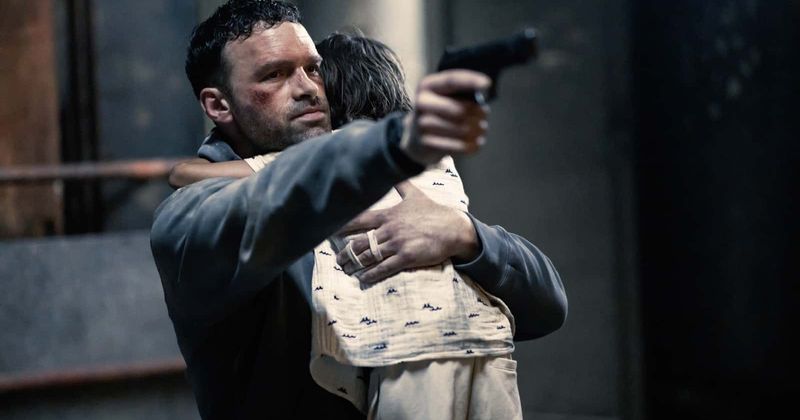
This “Columbo” styled thriller — we see the killing(s), and wonder if the cop (Hamm) or the relative (Fey) will figure out who did it, and why — co-stars Nick Muhammed and comes our way June 16.
I think it was directed by Mr. Hamm’s “Mad Men” co-star John Slattery. Yup. Just looked it up. It’s him. Cool.
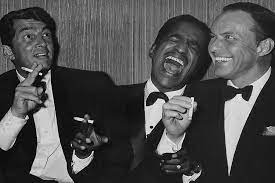
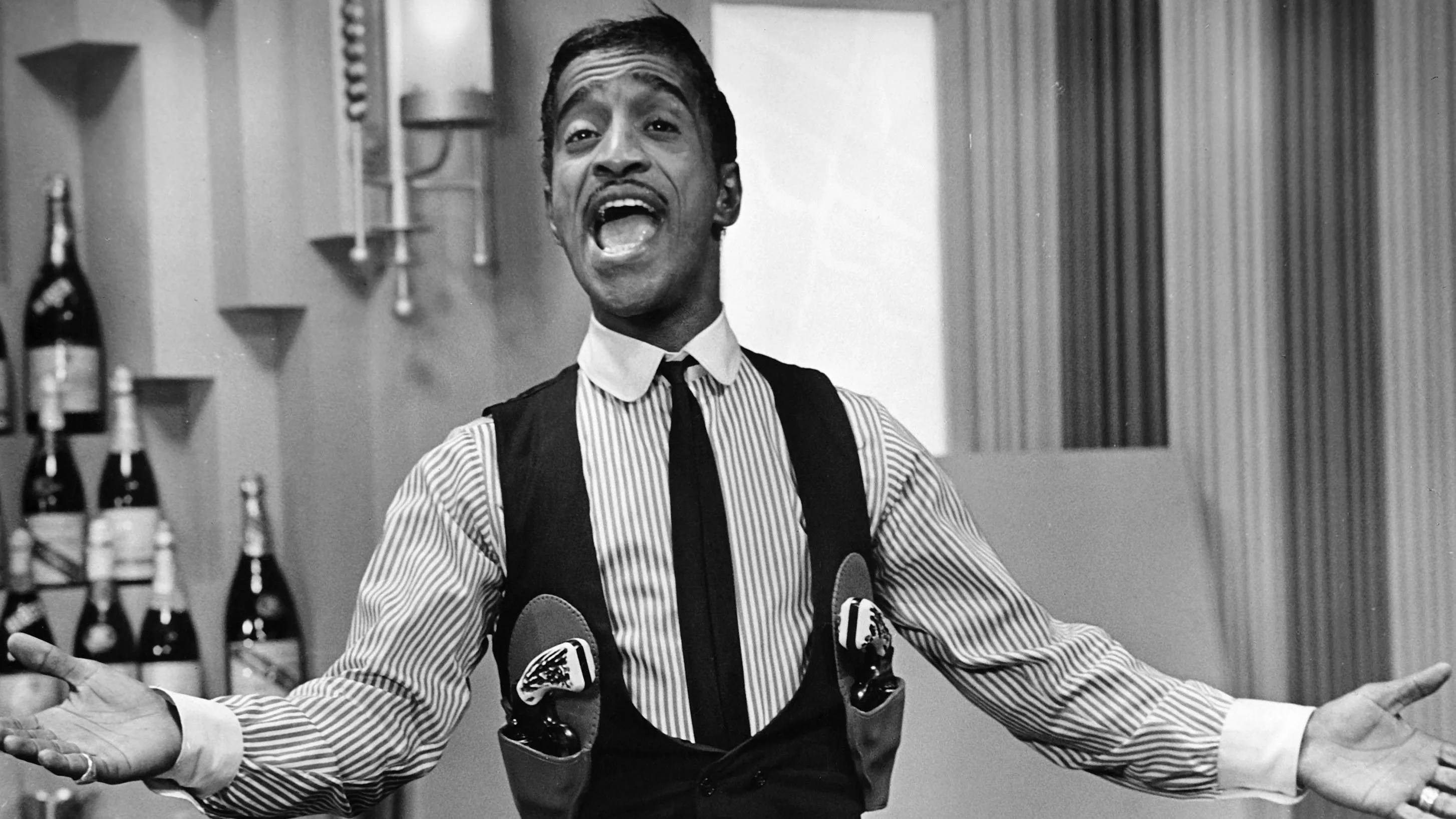
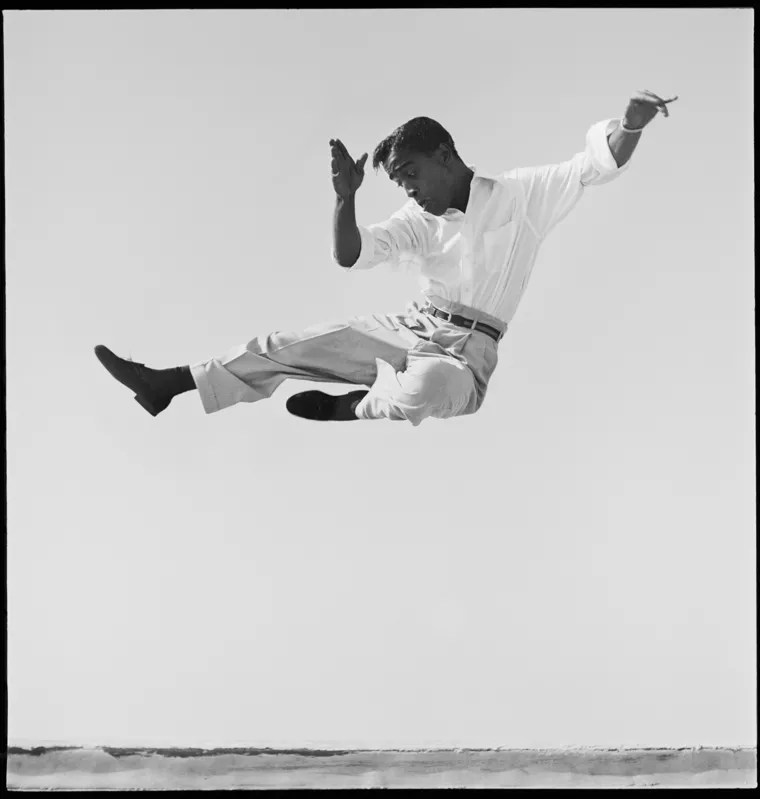
The image might be the way most of us remember that consummate showman, the entertainer’s entertainer, Sammy Davis Jr.
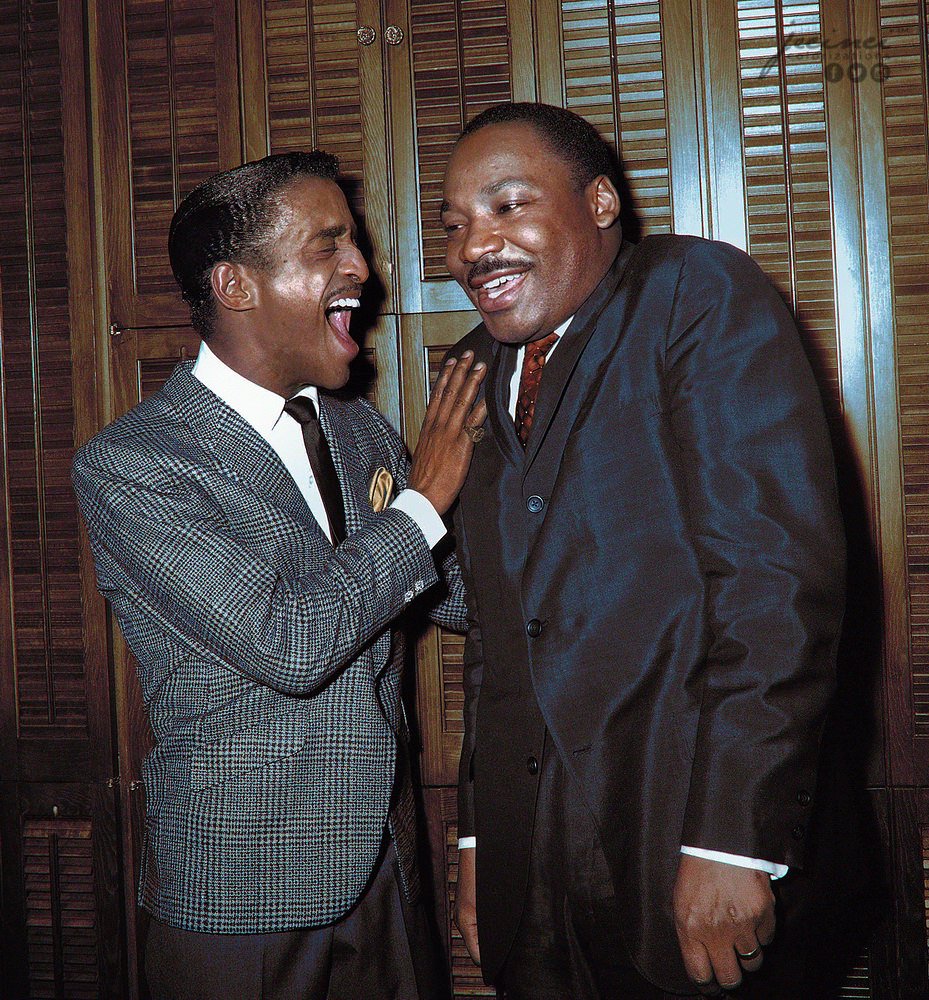
He’s laughing, often as not surrounded by white actors, singers, comics or politicians — some of them his peers — most of them less dazzling in at least one of the singer/dancer/actor and funnyman’s proficiencies.
Somebody — a fellow Rat Packer (Sinatra, Dino, Lawford or Bishop), Nixon, this comic or that Civil Rights icon — has said something funny, maybe only mildly amusing, maybe faintly/comically racist in the case of his Vegas/”Ocean’s 11″ Pack. And Sammy D’s laugh would consume his face, doubling him over, eyes closed, making you think you’d missed the best joke or quip this showbiz legend had ever heard.
But if you listen to audio of such occasions, as Yale professor and cultural historian Matthew Frye Jacobson did, you won’t “hear” that laugh. It was, often as not, a “silent laugh,” a bit of acting, a face Davis put on.
The man who integregated multiple professions, broke down cultural barriers in scores of ways, even by dating and marrying white women, but who grew up in the Jim Crow era that wasn’t merely limited to the South, was faking it to get by, to give white America the sense that he and people like him could laugh all the ugliness off, and that white America should catch on to the joke that racism has always been.
Jacobson’s academic “cultural history” of Davis through “The Long Civil Rights Era” (starting earlier than earlier historians suggested, and ending perhaps a bit later, if at all) puts the former child performer who performed his way to “living legend” in context. He parks Davis within his time as well as ahead of it, disparaged by the black community for going along to get along, clowning with famous liberal friends who made pushing the racial envelope — mostly at Sammy’s expense — part of their act, cuddling up to Nixon, preaching and believing with all his heart that his talent would render race irrelevent.
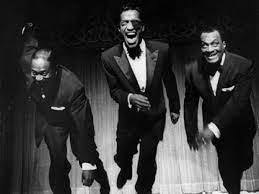
The book is a dense and heavily-notated history of Sammy’s life, parsing his biography and his spin on a life that saw him in blackface (perhaps posing as a dwarf, to get around child labor/welfare and education laws) as a tyke, nurtured and protected by the trio that his father, Sammy Sr., and Will Mastin sang, danced and joked across America, then a nightclub, recording artist, Broadway and even film star by the 1950s.
Jacobson quotes extensively from Davis’s many TV, print and radio interviews over the years, his “as told to” autobiography, “Yes, I Can,” and a revealing and authoritative profile that he sat for with “Playboy” journalist and future “Roots” author Alex Haley, who co-authored “The Autobiography of Malcolm X.”
Davis, who says he first faced real racism when he was in the Army during World War II, believed pretty much to the end of his days “that if I can get ‘big’ enough, my color” wouldn’t matter. As Jacobson points out, time and again, the evidence almost always proved otherwise.
The object here is to rescue Davis from the racial/cultural dismissal that attached itself to his self-absorbed (a showbiz failing) clowning, laughing-it-off persona, a dismissal that emerged in the 1950s and was chiseled in stone by the time he embraced the racist, corrupt, power-mad and “Southern Strategy” deploying Richard Nixon in 1972.
Davis wore variations of that “Uncle Tom” label for much of his life, which he resented. As he’d integrated Vegas, arm-twisted his way into busting down the seriously-segregationist hotel policies there and elsewhere and pushed a color-blindness in his romantic life that chipped away at the state-by-state “miscegenation” laws against interracial marriage, he felt he deserved better. He’d been a black Hollywood and recording industry pioneer, not just in representation but in the sorts of roles he played. Jacobson suggests Davis had a “resentful” point about his belittling critics.
His life wasn’t as unmessy as Poitier’s or Belafonte’s. Reviewing the new George Foreman biopic, “Big George Foreman” just after finishing this book, it strikes me that Davis was Foreman to his more lionized by his black peers Poitier and Belafonte’s Muhammad Ali. Foreman was branded as a race traitor, tone deaf, all of that, largely because he wasn’t Ali, because he’d waved an American flag after winning the boxing gold medal at the 1968 Olympics. He was and is dismissed as both “establishment” and a kind of a clown, the black boxer white America preferred, and later in life learned to love.
So it is with Davis — a palatable, lighthearted and non-threatening black face in an era when activists were giving American white supremacist politics, policies and cultural inequities their first serious challenge.
I used the words “academic” and “dense” in describing Jacobson’s book with reason. He dives into black activism, black cultural philosophy (James Baldwin is frequently quoted), theories behind what drives racism, the works.
But thorough as it is, it’s a dry read, with some passages taking the reader through pages when Davis himself isn’t mentioned as this or that racial law and practice is dissected and peers and those who preceded Davis (Bill “Bojangles” Robinson, most famously) are given biographical sketches and the history of tap dance or minstrel shows or the African American diaspora or Jim Crow are explored.
It helps to have read at least one of the other Davis biographies or his autobiography before plunging into “Dancing Down the Barricades.”
But Jacobson zeroes in on the essence of the man, the “I only cared about me” narcissism/egoism that drives most entertainers, and details a more integral role in the Civil Rights Movement than most give Davis credit for.
After all, his mere presence in America’s clubs, concert halls, casinos, cinemas and living rooms was something Martin Luther King. Jr. and others appreciated for what it was — groundbreaking, “barricade” breaching.
And the same year Davis gave Nixon that ill-advised hug, he gave Archie Bunker the disarming, humiliating and hilarious kiss that rocked America and underscored the early messaging of Norman Lear’s landmark comedy.
Racism, and racists, are laughable. Watch me laugh at them.
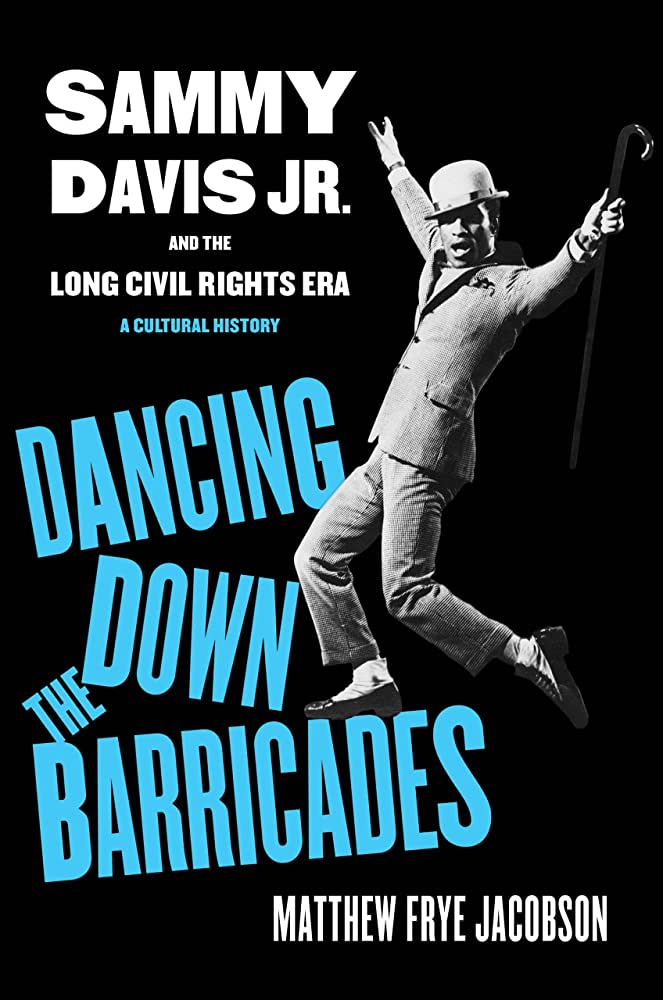
“Dancing Down the Barricades: Sammy Davis Jr. and the Long Civil Rights Era, A Cultural History.” By Matthew Frye Jacobson. University of California Press. 314 pages, with index. $20.95
“Big George Foreman” is a movie that mimics its title character to a T. Like the fighter himself, it’s big and bloated and ungainly on its feet, but with a gentle charm that made this boxing legend, owner of the greatest overage comeback in sports history, a folk hero.
Even the title veteran director George Tillman Jr. (“Barbershop,” “Notorious,” “Mudbound”) has to work with — “Big George Foreman: The Miraculous Story of the Once and Future Heavyweight Champion of the World” — is nothing if not lumbering.
But this faith-based drama hangs on an absolutely fascinating figure, a Goliath-sized puncher who won big, then lost fights and lost his way, found Jesus — “I didn’t know he was lost, George” Muhammed Ali joked. — and struggled to make a difference in his hometown, Houston. He staged a wildly improbable, overweight and over-age comeback, and became beloved because he took it all with good humor as he transformed into the greatest electric grille salesman in history.
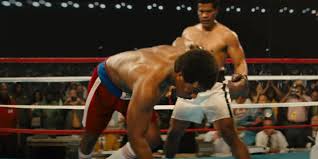
The formidable Khris Davis (“Detroit,” “Judas and the Black Messiah” and TV’s “Atlanta”) transforms himself into the scowling brute of Foreman’s youth, an Olympic underdog who took home a gold medal and strutted through his neighborhood wearing it, a very young heavyweight champ and a young ex-champ when he let Muhammed Ali (a very charismatic Sullivan Jones) talk him into staging their title fight in Kinshasha, Zaire, in a ring hemmed in by loosey-goosey rope-a-dope ropes.
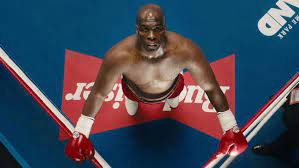
Davis lets us see the bulky, cuddly Dad that Foreman became, someone who gave up his rage, turned to preaching, lost his fortune and staged a comeback to retrieve it and continue his ministry.
Tillman’s film takes us back to George’s violent, misdirected youth (Austin David Jones plays him as a tween) teased and held back in school, with his pious waitress mother (Sonja John, fierce) trying to control his fury and barely feeding herself and her four children.
Even when he’s a success, she reminds him he hurts people. “You’re better than this.”
We see the young George still clinging to violence, rolling drunks with a pal until one drunk turns out to be an undercover cop. He gets a second chance when he enrolls in one of the Great Society programs, Job Corps, where he might struggle to learn to become an electrician, but an understanding counselor (Oscar winner Forest Whitaker) takes him under his wing and turns him into a boxing champion.
He is depicted as a flawed and very human man-child, waving an American flag in the ring at the 1968 Olympics when much of Black America, and even athletes at those Mexico City Olympics, were protesting or in open revolt. He gets famous and cheats on his gorgeous first wife (Shein Mompremier), lets Ali bait him into punching himself out in the jungle heat of Africa, and experiences a religious locker room epiphany that might have been a concussive, seizure reaction to another beating he’d just suffered in the ring.
And on and on this life has gone, changing focus, preaching from a pickup truck bed and starting a youth center to get Houston’s kids off the streets, losing all his money (John Magaro plays the old friend who you just know is going to botch investing) even as he finds a new love (Jasmine Matthews) and a determination to get back in the ring to balance their books and fulfill what he and his wife see as a Mission from God.
This saga could have easily become a comedy, and someday, perhaps someone else will take that approach, as Foreman’s TV talk show guest/grill pitchman persona is nothing if not goofy.
But they went instead for an upbeat faith-based emphasis in the story, which is both uplifting and something of a handicap as it helps make this feel over-long and yet incomplete.
How the folks who bought rights to The George Foreman Grill from him didn’t show up at the production office with bags of cash begging to have that part of the story in this movie is a mystery.
The film never lets you forget it’s financially malnourished, and Davis, Whitaker and Magaro are the only “names” in the cast, there are all these semi-successful impersonations of Joe Frazier and sportscasters from Howard Cosell to Jim Lampley, and the most cut-rate “Tonight Show” recreation ever.
But the fights are first rate, not “Creed” or “Raging Bull” or even “Rocky” showy, but brutal, with Tillman making us hear and feel Foreman’s freight-train punches on bodies or punching bags.
The movie never quite clears that “mixed bag” mark. But as faith-based entertainment, it’s uplifting and lightly inspiring. As a sport drama, it tells a story that made generations stare on in disbelief at every “THAT just happened” moment. And as a flattering, feel-good portrait of a guy who overcame much, made big mistakes, lost confidence and had his crisis of faith, someone who kept plugging away and just got more lovable in the process, it’s hard to knock.
Rating: PG-13 for some sports violence, sexual situations
Cast: Khris Davis, Jasmine Matthews, Sonja John, Sullivan Jones, John Magaro, Shein Mompremier, Lawrence Gilliard Jr., Sam Trammell and Forest Whitaker
Credits: Directed by George Tillman Jr., scripted by Frank Baldwin, Dan Gordon and George Tillman Jr. A Sony Affirm release.
Hollywood’s idea of a “Top Gun” is a somewhat short action tyro who isn’t shy about hitting the gym, driving his motorcycle without a helmet or doing his own stunts.
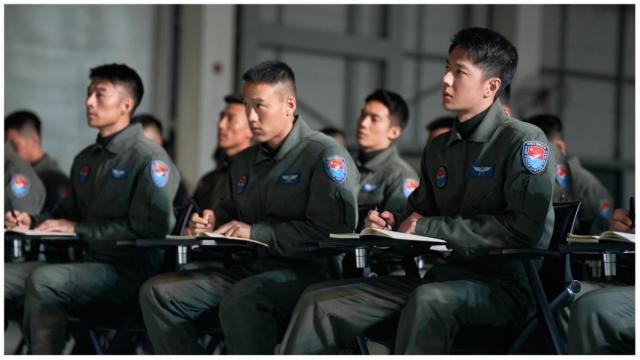
Some of China’s top guns, cast in “Born to Fly,” are buff. But most are willowy enough to seem right at home in a boy band.
But they’re just as patriotic, just as jingoistic and just as spoiling for a dust-up with the unnamed “enemy” as the testosteroned team that attended the U.S. Navy’s “Top Gun” school, way back in the movie-mad ’80s.
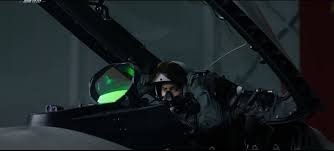
“Born to Fly” is a straight-up “Top Gun” Chinese knock-off — the original, not “Maverick” — with hints of “The Right Stuff” and every other movie about test pilots testing themselves and each other as they take new airframes up into “the wild blue yonder” to see if they’re worthy.
It’s centered around Lei Yu, a frontline pilot summoned to test pilot school after getting handed his lunch in one of China’s many airspace/seaspace confrontations with “foreigners” over The People’s Republic’s expansionist ideas of just what constitutes “Chinese jurisdiction.”
This seems to fall somewhere between invading Tibet and Soviet and later Putin’s Russia’s idea of regions of “influence” on the international provocation scale, the thinking being “It’s called The China Sea, it’s ours, all the way around Taiwan and right up to the beaches of the Philippines.”
The U.S. Navy and its pilots, as this bellicose Chinese flag-waver implies, aren’t accepting that.
But Lei Yu will do his patriotic duty and hope to get a new fighter to take back to those “front lines” for his “revenge” on the foreigners.
As the film stars a big name in Chinese cinema, Wang Yibo, with other recognizable faces in the supporting cast, this was poised to be a blockbuster in the Motherland last year. But it was yanked from release. Speculation about why has ranged from the benign “star’s sponsors” stopped it to the quality of the effects (which are actually excellent) and performances (no issues there) to more geopolitical.
Did the government want it suppressed so as not to dial up tensions with “foreigners,” for peaceful reasons, or more sinister ones given China’s oft-expressed designs on Taiwan?
Beyond my paygrade to say. But I can say the movie’s definitely got A-picture qualities, even if those are saddled to a tepid, nationalistic agitprop screenplay.
Lei Yu, his comrades, his commanding officer and his “Golden Helmet Award” winning rivals are all trying to get China’s next-gen jet up to the quality of “the enemy’s” “fourth gen” stealth figher.
They will train, be tested on reflexes and nerve, “push the envelope” (in Chinese with English subtitles), “punch-out” every time when this new engine fails. The Master Designer (Tian Zhaungzhuang) and his crew hope that engine and this new jet will allow China to “catch up” just at the moment jet fighters seem obsolete.
See “Russia vs. Ukraine,” rounds one and two.
What interested me here was the contrasting cultural attitudes in military service as depicted in essentially two different versions of the same general narrative. The American one is egocentric, hot-dogging and nihilistic. And there are hints of that in the Chinese corps, too, but open willingness to sacrifice ego for the greater good is preached and acted-out by the characters.
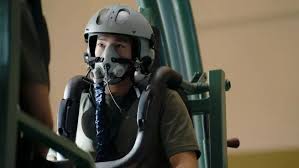
Lei Yu “punches out” too quickly during a two-seater jet flame-out, and after being scolded for losing “data” even though every trained pilot’s life is “precious,” he is sentenced to the parachute hanger, learning the meticulous “one parachute, one life” work of the man who runs it, grasping the big picture, the stakes and even having a brain storm about jet design as he does.
There are scenes of Big Red Chinese flag pomp and ceremony — graduating into the class, visiting the memorial to fallen (Test?) pilots.
Other than that, “Born to Fly” looks and sounds like a Hollywood knockoff, from its action sequences to the Western rock guitar flavor to the music in some scenes, and a majestic score that quotes or plagiarizes Aaron Copland’s “Fanfare for the Common Man.”
And there are a lot of seriously limp moments of confrontation, soul-searching and the “romantic relationship” (Zhou Dongyu plays a doctor testing the pilots) that is so chastely avoided.
I’ve seen just enough recent Chinese cinema to see “Born to Fly” as a bit cheesier than most exports, but only on the edges of the rank propaganda of some Chinese war films, which span most wars China has fought, from ancient times to Korea.
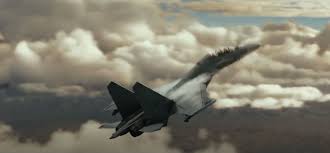
Technologically, the flight scenes — combining some real in-flight footage with pretty good CGI — is light years ahead of that cartoonish Chinese Bruce Willis WWII air combat picture “Air Strike” which I watched on TV just long enough to grimace.
The melodramatics are a bit on the thin side, which makes it a little worse than either of the “Top Guns” just in terms of story. And the real in-flight footage of those two Hollywood enterprises is on another level thanks to Cruise’s commitment to tactile reality in his performances.
But I don’t doubt “Born to Fly” would have sold plenty of tickets had it been released in the market it was made for. Geopolitically, the jury’s still out on whether or not that would have been a good thing.
In any event, it’s just as bad as “Top Gun,” for a lot of the same reasons, and earns exactly the rating I gave that “classic” film when I reviewed it on the cusp of the release of “Maverick.”
Rating: unrated, fisticuffs, blood
Cast: Wang Yibo, Hu Jun, Yosh Yu, Zhou Dongyu and Tian Zhuangzhuang
Credits: Scripted and directed by Liu Xiaoshi Liu. A Well Go USA release.
It’s safe to say that “Guardians of the Galaxy: Volume 3” is an emotional roller-coaster, a fan-friendly ride through “the feels” that puts our motley, space-traveling crew in peril and revisits old trauma as it does.
If you’re the least bit attached to these characters, you can’t helped but be moved. A little.
But at some point, as we revisit “Volume 3’s” major subtext — grimly cruel animal testing — for the umpteenth time, the viewer is forced to realize that a roller coaster is just a piece of engineering designed to deliver frights and breathless simulations of near-death-experience dangers for our entertainment.
At some point, these suffering, doomed and dewey-eyed digital critters are just ham-fisted manipulations that aren’t so much moving as triggering. All that’s missing is Sarah McLachlan singing underneath pictures of neglected and abused puppies, the only “on-the-nose” song missing from the usual “Original Hits, Original Stars” soundtrack.
The laughs are fewer and farther between as writer-director James Gunn bids this career-making franchise farewell and tries to transport his jokes-that-take-no-prisoners tone over to Warner Bros. and the DC comic universe. And he’s decided to leave Marvel with a Rocket — the violent, wise-ass and tech-savvy raccoon who doesn’t think he’s a “raccoon” — origin story.
No, that was never going to be pretty.
Star Lord Peter (Chris Pratt) has crawled into a bottle since his ex-assasin love Gamora (Zoe Saldana, Best in Class, Best in Cast) died and came back all cynical and all business with no memory of ever being in love with the dorky human whose taste in music is locked in the early ’80s.
Hurled into a new fight against a new caped, gilded superfoe (Will Poulter) to save Knowhere, the rustic spaceport and Guardians HQ, Rocket gets badly hurt. Nebula and Mantis (Karen Gillen and Pom Klementieff), Peter and the crew realize for the first time how “engineered” he is, and that Rocket can’t be saved without getting around some intellectual property-protecting bomb that was implanted in his gut.
Drax (Dave Bautista), re-grown Groot (the voice of Vin Diesel), a seriously-upset Peter and the Guardians get Gamora’s help with her space-faring criminal pals known as Ravagers (Sly Stallone plays their leader) so that they can infiltrate the headquarters of the corporation that made Rocket the way he is.
An icky “bio engineered” portal that looks like the offal that’s ground into hotdogs must be penetrated, a custom-designed planet called “Counter Earth,” filled with beasts bred and manipulated into wild-boar people, goat folk and the like must be visited and one of the most interesting and menacing Marvel villains this side of Magneto, The High Evolutionary (Chukwudi Iwuji of TV’s “Peacemaker,” “The Split” and “Designated Survivor) must be bested to secure the means of saving “my best friend,” Peter insists.
“Second best,” Drax always corrects him.
Just make sure you don’t fall into a trap, kids.
“It’s not a trap. It’s a STAND off!”
There’s one truly dazzling fight among the many shoot-outs/punch-outs/space battles of this quest, an “Old Boy” inspired blast through a corridor packed with minions, soldiers and foes and lots of slo-mo flips, shots, punches and martial arts and wrestling moves.
The always-amusing fanboy fave Nathan Fillion plays a meat-suited guard amongst the bad guys, a rare light touch added to the generally glum proceedings.
Gunn’s story is making some sort of point about reaching for “utopia” in all the inhumane and cruelly wasteful scientific ways, about human failings and foibles that can’t be engineered away any more than trauma, lost love or simple regret can.
That’s a vague, fumbling over-reach in an action comedy that is never more than five minutes away from a fresh blast of classic rock — whose boundaries are stretched to include RadioHead, The Beastie Boys, The Mowglis and The Flaming Lips here — and never more than 10 minutes away from its next grim, seriously bummer baby Rocket flashback.
We all have our own parameters for how and when we’re willing to be manipulated by a film, and diehard fans of this goofy, jokey trilogy may have more tolerance for this than me. I found the yanking of the heartstrings glib and the attempts at cheap sentiment just that — cheap.
These pictures have grown less cute, less charming and less fun with each passing installment, and this one just drags as it meanders towards its over-hyped lump-in-throat finale.
But you have to respect players who deliver performances that register underneath the makeup, prosthetics and effects, with Klementief, Iwugi and Fillion standing out.
And Saldana’s auditioning for better roles by transforming Gamora into someone we haven’t seen in the earlier films, someone not the least bit invested in playing the “spitfire,” ready for a “meet cute” with a lead character/leading man whose appeal she forgot and, after three movies, we can excused for forgetting as well.
Rating: PG-13 for intense sequences of violence and action, strong language, suggestive/drug references and thematic elements
Cast: Chris Pratt, Zoe Saldana, Karen Gillen, Pom Klementieff, Dave Bautista, Will Poulter, Sylvester Stallone and Chukwudi Iwuji, with the voices of Bradley Cooper, Maria Bakalova and Vin Diesel.
Credits: Scripted and directed by James Gunn, based on the Dan Abnett and Andy Lanning Marvel comic. A Marvel Studios release.
“AKA” is a solid if generally unsurprising terrorist thriller built around a French undercover killing machine with “particular skills.”
“Lost Bullet” actor turned star and screenwriter Alban Lenoir leans on genre formula tropes and thriller cliches entirely too much in this somewhat sluggish outing, directed by “Lost Bullet” and “Lost Bullet 2” helmer Morgan S. Dalibbert.
We meet our hero as he’s being hustled into a remote terrorist hideout in the mountains of Libya, one of those cave lairs that make you wonder “Who makes, sells and ships them their pre-fab hostage-holding prison cells?”
He affects an escape through that classic French “Papillon” use-your-bum trick, reassuring a non-government organization aid worker/activist being held that she’s “going home.” Our unnamed assassin then slaughters every AK-47 wielding Arab in sight.
But something about the mission seems “off the books,” and when this fellow gets home, we see Adam Franco, as we learn he’s called, commissioned to do more “unofficial” and unauthorized work. His country, or some folks in it, need him to track down a Sudanese terrorist (Kevin Layne) who blew up something in Paris and is sure to blow again.
Franco’s boss (Thibault de Montalembert) orders him to infiltrate a French gang whose leader (Éric Cantona) is cozy with this ex-smuggler/terrorist.
Let the genre conventions commence!
This time Franco will use his own background — something happened in his childhood that made him infamous, and he later spent years in the French Foreign Legion — to join Victor’s gang, make himself useful with his “particular skills” and throw his weight around as he hunts for clues.
Pee Wee (Saïdou Camara) is who he’s paired up with in the gang. Victor’s wife (Sveva Alviti) who runs a club/brothel must be impressed. The teen daughter (Lucille Guillaume) must be tolerated. And their bullied little boy Jonathan (Noé Chabbat) must learn to idolize this walking muscle who is now his driver, protector and boxing instructor.
Of course there’s a gang war that Franco is walking into even as he’s supposedly frantic to find this terrorist who is expected to strike again. And there are government intrigues that hint at why this operation is both hush-hush, with more than a whiff of “extra-legal.”
Lenoir is a perfectly credible man of action, unlike all these thrillers that have Neeson, Gibson, Stallone or Denzel throwing haymakers well into their AARP dotage. The fights are well-choreographed, the shoot-outs well-staged, if seemingly a bit arbitrary.
But the incidents, relationships and even the intrigues here are all over-familiar tropes, which prevents this competently-made thriller ever rise to the level of engaging.
Rating: TV-MA, graphic violence
Cast: Alban Lenoir, Sveva Alviti, Kevin Layne, Éric Cantona, Saïdou Camara, Thibault de Montalembert and Lucille Guillaume
Credits: Directed by Morgan S. Dalibert, scripted by Morgan S. Dalibert and Alban Lenoir A Netflix release.
The hardest hurdle for any new take on Peter Pan to overcome is simply justifying its reason to exist.
There have been many Peters, many Wendys and many Captain Hooks. We’ve seen the story told this way and that, from most any point of view you can think of, and even seen the original story of the J.M. Barrie play and the animated version has been a fixture for going on seven decades now.
But here’s Disney serving up “The Boy Who Could Fly” and the Girl Who’s Really Good at Telling Stories once again as “Peter Pan & Wendy.” Sadly, you can make the case that this is one of the better “bedtime story” versions of this tale, as it’s perfunctory enough to be sleep-inducing.
We have a good Wendy, brought to lively life by Ever Anderson of “Black Widow” and one of her mother Milla Jovovich’s “Resident Evil” outings. Jude Law makes a ruthless enough Hook, who has his brooding, vengeful character “explained” via back story almost as thoroughly as the infamous Robin Williams/Julia Roberts/Dustin Hoffman take on “Hook.”
Yara Shahidi makes a perfectly pixiesh Tinkerbell and Alyssa Wapanatâhk is a fierce and fleshed out representation of the Native American girl Tiger Lily. Peter (Alexander Molony)? He’s a bit bland, and almost a non-entity in this take on the tale, which leans heavily on the “never growing up/growing old” thing as its overriding theme.
Asking Peter to explain his age-old emnity for Capt. Hook is usually explained away the way Peter dismisses the question here, “Because he’s a a pirate and I’m Peter Pan.”
“Pete’s Dragon” director and co-adapter David Lowery’s A-budget picture has terrific sets, a full on pirate’s brigantine and some lovely effects. The cave and the Canadian Maritime locations — Newfoundland and Labrador — are gorgeous.
The casting is as diverse as you might expect these days, and even The Lost Boys include girls, lots of them. “Representation” is always a good thing, but it cannot be the only thing, the main reason for bringing us a new “Peter Pan.”
Aside from reminding us that Peter Pan was the original ageist as well as being the reason “Peter Pan Syndrome” is totally a thing, it’s hard to figure out why we’re here. They’ve dispensed with the storytelling Wendy did at home, inspiring her brothers (Joshua Pickering, Jacobi Jupe) to take up Neverland-style sword fighting, with old-enough-to-go-to-boarding-school Wendy joining in.
Peter’s supposed to overhear a story and decide Wendy must come with him back to Neverland. He must have caught her act earlier in this rendition. Wendy’s urged to take steps toward adulthood by her mother, and as there’s no pushback of “romantic” interest in Peter (younger, shorter), that hangs over the film as its Big Theme, even if it’s no Big Thing.
There’s a smattering of music. Pirates do like the sing, even when Jim Gaffigan is our reliable first mate Smee.
And Molly Parker, playing Mrs. Darling, sings a bit of lullaby that Anderson repeats that is almost as good as anything in the Disney “Peter Pan” animated musical.
But the action beats are kind of half-hearted, and that’s the only time “heart” came to mind when watching this emotionally flat, somewhat dull attempt at bringing Peter to a new generation and keeping Disney’s brand attached to the 100-year-old-plus intellectual property dreamed up by J.M. Barrie.
Rating: PG- squeaky clean
Cast: Ever Anderson, Alexander Molony, Alyssa Wapanatâhk, Jim Gaffigan, Joshua Pickering, Jacobi Jupe, Yara Shahidi, Molly Parker, Alan Tudyk and Jude Law.
Credits: Directed by David Lowery, scripted by David Lowery, Toby Halbrooks, based on the play by J.M. Barrie. A Disney+ release.