Movie Review: African American Actors make Orson Welles a legend via “Voodoo Macbeth”

Movies about the early career of stage and screen “wunderkind” Orson Welles are, by definition, for fans. And one thing fans are always going to insist on is casting a convincing version of the charismatic, sonorous stage and radio tyro of the ’30s and ’40s who became a film legend of the ’40s-70s, Orson Welles. 

You don’t make a “Night That Panicked America” without a Paul Shenar, a “Mank” without Tom Burke or roll cameras on “R.K.O. 281” without someone of Liev Schreiber’s stature, voice and caliber. “Cradle Will Rock” won’t rock without an Angus MacFadyen as Welles, and if you’re really lucky, you land The Gold Standard, Christian McKay if you’re making a movie titled “Me & Orson Welles.”

The only excuse for not getting a properly magnetic Welles would be if you’re making a “student film.” Even the best of those don’t attract top drawer talent, and they generally aren’t released, with cause.

Voodoo MacBeth” is a USC student film version of the theatre event that gave the “wunderkind” his “boy wonder” nickname. It’s an ambitious account of how Welles was handed his big break, a chance to direct a Federally-backed make-work-for-actors during the Depression production of Shakespeare’s “Scottish Tragedy.” Working with an all Black cast — because The New Deal recognized that Black actors need to work, too — Welles turned “Macbeth” into a Haitian voodoo fantasy set in the early earl 19th century.

The film never comes close to catching the lightning in a bottle this famed production became. It rubs much of the edge off many characters (especially Welles), lacks spark or anything resembling a sense of occasion, and is — at least — historically defensible even as it takes many liberties with the “real” events.  

Ten student directors and eight student screenwriters and a cast of mostly little-known players take their best shot at this touchstone event in 1930s theater and in the career of Welles. They fall well short of the mark. Yes, this “Voodoo” film won awards at mostly lesser known film festivals, so the idea of releasing it theatrically isn’t insane. But it does border on delusional.

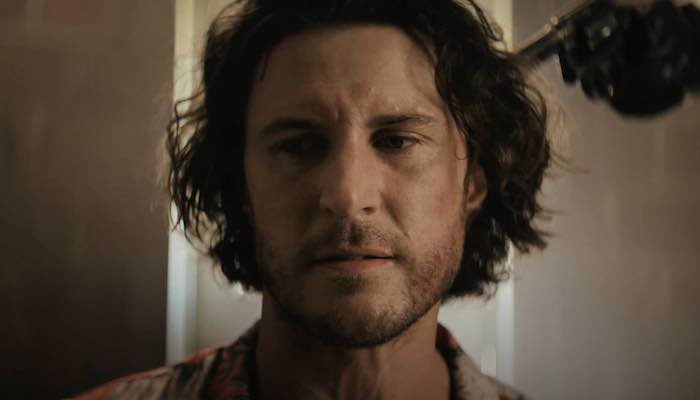
“Voodoo Macbeth” recreates, on the cheap, the New York of the mid-1930s, when the Federal Theatre Project was set up to employ starving Depression Era actors. New York Negro Theater Unit head, actress and producer Rose McClendon (Inger Tudor) was talked by fellow producer and future Oscar-winning actor John Houseman (Daniel Kuhlman) into getting stage and radio actor and sometime director Welles (Jewell Wilson Bridge) to take on McClendon’s dream, a chance for her to play Lady Macbeth.

In the Jim Crow 1930s, it took a Great Depression for this “crazy” idea to even get considered.

Welles and McClendon are at loggerheads as he struggles to cast this show with the biggest names in the Black theater of the day, few in number, and a lot of unknowns. Welles was a childish, headstrong newlywed of 20 (June Schreiner plays Virginia Welles, who is credited here with thinking up turning the witches into “voodoo” mystics, with jungle drums in the score, etc.). Unused to dealing with Black actors and Black people outside of servile jobs, Welles cast a singer with no acting experience here, a boxer (Wrekless Watson) with “presence” there, a drunk (Gary McDonald plays Jack Carter), the would-be thespian elevator operator (Jeremy Tardy) at his apartment building, and a leading man with immigration problems (Ephraim López is Juano Hernandez).

The superstitious Welles becomes convinced the show is cursed thanks to the play that they’re doing, with accidents, bad luck and the like, with their chief obstacle to success a showboating conservative Texas Congressman (Hunter Bodine) hellbent on shutting them down. 

But they soldier on — Welles directing — “Say the words Shakespeare gave you…and MEAN them” — and the cast overcoming the odds as the Black community pickets (Welles dons blackface to fill in for a missing player), Federal money is withheld and an early critic, painted as corrupt here (Ben Shields) savages the show.

None of it, not Welles’ flirtation with his Lady Macduff later Lady Macbeth (Ashli Haynes), not Welles’ domestic problems, not the cast’s various burdens and foibles, is scripted or acted in ways as compelling as the real story, which has been related, in great detail, by every Welles biographer. 

Student filmmakers are allowed to overreach, to make mistakes in tone, tight pacing and clear messaging. It’s a learning experience, even in a written-and-directed-by LARGE committees project like this. The only thing releasing this middling effort accomplishes is keeping the Welles lore it’s based on alive, even as it discourages others from taking a shot at filming this. 

But if it’s any consolation, remember another touchstone theatrical event from Welles’ electric years in the New York theater. “Cradle Will Rock,” the leftist labor musical he staged with Houseman and composer Marc Blitzstein, also made for a disappointing movie, even if it had a pretty good Orson as one of the leads.  

Rating: unrated, violence, profanity

Cast: Inger Tudor, Jewell Wilson Bridges, Jeremy Tardy, Wrekless Watson, Ashli Haynes, June Schreiner, Daniel Kuhlman, Hunter Bodine and Gary McDonald

Credits: Directed by Dagmawi Abebe , Rohy ARwas, Hannah Bang, Christopher Beaton, Agazi Desta,  Tiffany Kontoyiannis Guillen, Zoe Salnave, Ernesto Sandoval and Sabina Vajraca, scripted by Agazi Desta, Jennifer Frazin, Morgan Milender, Molly Miller, Amri Rigby, Joel David Santner, Erica Sutherlin and Chris Tarricone. A Lighthouse release.

Running time: 1:48

Posted in Reviews, previews, profiles and movie news | Comments Off on Movie Review: African American Actors make Orson Welles a legend via “Voodoo Macbeth”

Documentary Review: You think you’re “Metal,” but you’re not All-Woman-Thrash Band-in-Beirut-Metal — “Sirens”

The leather gives them away — the tattoos, the piercings, the black boots and wristlets and matching Flying Vee replica guitars.

This here is a metal band, and judging from the “Enter Sandman” era hair, they’re all about the thrash.

Slaves to Sirens plays it fast and hits those chords hard behind the vocal-cords-shredding yowl/growl of its lead singer.

You can hear a version of this quintet in any metal club on any given weekend. But the novel thing about these Sirens is that they’re all women. And they’re trying to break-out from one of the least likely heavy metal hotspots on Earth — conservative, strife-riven Beirut, Lebanon.

“Sirens” is an engaging behind-the-scenes doc about this band, which formed in 2015 and got good enough/fast enough that they were abruptly summoned to make their Glastonbury festival debut a couple of years back.

Rita Baghdadi’s intimate, fly-on-the-wall documentary captures the tightrope walk artists have to walk in a place where “conservative” could mean “intolerant” and violently so, where women are more emancipated than say, Syria or Jordan, but where “we’re living in a cycle of fear” just for donning the leather and cranking it up in a divided place with such a troubled history.

“War, instability and unemployment” is all anyone there’s known “since my grandparents’ time,” lead guitarist Lilas Mayassi complains. Her mother mutters “It will always be like this,” (in English and Arabic with English subtitles) and we believe it.

Rhythm guitarist Shery Bechara’s father and mother are just as supportive, and equally fatalistic.

“My parents always tell me ‘There is no future here.'”

And yet she and Lilas and the Sirens persist.

Director Baghdadi zeroes in on the guitarists, their inspire-each-other co-dependent relationship and the band’s first heady taste of fame — a Revolver Magazine write-up and an abrupt invitation to be flown to Britain to play at Glastonbury.

The story ebbs and flows like the relationship between these two founding members, one of whom was just now acting on same sex sexual attraction in a part of the world where that can have deadly consequences.

The strife in the band is something of a cliche, even if the shouting matches and fractious band meetings are all too real. It’s ongoing, as two members quit this past summer. The film’s dating sequence has a long coaching-a-new-love-about-how-to-meet-her-mother on a drive to the house, with a dash-cam, that can’t help but seem contrived if not staged.

But as the band cusses each other out, busts up and reunites, as older musician/mentors and relatives talk about how much easier life would be if they’d just play pop, as Beirut experiences yet another tragedy (the infamous fireworks factory explosion) that calls for regime change, and a benefit concert, we come to appreciate how it’s still about the music, man.

And if you’re asked to kiss and make up and join an orchestra and more experienced musicians for a Beirut performance of Led Zeppelin’s “Kashmir,” you tune up, don the fishnets and halter tops and get it done.

That’s pretty damned metal, I have to say.

Cast: Shery Bechara, Lilas Mayassi, Maya Khaiallah, Alma Doumani and Tatyana Boughaba

Credits: Scripted and directed by Rita Baghdadi. An Oscilloscope Labs release.

Running time: 1:20

Posted in Reviews, previews, profiles and movie news | Comments Off on Documentary Review: You think you’re “Metal,” but you’re not All-Woman-Thrash Band-in-Beirut-Metal — “Sirens”

Movie Review: “Project Wolf Hunting” is a Slaughterhouse at Sea

“Project Wolf Hunting” is “Con Air” on a cargo ship — psychopathic convicts being transported by sea. And there’s something even more monstrous on ice in the hold!

Boy, Hollywood’s going to have to put the work in to catch up with where Korean action cinema is these days.

Writer-director Kim Hongsun’s action epic is a “Captain Phillips” bloodbath, a straight-up splatter pic — that’s a slasher film that doesn’t know when enough is enough. Scene after scene is filled with convicts killing crew and cops, or cops killing convicts, or everybody being killed by Korea’s take on Mary Shelley’s most famous work.

It’s a wonder anybody can kill anybody, as the decks are so bathed in blood it’s hard to avoid those nasty slip-and-fall accidents while you’re lunging with a knife, swinging a sledgehammer or merely taking aim with an assault rifle.

Writer-director Kim Hongsun (“Traffickers”) just signed with a Hollywood agency, which will at least coordinate the proper spelling of his name so that IMDb doesn’t have a different “Kim” credited as screenwriter. He stages machine gun shoot-outs within the confines of the bridge, knife fights on every deck and a brawl in the engine room, where fuel oil and fuel oil lines lead the Filipino engineer to bellow, “You can’t shoot here! The ship will stop!”

TOOL fight!

The set-up — there was this agreement between Korea and the Philippines a few years back, an exchange of prison inmates, with Filipinos sent home to do their time on the islands and Korean criminals likewise sent “home.” A prologue shows how things can go wrong when you put hated criminals on a jet and have to walk them through an airport.

So the decision is made to rent space on the Frontier Titan, a cargo ship. Twenty “veteran detectives” and their chief (Dong-il Sung) will watch over the worst who got caught doing their worst in the Philippines, including a necrophiliac and assorted murderers, with Jong-du (Seo In-guk) the worst of the very worst, and a “celebrity” “red notice” killer (Jang Dong-yoon) in their ranks as well.

But we smell a rat the moment we see the shifty-eyed “doctor” hired at the last minute to join this three day sail. And there are other sketchy characters on board, along with openly abusive cops.Then there’s the amoral corporate creep (Jang Dong-yoon) and his crew that takes over the shipping company’s traffic-monitoring station back in Inchon.

Things are bound to go awfully, gruesomely wrong. And they do. A viewing tip? Don’t get too invested in any one character, or group of characters.

“If this isn’t hell,” the doctor grumbles in Korean with English subtitles, “I don’t know what is!”

The script works in Korea’s favorite nemesis, Japan, in some World War II flashbacks that don’t fold into the story seamlessly. Scenes don’t play by their own rules. That “Don’t shoot in here” warning falls on deaf ears, as there’s no warning psychopaths not to do something.

“Project Wolf Hunting” is a brutally efficient killing machine long before the supernatural twist stomps into the proceedings. That almost seems like a gimmick-too-far.

Only a couple of characters merit background sketches, and these explain and motivate their characters when the picture doesn’t really require that. A few red herrings offer clever distractions. But how many “villains” can one thriller stand?

Kim keeps the action going and the blood flowing through two hours of grisly, grim mayhem as the armed and murderous go at it in a “prison” from which there is no escape, only a chance to be chum for the sharks.

Rating: unrated, gruesomely violent, sex, nudity, profanity

Cast: Seo In-guk, Sung Dong-il, Jang Dong-yoon, Jung So-min, Park Ho-san

Credits: Scripted and directed by Kim Hongsun. A Well Go USA release.

Running time: 2:02

Posted in Reviews, previews, profiles and movie news | Comments Off on Movie Review: “Project Wolf Hunting” is a Slaughterhouse at Sea

Documentary Preview: Ready Retifists? “Salvatore: Shoemaker of Dreams”

The life of a shoemaker to the stars. Some folks are going to really be into this, I dare say.

Posted in Reviews, previews, profiles and movie news | Comments Off on Documentary Preview: Ready Retifists? “Salvatore: Shoemaker of Dreams”

Movie Review: The “Railway Children” Return

“Railway Children” has more hugs in it than any British movie this side of “Love, Actually.” So much for chilly, oppressed English reserve — then or now.

This treacly trifle is the latest version of an E. Nesbit novel from 1905, a tale of city kids sadly separated from their parents and sent to live in the country.

This period-piece has been turned into at least three TV series and many movies, most famously a film from 1970. That movie’s Yorkshire locations, and one of its child stars — Jenny Agutter, who also starred in a 1960s TV version — are revived for this film, which wore the title “The Railway Children Return” at one point.

Setting this “reboot” of the tale during World War II, when British cities were being bombed and parents were urged to ship their kids off to the country, often to live with complete strangers, is such a clever touch that it’s shocking no one thought of it adapting it before. Perhaps one of the post-war versions did. That adds pathos and a hint of tragedy to the story, and raises the stakes.

Picking 1944 as the year when the sisters Lily (Beau Gadsdon) and Pattie (Eden Hamilton) and their little brother Ted (Zac Crudby) are packed off to stay with strangers is odd. The London Blitz was years before, and the big exodus of kids came earlier. But that’s a plot contrivance that makes another subtext fit.

Their nurse-mother takes them to their tearful farewell at the train station, sending them off with “Look after them, you’re the parent now” instructions to Lily.

They steam from Manchester (which was only bombed twice, in 1940) into the country, to scenic, quaint Oakworth where school teacher Annie (Sheridan Smith), her son Thomas (Austin Haynes) and Annie’s mother (Agutter) show up at the school to see who needs to be taken in.

A sweet touch — grandma remembers when she came to the country, a reference to Agutter’s film of 50 years ago. Another? Granny advises them to “wait” and see who can’t be placed. Most families would blanch at having to feed three extra mouths. “There’s a war on,” as folks said back then.

But they take on the three kids, keep calm and carry them home.

Life here is all schoolwork, “sweets” and precious few chores. Annie shows them how to run after they’ve fetched the morning’s eggs from her hens, so that they drop and break a few. The kids cut loose during a bread-making lesson by having a flour fight.

Not to be a fussbudget, but wasting food was a cardinal sin on an island that was rationing everything and worried about being starved out is a detail that some born-yesterday screenwriter should have looked up.

The three new kids join Thomas for rambles in the countryside, and playtime at the local railyard. That’s where he’s turned an abandoned trolley car into a clubhouse. It’s there, after tall, plucky Lily has handled a local bully, that they stumble across a deserter.

It’s wholly worthwhile for a film about Britain in World War II to introduce African American characters and the Jim Crow racism that the U.S. military dragged with it as it sent troops overseas. But this slight, unevenly-acted children’s film handles it rather clumsily.

AJ Aiken plays Abe, a teen who has been beaten by racist MPs (we see this happen several times) for fraternizing with the white local girls and who has decided to try and find his way home. The kids try to help, and bond with the stranger as they do.

That’s a well-intentioned but somewhat wan attempt to add a little gravitas to the “children’s war movie” proceedings. One other bit of military melodrama is introduced when a stray bomber looses a stray bomb. Not to worry. Manchester Lily knows just how to react.

“If you’re still alive after the noise is gone, you’re OK!”

Tom Courtenay shows up to twinkle through a moment or two, a visiting uncle relating news about the war, about “Rommel” and his army being “crushed” in North Africa. That was in 1942-43. Is this supposed to be before D-Day, or shortly after in 1944? One wonders just how much history those who scripted it dug into.

The World War II material carries a lot of the emotional and action weight in this “Railway Children,” with parents missing or actually missing in action, an air raid and American GIs bringing their problems from home with them. That stuff is simply handled, and rendered into thin drama. One wonders what on Earth Nesbitt’s novel had in it that carried the story along and gave it drama without WWII. And the epilogue that wraps this entire enterprise up is so namby pamby as to make one wonder why The War was used if they weren’t going to treat it as the perilous and sad event that it was, for adults as well as children.

Still, it’s all harmless enough, and a lovely Yorkshire travelogue if nothing else. Gadsdon (“The Girl in the Spider’s Web,” “Rogue One” and young Princess Margaret in TV’s “The Crown) is the stand-out performer. Try not to notice how distracted the other kid-players seem in group scenes.

Rating: PG

Cast: Beau Gadsdon, Austin Haynes, KJ Aikens, Eden Hamilton, Sheridan Smith, Zac Cudby, Tom Courtenay, John Bradley and Jenny Agutter.

Credits: Directed by Morgan Matthews, scripted by Daniel Brockhurst and Jemma Rogers, based on the 1970 film which was based on a novel by E. Nesbit. A Blue Fox release.

Running time: 1:35

Posted in Reviews, previews, profiles and movie news | Comments Off on Movie Review: The “Railway Children” Return

Movie Review: A Farrelly Brother and Zac Efron set out on “The Greatest Beer Run Ever”

Peter Farrelly’s luck had to run out.

The director who made his name with farces, who got Oscar glory for turning sentimental, serious and only occasionally silly with “Green Book,” gives us his take on Vietnam with another dramedy inspired by a true story in “The Greatest Beer Run Ever.”

It’s about a New Yorker who sets off on a quixotic quest bring his pals “from the neighborhood” a beer. It’s the middle of the Vietnam War. They’re serving. He’ll do his part by delivering Pabst Blue Ribbon to a combat zone.

This “beer run” from Inwood, Manhattan, to Saigon and “up country” environs starts jaunty, gets somber and sentimental and then goes oh-so-very-wrong. You’ll feel it the instant it happens, just as I did. And when the ironic, tone-deaf tune that accompanies this eye-opening (to our hero) murder is reprised in a more emotional setting in the film’s finale, we’re all allowed to wonder if this Farrelly fellow ever had a clue.

Zac Efron stars as John “Chickie” Donohue, an oiler (engine maintenance) in the merchant marine, who travels for work and between voyages lays around his parents’ house when he’s not down at the the local pub. It’s a working class neighborhood — white, blue collar and patriotic. In 1967, Inwood was the sort of place you didn’t want to be questioning the war, the government running it or America in front of the locals.

Especially “The Colonel” (Bill Murray), the barkeep/owner of their favorite watering hole.

“War is NOT a TV show,” he grouses at the negative coverage that was just starting to take hold in ’67. Chickie agrees, which makes for spirited debates with his younger, peace-protesting sister (Ruby Ashbourne Serkis, quite good). Guys from their neighborhood — friends — are dying. They’ve all been to the wakes and the funerals.

But it’s one thing to wave the flag and support the troops from 12,000 miles away. If only there was something they could do. You know, buy’em a beer or something.

I could do that,” Chickie declares. He can’t be serious. Or sober.

“”The man’s stone sober. That’s his fifth beer...tops,” the Colonel avows. Yeah. It’d be great to “bring our boys some good Ol’ American beer” in Vietnam.

The screenplay’s brightest moments are the ways fate and Chickie’s big mouth contrive to hold him to that vow. It’s not just his pals ribbing him over drinks. Mothers start showing up at the door, asking him to deliver some socks to this guy, take a rosary to that one. And damned if the fellow down at the Seafarers union hall doesn’t have a ship Vietnam-bound “in three hours.”

It’s right on the edge of hilarious that Chickie gets bum-rushed on board with a duffel full of PBRs and addresses of a handful of guys he knows to track down “in country.”

That first beer delivery, to an MP in Saigon, goes exactly as Chickie had hoped — a look of delighted surprise, brewskies all around, and dressed as he is, Chickie finds himself mistaken for “a tourist” — ‘Nam slang for “CIA.” That’ll facilitate his travels around South Vietnam to make his rounds. No American questions a “civilian” dressed like that.

But the jolly, jaunty mood of “Beer Run” ends the moment the guy has to wait for bodies to be off-loaded before boarding a transport. The good cheer he senses from this local bartender or that friendly, “Oklahoma” fan Vietnamese traffic cop fades as Chickie hits a firebase and sees things Americans at home weren’t seeing or hearing about — not yet. Not pre-Tet.

As in “Green Book,” the arc of the story is the naive, knee-jerk hero’s eyes being opened — here by violence, seemingly pointless sacrifice and war crimes.

Efron gamely plays-up Chickie’s ebullience at “surprising” this soldier or that one, only to be the last one to figure out that he’s risked his life for nothing, and his presence puts their lives at risk as well.

GIs barking “What the hell are you doing?” and “You think this is FUNNY?” are speaking for themselves, and for the viewer, who is treated to a CIA murder, a traumatized Vietnamese child weeping at seeing another Ugly American, coffins and a tactless search “for my friend” by the frivolous, tactless guy in the plaid shirt in a triage tent full of the dead and wounded in the middle of the Tet Offensive.

Farrelly and the screenwriters take another stab at making conservatives understand the role of a free press, serving up the always-cynical press corps, which Chickie rages at for not being “patriotic” and reporting this war in more flattering terms. The whole “stabbed in the back by the press” trope, “letting the troops down/bad for morale” argument gets one more airing.

“The truth doesn’t hurt us,” the veteran Look Magazine writer/photographer played by Russell Crowe lectures. “It’s the lies.

I dare say the real Donohue, whose memoir this is based on, might be a little surprised at how unflattering this portrait of his exploit turns out to be.

Farrelly struggles to strike the right notes, and he finds them, here and there. A lot of the sentimental moments play, and several laughs land. This is one daft idea, a fool undertaking a fool’s errand (What do you think GIs drank off duty “over there?” “Good ol’American beer.”) that sobers up a naive, flag-waving joker with a simplistic world view and glib take on the violence of being in combat.

But “The Greatest Beer Run Ever” falls to Earth the moment someone “falls” out of a helicopter. All the PBR in the world can’t make anybody watching it forget that. And setting that incident to the easy listening hit “Cherish” — and then reminding us you did it in a tender moment at the end — is as big a miscalculation as any Farrelly has ever made. And remember, Peter and his brother thought a reboot of “The Three Stooges” was a good idea.

Rating: R for language and some war violence

Cast: Zac Efron, Russell Crowe, Ruby Ashbourne Serkis, Kyle Allen, Jake Picking, Will Ropp and Bill Murray.

Credits: Directed by Peter Farrelly, scripted by Brian Hayes Currie, Peer Farrelly and Pete Jones, based on the memoir by John “Chickie” Donohue and J.T. Molloy. An Apple+ release.

Running time: 2:07

Posted in Reviews, previews, profiles and movie news | Comments Off on Movie Review: A Farrelly Brother and Zac Efron set out on “The Greatest Beer Run Ever”

The Oddest Tune in “The Greatest Beer Run Ever?”

It’s a Vietnam War movie, so of course there’s a soundtrack packed with 1960s pop and rock — “Cherish” (badly used) to “Let It All Hang Out,” it’s not “Good Morning, Vietnam,” but “The Greatest Beer Run Ever” does blow through some cash on music rights.

No, Zac Efron doesn’t sing in it. Or dance.

Set in 1967, here’s a song that we haven’t heard in any of the scores of films set in and during the Vietnam War. Remember, many Vietnamese spoke French, as the French had just been forced out in the previous decade. So if the locals were jamming to The Beatles, they just might have preferred the French version, also a hit, recorded by this legend.

Posted in Reviews, previews, profiles and movie news | Comments Off on The Oddest Tune in “The Greatest Beer Run Ever?”

James Earl Jones retires, signs over rights to that sonorous voice to LucasFilm Ltd

There’s a sweet twist to this sad news, that James Earl Jones has retired.

Vanity Fair makes it official, the great man with the singular voice is hanging it up at 91. But Lucasfilm is passing a last big check his way as he signs over rights to the voice of Darth Vader forever.

Well done all around. Great actor, a fun and fascinating interview. Caught him on a bad day once and he was still more interesting than half the actors you meet. Caught him on a great day and he could not have been kinder or grander.

Posted in Reviews, previews, profiles and movie news | Comments Off on James Earl Jones retires, signs over rights to that sonorous voice to LucasFilm Ltd

Today’s DVD donation? “Moon, 66 Questions” comes to the New Smyrna Beach Library

I remember reviewing this one, but I had to look it up before passing it on to a public library that I either pass, visit or stop to do some writing in. came out early last summer. And while I didn’t warm to a Greek tale of a daughter coming home to Athens to care for her aged, inform father, we can all identify with some of what’s depicted, if not now then soon enough.

“Moon 66 Questions” came out early last summer. And while I didn’t warm to a Greek tale of a daughter coming home to Athens to care for her aged, inform father, we can all identify with some of what’s depicted, if not now then soon enough.

MovieNation, spreading quality international cinema over the Southeast, one DVD, one public library at a time.

Remember to donate yours to your local library, fighting the good fight and beating back the darkness of ignorance and censorship for 200 years, and maybe a little while longer.

Posted in Reviews, previews, profiles and movie news | Comments Off on Today’s DVD donation? “Moon, 66 Questions” comes to the New Smyrna Beach Library

Classic Film Review: Dunaway, Palance and George C. Scott tangle over “Oklahoma Crude” (1973)

A couple of things stick in the memory about “Oklahoma Crude,” a downbeat Western “action comedy” (lots of shooting and blowing stuff up) from the cinema’s filmmaker of conscience, director and producer Stanley Kramer.

The “boomer” theme music by Henry Mancini was one of the most borrowed instrumentals of the ’70s, used in commercials, TV football highlights shows and the ads for other films. I dare say you recognize it, too.

Neither the stars nor the director are well known for their comedies.

And watching “Oklahoma Crude” anew, you can’t help but remember that movies often had offbeat or even downbeat endings in the Hollywood that “Jaws” and “Star Wars” changed forever — the 1970s.

The director of “On the Beach” and “The Defiant Ones” had a late ’60s/early ’70s run of comedies — not all of them with the pointed messaging of “Guess Who’s Coming to Dinner.”

As a kid, I’d tune into the WWII comedy “The Secret of Santa Vittoria” (1969) starring Anthony Quinn, Anna Magnani and Virna Lisa. Italians hiding their stash of wine from the Germans, what’s not to love? I adored Quinn and all the scenery-chewing, larger-than-life actors of that era, including George C. Scott, whose comic turn in “The Flim-Flan Man” (1967) wasn’t great, but he seemed to be having a grand ol’time in a kind of “The Sting Goes to Mayberry” farce. Great car chase, and old confidence man Scott was in his pre-Oscar glory.

Leading lady Faye Dunaway’s comic years would come years later. Neither she nor Scott was particularly light-hearted in this fin de siecle oil fields Western set in 1913. But it’s a generally entertaining curiosity from an era when John Wayne’s Westerns were also about the end of the era (“The Shootist”) and TV Westerns had evolved into “modern” detective shows (“Hec Ramsey”).

Dunaway’s a defiant single woman guarding her drill derrick from all comers in those wildcatting days. If the “message” director Kramer had one in this film, it was about predatory Big Oil and Big Capitalism, crushing the small guy or gal and getting to write history as the heroes of their own villainy.

There’s a bit of what happens in “There Will Be Blood” in this story as trigger-happy Lena empties her Winchester into anybody who approaches her hilltop cabin and drilling rig, even shooting at her feckless father (Sir John Mills). With Big Oil having hired the same murderous son of a bitch that Big Cattle hired in “Shane” (Jack Palance), we see her point. She’s got a right to be nervous.

Dad trolls the hobo jungle where the unemployed roughnecks camp and hires the only man who’ll take the job and the challenge. Mase is a drunk who’d really rather be making his way to Mexico…for a bender. But he needs to eat, so they acquire him cheap firearms and Lena — a loner with no use for men or women save as employees — reluctantly accepts his presence.

Palance is a bowler-hatted menace here, a dapper thug of the type many a coal field of the era would recognize — a man of violence who hires others to join him in crushing the little guy — unionized miners or independent oil prospectors. They didn’t call the bosses of these goons “Robber Barons” for nothing.

What ensues is an infuriating series of provocations and brutal assaults. There is no “getting even,” Mase assures her. But as she’s hellbent on having her well and her revenge, what can he do?

What’s striking seeing this film again after many years is the cavalier level of violence. There are deaths, but the ones early on are mostly off-camera.

Mase, Lena and her father counter attack with rifles and dynamite (the Western movie’s “deus ex machina” courtesy of Alfred Nobel). The scene is epic mayhem, with bombs blowing up villains and shotguns peppering their bums with bird shot. But when you’re firing a Winchester repeating rifle, you’re playing for keeps. There’s no point in trying to keep a body count, as Kramer is intent on keeping it all on a sort of PG-rated good clean fun level.

That’s kind of nuts. As glib as the films of Bruce Willis and others have been about wanton slaughter, “Oklahoma Crude” ventilates or blows up scores, who then get picked up in a pre-triage/emergency room era and dragged off to recover and fight another day.

The chemistry between Scott and Dunaway isn’t necessarily sexual. Not with him wondering if “Maybe you’re the kind who prefers women?” But you have to figure as close as they come to buying it and as much as they depend on each other in matters of life or death, riches or poverty, something might happen.

Scott virtually never played a romantic lead.

The film’s ’70s finale seemed less downbeat then than now, when we’ve come to expect “The Hollywood Ending” almost every time out. But there’s a whiff of “Sierra Madre” in it, grudging respect between bloody foes, because when it’s all said and done, business is business.

That’s Kramer’s message, I think. That buying into getting rich thing is a disease, like gold fever. And with oil, somedays you’re Jett Rink in “Giant,” some days you’re Jed Clampett, and some days you’ve just got yourself a very deep hole.

Kramer’s career wound down in the ’70s, with him dabbling in Vietnam and its aftermath on TV and the big screen, dropping out of the business with a priest/nun murder drama, “The Runner Stumbles,” which did nothing for his reputation and did Dick Van Dyke no favors either.

“Crude” is the operative word for this one. It’s a choppy film with a great sense of its place and time and fine action beats. Anything with this cast is always going to be watchable. But it’s not quite a comedy, not really an action comedy. And the oily Big Eat the Small message is muddled even now. Think of how this must have played during the Arab Oil Embargo, when it came out?

With “There Will Be Blood” still fresh in our minds, I’d say it’s worth checking out just to see George C. Scott chew a little scenery, Dunaway as a fiery brunette and Palance in his pre-lovable Oscar years, one of the greatest sadistic villains the screen Western ever had, even in a West that was drawing to a close by the time “Oklahoma Crude” was a commodities market label of value.

Rating: PG, violence, off color humor

Cast: Faye Dunaway, George C. Scott, John Mills and Jack Palance.

Credits: Directed by Stanley Kramer, scripted by Marc Norman. A Columbia release on Amazon, Movies! many other streamers.

Running time: 1:48

Posted in Reviews, previews, profiles and movie news | Comments Off on Classic Film Review: Dunaway, Palance and George C. Scott tangle over “Oklahoma Crude” (1973)