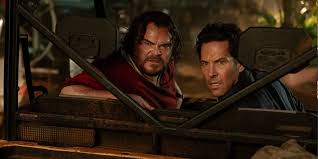
Series Review: “House of Guinness” is a Pint in a Gilded Gallon-sized Glass

How long does it take you to decide if a streaming series is worth bingeing all the way to the end? One episode? Three? Five?

That’s why such series frontload the action, the parade of characters, the colorful settings and in the case of period pieces, costumes. The series opener has to be a grabber. Think of “Ozark,” still Netflix’s streaming gold standard.

At the very least, a series-narrative needs to get down to the business of really entertaining by the second or third installment.

The late 19th century Dublin, rural Ireland and New York Bowery of Netflix’s period piece “House of Guiness” is striking and lavishly recreated for the series, set during a tumultuous changing of the ruling guard of Ireland’s most famous export — the dark porter of St. James Gate, Guinness Beer.

But a jolt from the first episode seems all creator Steven Knight budgeted for, so his director Tom Shankland — who shot half of the eight episodes — fills the screen with lush sepia (gas lit) interiors, dark repetitive shots of the sweaty, fiery, steelworks-like brewery.

The second installment feels like a placeholder, with melodrama of the dullest, most predictable variety wrung out of this saga of “fiction inspired by true stories.” So…it’s based on Guinness lore and gossip?

The third episode didn’t hook me, either.

The professional reviewing standard for most series is one should watch at least two or three episodes to form an opinion you can back up with a review. Most reviewers, judging from the notices I glanced over just as I started this review of “House of Guinness,” seem to have only watched an episode before passing judgement. It’s lovely to look at, but were they just guessing it would get better?

I sat through a third installment, and then a fourth, which is half-consumed by Jane Austen-esque scheming at a marriage ball. But midway through that fourth piece of the puzzle, the series crackles to life as a chancer (Jack Gleeson of “Game of Thrones”) finagles his way into representing the company as it tries to make a mark in the Irish-hating New York and Eastern American seaboard market of that era.

Finally, all these introductions and all that table-setting for the intrigues to come is sort of set in motion –halfway into the series. It starts to play as if our attentions to it will be rewarded, if only partially. Eventually. We hope.

The characters are a grab bag of melodramatic tropes. There are personal secrets and intrigues among the four heirs to the brewing empire — Arthur, played by Anthony Boyle, is mustachioed and closeted, Benjamin (Fionn O’Shea) is a dissolute drunk, Anne is the daughter (Emily Fairn) struggling to negotiate or procreate herself into a place at the table and Edward (Louis Patridge) is the dashing, resentful middle brother who works seven days a week making sure the beer and the business come to a perfect head every time.

“Your name is Guinness. That is not WHO you are! That is WHAT you are!”

So we have a gay blade whose “secret” could be exposed and ruin them, a scheming drinker/gambler, sexual adventures outside of marriage and even the poshest of the posh drop F-bombs like they’re auditioning for “Trainspotting.”

The sountrack is packed with anachronistic Irish rock, pop and hip hop by the likes of The Mary Wallopers, Thin Lizzy, Kneecap and Fontaines D.C. to give the enterprise an angry sonic edge that the narrative rarely provides.

Players earn their keep with frequent costume changes — Gilded Age tuxes and dresses for the swells, 18th century uniforms for the servants and green coats and sashes and skirts and bowler hats for the Catholic majority, especially the Fenians, agitating for Irish independence.

In 1868, when the Guinness patriarch dies, Ireland is still under the thumb of the British and the Fenian Brotherhood, precursor to the IRA, is protesting and angling to make the Brits consider giving them their freedom. The brewery may be a huge employer, but it is a Protestant enterprise in a Catholic country, which the Fenians — just a generation removed from the British-overseen potato famine — see as an angle to exploit.

But at least one Guinness sees that angle first and vows to play it for electoral advantage. The family has historically run for a seat in Parliament, and the Irish working class (males) are newly enfranchised. And Fenian connections will do wonders with the Irish diaspora in America, if they’re to sell their beer there.

Series creator Knight scripted and directed the very fine “Locke” and wrote terrific thriller “Eastern Promises” and the abomination “Serenity.” One gives somebody with those bonafides the benefit of the doubt.

But while I have no problem with the fictionalizing and the era-inappropriate music, I couldn’t get into Knight’s over-reliance on “types” — the power-and-position-hungry wife (Danielle Galligan), the fiery redheaded Fenian agitator (Niamh McCormack) and the Guinness family’s two-fisted “fixer,” Mr. Rafferty (James Norton) whose ties go deeper than most of the siblings realize.

Knight uses types rather than casting famous Irish acting names and faces to invite us into the story. Norton is the most famous player in the cast. He and Gleeson make the strongest impressions.

Future billion dollar business aside (graphics do the exchange rate math between then and now), the stakes in this story never feel all that high. The characters never give us the impression they’ll be paupers if they don’t make the others bend to their will.

Pretty faces or not, there’s no “romance” to any of this and scene after scene plays as decoration rather than forcefully advancing the plot.

As someone who loves the beverage and visited Dublin’s most popular tourist attraction — the St. James Gate Brewery — I was inclined to love this, and I enjoyed a moment here and there.

The stout? “I taste the bitterness of Ireland” in it, an Irish-American opines.

Where’d they get the symbol that decorates every bottle, keg and can of their beer? It’s Brian Boru’s Harp, but you’d have to go to Wikipedia to understand its symbolism and know where Edward Guinness first saw it.

Granted, the real history’s not exactly sizzling. But giving it a half-arsed “Bridgerton” sexing up doesn’t really pay off. Not early on, not even a bit after than and not really to so great a degree as to recommend this very pretty Irish travelogue bathed in beer and fire.

Rating: TV-MA, violence, sexual situations, nudity, profanity

Cast: Anthony Boyle, Louis Partridge, Emily Fairn, Fionn O’Shea, Danielle Galligan, Jack Gleeson, Niamh McCormack and James Norton

Credits: Created by Steven Knight. A Netflix release.

Running time: Eight episodes @:53-:55 minutes each

Posted in Reviews, previews, profiles and movie news | Tagged , , , , , | Comments Off on Series Review: “House of Guinness” is a Pint in a Gilded Gallon-sized Glass

Documentary Review: “Thank You Very Much” is the Deepest and Most Thorough Andy Kaufman Remembrance of All

There have been scads of TV specials, documentaries and books about comic performance artist, singer and hoaxer Andy Kaufman in the 41 years since his death.

I swear I’ve tried to take in one and all, from that sentimental, cute and childish pre-Pee Wee ABC special he did — belatedly aired around the time of his death — through his first biographer, who figured he had Kaufman nailed down as someone who perfected his shtick as a tween and basically repeated himself in more and more bizarre and maddening ways right up to his untimely death at 35.

His “alienating comedy,” intentionally bombing, posing as a virulent sexist, taking on weird disguised and untalented personas that could never have gotten on TV, was part and parcel of an entire career devoted to making his audience uncomfortable.

Our response? A lot of people, to this day, think he faked his death, the ultimate “commitment to a bit.” His “Taxi” co-star Carol Kane says she poked the corpse at his funeral “just to be sure” it wasn’t a hoax.

“Thank You Very Much” is the most thorough examination of Kaufman’s childhood, his psyche, his influences and the things that drove his art. For those who still care — and really, there has been no one who has done what he did and how he did it since — Alex Braverman’s documentary fills in more of the blanks than all the ones that preceded it.

There’s an image of tiny tyke Andy glimpsed in “The Peanut Gallery,” the kiddie audience present for broadcasts of “The Howdy Doody Show” in the mid-50s. We see and hear 20ish, bearded Andy challenge his Transcendental Meditation guru Maharishi Mahesh Yogi on “What is the value of entertainment?”

Their exchange, with the yogi chuckling at the audacity of the increasingly pointed queries, all but predict Kaufman’s future in entertainment back in 1970 and is one of the highlights of “Thank You Very Much.”

“Oddness is just a means of creating contrast,” Andy’s guru intoned. The yogi couldn’t have been more on the money if he’d added a verse of “That’s Entertainment!” as a kicker.

The late Robin Williams weighed in on his sometime collaborator. Michael Richards and Melanie Chartoff recall his intentionally disastrous “performance,” live on TV’s “Fridays.”

The wrestling, reading aloud from “The Great Gatsby” way past the point where the point it was funny on “Saturday Night Live,” “banned” from the show by popular vote, staging fake feuds and altercations with hecklers with his pal Bob Zmuda and fellow hoaxers, it was a career striking in its impact on the culture, and in its brevity.

Danny DeVito and Marilu Henner remember Kaufman posing as a panhandler down the street from where they were filming the sitcom Andy had just been cast in, “Taxi.”

Childhood friends, his parents and Andy himself talk about the childhood he reached back for and the trauma that might have triggered that.

The Tony Clifton alter-ego gets his due.

And the late Garry Shandling, seen in a pained and brief archival interview, adds “I would still like to know who the real Andy Kaufman was.”

Zmuda and Kaufman’s girlfriend Lynne Margulies are among the most authoritative witnesses and analysts of his mind and what shaped him.

I’d never seen Kaufman’s community college roommate, the Iranian-born Bijan Kimiachi, who relates how he became Kaufman’s “foreign man” model, Kimiachi’s “gift” to his friend.

Another great “get” for Braverman’s film? The avante garde singer and artist Laurie Anderson remembers her years as Andy’s favorite designated heckler/slap-fighter. She was “attracted to the violence in Andy,” a button-pushing comic for a “very violent country.”

There is a stunning amount of extant footage of Kaufman doing bits, playing clubs all the way to Carnegie Hall, on TV from a ’74 Dean Martin summer replacement series, doing “the foreign man,” through a Dick Van Dyke series two years later to “Saturday Night Live” and culture devouring stardom.

Steve Martin had him on when he guest-hosted “The Tonight Show,” and in an interview for this documentary, breaks down the comic tension that Kaufman made his own, playing variations of the guy “who has no business being here (on stage, on TV, etc).”

As Kaufman would stumble and seemingly struggle to tell a joke or find a laugh, the first giggles would be nervous. The guy wasn’t just bombing, he was deer-in-the-headlights freezing up.

“He’s also funny when he’s waiting,” Martin observes. The TM-trained comic was making comic magic out of awkward pauses and silences.

Generations have grown up since Kaufman’s death, and decades have passed since that Jim Carrey biopic, “Man on the Moon” came out. But if fans want to remember his work, art, genre-bending performances and signature bits, as well as his sad and precipitous decline, “Thank You Very Much” covers all the bases.

It’ll more than do until Andy comes back from the dead and has the last laugh in the greatest hoax of them all.

Rating: TV-MA, drug content, sexual subject matter, profanity

Cast: Andy Kaufman, Bob Zmuda, Marilu Henner, Robin Williams, Lynne Marguiles, Steve Martin, Lorne Michaels, Melanie Chartoff, Bijan Kimiachi, Michael Richards, James L. Brooks, Jim Burrows, Laurie Anderson and Danny DeVito.

Credits: Directed by Alex Braverman. A Drafthouse Films release on Tubi, other streamers

Running time: 1:39

Posted in Reviews, previews, profiles and movie news | Tagged , , , , , , , | Comments Off on Documentary Review: “Thank You Very Much” is the Deepest and Most Thorough Andy Kaufman Remembrance of All

Movie Review: A Friendship. An Affair. What’s Missing? “All of You”

Brett Goldstein burns through a little of his “Ted Lasso” capital with “All of You,” a “When Harry Met Sally” platonic-friends-can’t-stay platonic romance co-starring Imogen Poots.

The friends “since uni” story, co-written by Goldstein, is at its best when our not-a-couple are just bantering — drug jokes, a wake for her dad joke that nobody who hears it will ever forget — supporting one another in times of crisis, with one of them plainly longing for something that will never be.

It’s after Simon’s paid for Laura’s “Soul Mates” AI-perfect matchmaking, after he’s been to her wedding and after he was the one to rush her to the hospital so that she could give birth that the affair begins. That’s when the film settles into a struggle to transcend cliches.

Affairs go in and out of fashion in the culture, but “All of You” highlights the fact that it’s not just movies about them that are formulaic. Affairs themselves have become cliches.

She has a baby and a “vulnerable moment” — a late night visit, impulsive sex on the floor. She sets him up with a friend (Zawe Ashton) who clicks with him well enough for them to move in together, only for Simon’s new love to figure out who his true love.

Simon and Laura engage in cheaters’ magical thinking — a fantasy about running off to America for “non-stop sex and drugs.”

Even the epiphanies they’re sure to come to — she “won’t leave Lukas” (Steven Cree), her Scots husband — have the air of trite tropes.

“We hurt people and they don’t even know we’re doing it to them.”

Goldstein leans into soulful suffering as a journalist who doesn’t believe in this new foolproof “find the one person we’re meant to love” digital “test.” Poots makes Laura a beaming believer, pretty enough to take advantage of “just a friend” Simon and impose on him, even as she ignores how they connect.

He’s there with just the right laugh at her speech at her dad’s wake, or with a little Molly at the club where she’s hoping he’ll take a fancy to her “Andrea the Giant” (Ashton) buddy.

The movie moves on from the witty, callow quips of youth as they both take a stab at “being grownups…It’s AWFUL.”

Couplehood and its “farmer’s market” visits are not for Simon. “What goes on there? Are they selling farmers or something? Putting them up on plinths for display?”

What replaces that is sober and sad and so very over-familiar — a rendezvous by the sea, furtive phone calls, her protests that he’s “stalking” her when she’s the instigator — as to be almost laughable itself.

Honestly, who takes a checklist of all the things one does when having an affair, as seen in the movies, into an affair? That’s how this plays.

The acting is good, as Poots is an old hand at this sort of lovesick romance and Goldstein shows off character traits that most of us haven’t seen him attempt. But few of the heartfelt moments land and none grab the pathos that Goldstein and co-writer/director Walter Bridges are attempting.

It isn’t just morality that keeps us from “rooting for them” as a couple. We can’t decide if they’re rooting for them.

Rating: R, drug abuse, sex, profanity

Cast: Brett Goldstein, Imogen Poots, Zawe Ashton and Steven Cree

Credits: Directed by William Bridges, scripted by William Bridges and Brett Goldstein. An Apple TV+ release.

Running time: 1:38

Posted in Reviews, previews, profiles and movie news | Tagged , , , , | Comments Off on Movie Review: A Friendship. An Affair. What’s Missing? “All of You”

Netflixable? Cross Liam in the Himalayas and he will Truck You Up — “Ice Road: Vengeance”

OMG there are some real LOLs packed into the Liam Neeson action sequel, “Ice Road: Vengeance.” Sadly enough, there aren’t many of them that are intentional.

It’s implausible but far from impossible to believe the sight of gaunt, weathered 70something Neeson free-climbing The Needles in South Dakota. He bellows at the gods — or Tom Cruise — when he summits.

How’d he master that skill and stay in shape for it doing all that driving?

Mike, our “Ice Road” hero, is hellbent on remaking the long-haul truck driver image, one movie at a time. They’re not all pill-popping, sleep-deprived road hogs and most-likely-suspects in most serial killer cases.

In “Vengeance,” Mike’s kidnapped on his way to spread his climber/Air Force sergeant brother’s ashes on Mount Everest. That brother recites in voice-over his final wishes in a letter he Mike left before deployment from Minot, N.D. to Iraq.

Hilariously, the dope mispronounces the name of his base town. It’s “MY-not,” ya silly micks. Not “ME-not.”

Actually, that’s on writer (“Armageddon,” “Die Hard with a Vengeance”) turned “Ice Road” writer-director Jonathan Hensleigh. Who’d expect a Belgian actor (Marcus Thomas) to know Northern Plains pronunciations?

Hensleigh probably didn’t set out to make an outlandish, plot-holes-you-could-drive-a-semi-through sequel. Then again, the original film wasn’t exactly “Wages of Fear.”

Mike’s trek to Everest is interrupted when he and his “half-Sherpa” guide Dhani (Fan Bingbing of “Iron Man 3” and “The 355”) are waylaid by a black-clothed hit team who hijack their Kiwi Express bus to the base camp.

The grizzled New Zealand bus driver Spike (Geoff Morrell) has just enough time to bond with his fellow “asphalt jockey” when the bus is taken — in broad daylight, in the middle of Kathmandu– and Mike and ex-military Buddhist Dhani have to figure out a way out of their jam.

“In Nepal, kidnappers leave no witnesses.

There are Americans — a professor/NGO aid worker (Bernard Curry) and his inattentive daughter Starr (Grace O’Sullivan). And there’s a local. Vijay (Saksham Sharma) is the son of a landowner who has refused to sell out and allow a predatory developer (Mahesh Jadu) to dam their village’s river and bury all their property under water.

Yeah, this all about getting to Vijay.

Foiling the hijackers (Amelia Bishop plays the petite, bob-cut French killing machine) only puts Vijay into the hands of murderously corrupt cops led by Capt. Shankar (Monish Anand). Crossing them and the “Kathmandu Mafia” is “poking the dragon,” high-mileage Mike is warned.

“I’ve poked one or two before, trust me,” he purrs.

Chase after impossible chase, crashes that don’t end their quest, shootouts where everybody does a lot of missing — unless Mike picks up a pistol — insanely difficult on-the-road repairs and at least one trap we have no idea how the passengers and bus driver escape from unfold along this stunningly scenic, more-harrowing than it plays here “Road to the Sky” highway through the Annapurna Highlands.

A few of the action beats play — brawls and the like. Many don’t.

The repairs are pie-in-the-Himalayan sky absurd, a couple of get-aways are too implausible to even be entertainingly silly and the victims die off in the most utterly predictable order.

But that chiseled-out-of-Irish-stone Neeson always gives his all and delivers fair value, even if the movie that surrounds him isn’t all that.

Rating: TV-14, violence and lots of it

Cast: Liam Neeson, Fan Binging, Grace O’Sullivan, Saksham Sharma, Geoff Morrell, Amelia Bishop and Mahesh Jadu.

Credits: Scripted and directed by Jonathan Hensleigh. A Vertical release on Netflix.

Running time: 1:52

Posted in Reviews, previews, profiles and movie news | Tagged , , , , , | Comments Off on Netflixable? Cross Liam in the Himalayas and he will Truck You Up — “Ice Road: Vengeance”

Movie Review: A Tale from the Resistance — “One Battle After Another”

“The Revolution,” Gil Scott-Heron taught us, “will not be televised.”

But it might turn up on the big screen. And not just in the end game of “Civil War.”One Battle After Another” is a reminder that the struggle never ends and the revolt against the forces of oppression is ongoing. And it’s not just Chairman Mao who preached that. He was quoting Thomas Jefferson, who taught that a “little rebellion now and then” is how you preserve your liberty.

Paul Thomas Anderson’s new thriller is practically a call to action, the closest we’ll ever come to “The Anarchist Cookbook” adapted to the screen. “Inspired by” Thomas Pynchon’s “Vineland” tale of aged radicals confronting the racist repression and “greed is good” power grab of the Reagan years, “Battle” is is by turns serio-comic and chilling to the point of depressing.

A country rapidly devolving into a militarized police state, the rule of law and due process going out the door and sinister oligarchs pushing and implementing a white nationalism agenda through violence and staged provocations, this movie is why a lot of us can’t stomach the no-longer-trustworthy evening news. So we go to the cinema/

Leonardo di Caprio plays The Rocket Man, Ghetto Pat, a member of a militant revolutionary group that ironically named itself after a piece of French artillery, The French 75, which was famous before the cocktail that took that name.

Pat is a bomb builder, a fireworks “distraction” provider for his cell, a young man in love with the profane, reckless and outspoken Perfidia (Teyana Taylor of the “White Men Can’t Jump” remake and “Coming 2 America” sequel). She is a sexy Rhianna radical, an unmasked fury who shrieks about “a declaration of war” when they release imprisoned immigrants or rob a bank to finance their battle against the fascist powers that be.

When Perfidia sexually humiliates a proto-ICE MKII unit Captain Lockjaw (Sean Penn) as they liberate a detention camp, the seed is planted for a story of revenge that will span a “Les Miserables” lifetime. She winds up pregnant, and captured after the baby’s birth. She killed a bank guard, so she becomes a “rat,” giving up her comrades to her Army interrogator.

And Ghetto Pat? He becomes Bob Ferguson, a single dad raising young Charlene-renamed-Willa (Chase Infiniti) in a fictional “sanctuary city” in California, where the teen tries to live a normal life with a dad determined to stay stoned and as close to off-the-grid as an ex-revolutionary can manage.

She takes karate classes from Sensie Sergio (Benicio del Toro) and lives under the illusion that her mother was a “hero” and her dad is the only person she can trust. Unless she hears this code phrase about ’60s TV shows “Green Acres,” “Beverly Hillbillies” and “Hooterville (sic) Junction.”

Anybody reciting that? “Trust them with your life.”

When Willa’s “extracted” from a high school dance by one of Dad’s old comrades (Regina Hall), all the aged chickens have come home to roost. Col. Lockjaw wants her because there’s something he wants to hide from this Bohemian Grove/White Supremacist “Christmas Adventurers Club” of above-the-law shakers and movers (Tony Goldwyn and Kevin Tighe are among the villains).

And Pat-now-Bob is on the lam, on the run, hoping to elude capture long enough to rescue her. Stoner Bob is about to learn that The Revolution never ended. It just turned Latino. Because Willa’s martial arts sensei (del Toro) is a lot cooler than anybody figured.

Continue reading
Posted in Reviews, previews, profiles and movie news | Tagged , , , , , , | Comments Off on Movie Review: A Tale from the Resistance — “One Battle After Another”

Classic Film Review: An Ealing Comedy of Capital and Labor and “The Man in the White Suit” (1951)

In the years after “The War,” Britons got back to indulging the quirkier aspects of a national character that “Keep Calm and Carry On” had superceded, at least as far as “Fritz” and his “Bloodthirsty Guttersnipe” gang were concerned.

The Ealing comedies of that era were — to a one — twee and eccentric, working class, government baiting and posh-puncturing. Films from “Hue and Cry” to “The Maggie,” “Whisky Galore!” and “Kind Hearts and Coronets” could be dark (“The Ladykillers”) or simply liberating (“Passport to Pimlico”). But out of the bombed-out ruins of a broke country and vanishing empire they bubbled over with self-mocking wit and that peculiar sense of playfulness that produced Noel Coward, Peter Sellers and Monty Python.

No other place on Earth could have made “The Titfield Thunderbolt,” or found the fun embodied by that silly, alliterative title.

Alexander Mackendrick (“Sweet Smell of Success,” “Whisky Galore!”) was behind the camera for 1951’s Oscar-nominated “The Man in the White Suit,” a screwy satire of capital and labor that could not be more British.

It’s built around British bourgeouisie, Cockney union members, titles and old money, all of them flummoxed and all but undone by a single-minded practioner of that grand British tradition of tinkering.

Our title character is a Cambridge-trained chemist (Alex Guinness) who flits around the periphery of Manchester, in the Lancashire heart of Britain’s aged, Industrial Revolution era textile industry.

Sidney Stratton has had many jobs and been “sacked” from all of them. So he takes janitorial work just to be around the labs of these venerated mills so that he can secretly fund his tinkering on a new kind of polymer fiber in the golden age of Rayon and Nylon.

We see him skitter out of Corland’s (Michael Gough, later “Alfred” to Bale’s Batman) textile works and over to Birnley’s (Cecil Parker), who just happens to be the father of the fair Daphne (Joan Greenwood of “Kind Hearts and Coronets,” and “Tom Jones”).

Mr. Corland would love to marry Daphne, and get an infusion of cash from Mr. Birnley. But his books show all these unexplained expenditures. That queers the courtship and the investment. Sidney, the source of those expenditures, sneaks out just before he’s discovered.

Before he knows it, Mr. Birnley’s lab is running up bills for this chemical or that chemical-manipulating gadget. Sidney is at it again, bluffing the lab techs and their boss with his education and monomaniacal self-confidence.

Everything he orders, every experiment he carries out, every assistant he waylays or boss he buffaloes is explained away with “It’s very important” and “It’s really quite simple.

Nobody wants to admit they don’t quite know what he’s on about.

When he shouts “I’ve DONE it,” nobody knows what he’s done. Or who he is. Or that he’s spent all their money on it.

“You can’t fire ME! I don’t WORK here!”

What he’s “done” is invent a long-chain molecule that produces thread that repels dirt and stains and is so indestructible that it takes a blowtorch to cut it.

“It never gets dirty and it lasts forever,” the taken-with-Sidney Daphne translates. “The whole world is going to bless you!”

But what about the textile moguls who make all their money on customers replacing clothes and cloths that wear out? What about their labor force? Or say, the labor force of cheap labor textile-dependent India? What’s Sidney’s poor landlady/washerwoman (Edie Martin)to do “eef they’s no washin’?

The comedy in the early acts of this film, based on an unproduced play by Mackendrick’s cousin, is slapstick of a misdirection variety — Sidney eluding discovery, droll Daphne figuring it out, Sidney tumbling as he chases the rich girl who might “out him down in her MG roadster.

Guinness, coming into his own as a comic actor, is in a fine, daft dudgeon. He’s given an able assist in the “cute” department by an uncredited sound designer. Mary Habberfield gives Sidney’s DIY bubbling, gurgling chemical reflux apparataus musical toots and burps courtesy of blurts on the tuba and bassoon.

The pace picks up and the satire kicks in for the film’s last act, as Sidney is confronted by a consortium led by the Scrooge-in-a-vintage-Rolls Royce Sir John Kierlaw (Ernest Thesiger), a crone who won’t have his textile empire undone by “progress.”

The labor activist (Vida Hope) who rooms in the same boarding house as Sidney and develops a crush on him as she helps him stand up to capital and enforces his “tea breaks,” even though he’s basically working for nothing in his pursuit of “progress,” is crushed.

“TEA BREAK! We had to FIGHT for it!” And now he’s about to do away with all their jobs-for-life in short order.

The cast of character players make these workers and oligarchs, scientists and idealists feel lived-in and real.

And Guinness, dashing about, tumbling down a street or Bat-climbing down the side of a building thanks to a thread from his “indestuctible” invention, looks very good in a white suit.

That central sight gag plays on what the late writer and New York man about town/dandy Tom Wolfe used to say about his signature white suits. “You have to have three of them” in order to be recognized for having one.

What’s the point of wearing something that shows you never have to dirty yourself with anything resembling labor or effort, if it’s chemically incapable of getting dirty?

“The Man in the White Suit” plays as more slight these days, even if the satire still stings. It was never the laugh riot of “Whisky Galore!” or “The Ladykillers.” But its delights are still there in its shrewd observations about the shared interests of capital and labor, the fear of “progress” and mistrust of impersonal “science” and its ability to always move humanity forward.

And the Old School Englishness of it all still resonates, even in a Britain marked by 75 years of change, immigration, loss of empire, evolution and “progress.” Maybe they don’t “keep calm” the way they used to. But there’s still something twee about their taxis, their phone boxes, their tea and tea breaks and their tinkerers and hobbyists.

Rating: “approved”

Cast: Alec Guinness, Joan Greenwood, Cecil Parker, Ernest Thesiger, Vida Hope and Michael Gough

Credits: Directed by Alexander Mackendrick, scripted by Roger MacDougall, John Dighton and Alexander Mackendrick, based on a play by MacDougall. An Ealing release on Tubi, Amazon, other streamers.

Running time: 1:26

Posted in Reviews, previews, profiles and movie news | Tagged , , , , , | Comments Off on Classic Film Review: An Ealing Comedy of Capital and Labor and “The Man in the White Suit” (1951)

Movie Review: Moss and Hudson battle over the “Shell” of Eternal Beauty

“Shell” is a body horror thriller with hints of Michael Critchton’s “At What Price Eternal Beauty?” sci-fi “Looker,” and pretensions of the Demi Moore satire it borrows from the most, “The Substance.”

An actress pursues the latest thing in beauty treatment to prolong her career. But she won’t be so pretty when it all goes wrong.

In the hands of Max Minghella, an Oscar winning director’s son turned actor and then director, it all slowly — oh-so-slowly– unravels into camp.

It’s as if they looked at the rushes, of Elisabeth Moss’s unworried look when “rising paranoia” is what she’s supposed to be getting across, and at her unhurried get-aways, and at Kate Hudson vamping up her “ageless beauty” villainy and just said “The hell with it. Nobody’ll take this seriously.”

And they shouldn’t. It’s “The Substance” devolving into “The Toxic Avenger.” But hey, the laughs are intentional. Some of them, anyway, not that there are a lot of them.

Moss plays Samantha Lake, 40something actress of the near future (wrist phones, driverless electric cars) shamed into seeking a means of making herself younger and thus more easily cast in the eternally sexist-ageist world of showbiz.

A beauty/eternal youth treatment, like so many pills, etc. hawked on TV these days based on custacean shells (but not “from the pristine waters of New Zealand”)? That could be just the ticket.

Zoe Shannon (Hudson) is the CEO and a walking endorsement for “Shell,” a beauty treatment even the young and beautiful are trying.

Shannon’s a stunningly well-preserved 68 year-old, and a flinty, foul-mouthed realist.

“You know what they call a woman trying to ‘improve’ herself? A punch line!”

But there’ll be no “She’s had work done” scars, no “Lookit Ms. Botox!” for Samantha “Sam” Lake.

Next thing Sam knows, she’s landed the role she was passed over for. She moves to a swank new home. But we know there are “side effects” coming.

We and Sam learn that a young influencer-turned-actress (Kaia Gerber) whom Sam babysat for as a child disappeared after her Shell treatment.

And we the viewers have seen the body horror effects starting to take hold of a woman (Elizabeth Berkley of “Showgirls”), bloodying her until she’s killed and stuffed in a body bag in the film’s opening scene.

Got to keep any mishaps out of the media. Wouldn’t want the stock price to tank.

The presence of Berkley and later Peter MacNicol as the Mad Scientist behind this “Shell” science tells us “Shell” was supposed to be a goof all along, and more’s the pity. Randall Park shows up for the finale, another telltale sign of “camp.”

But “Shell” isn’t funny at all in the early acts, and barely worth a chuckle later on. Screenwriter Jack Stanley (“The Passenger”) isn’t known for comedy or satire or scripts worthy of A-listers.

The comment on standards of beauty is watered-down and most overt in the anticlimactic epilogue.

The finale? We see that coming early, and wait and wait and wait for the inevitable to arrive.

Moss is rarely bad, but the A-list character actress seems miscast here. Her “before” and “after” image is no different, and I thought they had her in a bulked-up bodysuit for the longest time, as if losing body fat was going to be part of the “transformation.”

But that’s just a reflection of the very prejudice the movie would be about, if it weren’t so inept.

Rating: R, bloody violence, nudity, profanity

Cast: Elisabeth Moss, Kate Hudson, Este Haim, Arian Moayed, Kaia Gerber, Randall Park and Peter MacNicol.

Credits: Directed by Max Minghella, scripted by Jack Stanley. A Republic Pictures (Paramount+) release.

Running time: 1:40

Posted in Reviews, previews, profiles and movie news | Tagged , , , , , | Comments Off on Movie Review: Moss and Hudson battle over the “Shell” of Eternal Beauty

Movie Review: “The Senior” is “A 59 year-old ‘Rudy'”

If you’re a sports fan, chances are if you’ve ever heard of Sul Ross State University, it’s because they let a 59 year-old walk-on play football for them back in the mid 2000s.

That true story of Mike Flynt, who’d been kicked off the team and out of school for being a two-fisted hothead back in 1971, becomes a sentimental faith-based drama for Angel Studios in “The Senior,” a well-cast if utterly formulaic sports drama where the “faith-based” piece of the puzzle is very much an afterthought.

Where this Rod Lurie (“The Contender,” “Resurrecting the Champ”) film goes right starts with the casting. If ever a guy seemed born to play a short-tempered fireplug who never stopped playing linebacker, it’s Michael Chiklis. Hell, he’s even got a linebacker’s name.

We encounter Chiklis as Flynt 37 years after the film’s prologue, which saw young Mike (Shawn Patrick Clifford) loose the captaincy of the college football team, his place on that team and his enrollment in that school for never failing to take offense and “never walking away” from a possible fight, because that’s the way his bullying old man (James Badge Dale) taught him.

Grown-up Mike may have married his college sweetheart (Mary Stuart Masterson) and become a successful home builder, raising two kids — one of whom has a grandchild. But when we see him leave the worksite, pushing-60 Mike gets into a fistfight with an irate a-hole in a pickup.

In Texas? What’re the odds?

Wife Eileen may see the bruised knuckles and know the full story. Mike’s college professor son (Brandon Flynn) doesn’t need to see the knuckles. He’s the bullied kid that the former bullied kid Mike raised, just the way his old man did. Mika Flynt never forgave that.

But when wife Eileen talks Mike into joining classmates who graduated when he did not for a 35th reunion (held in a Texas roadhouse), he takes time to make amends with a former rival. And when his classmates note that A) he’s still in good shape and that B) he has another “year of eligibility” at NCAA Division III Sul Ross, that’s all the encouragement Mike needs.

Next thing we know, Mike’s glad-handing the coach (Rob Corddry), “sticking around” Alpine, Texas for a try out. Eileen isn’t consulted, so naturally she tells her bullheaded husband that he’s finishing up his degree or else she isn’t signing on to the possible concussions, head, knee and spinal injuries that this risks.

All its takes is a would-be teammate declaring that Mike’s “like a 59 year-old ‘Rudy,'” referencing the famed kid-who-dreamed-of-Notre-Dame movie, for “The Senior” to settle into its formula and never deviate from it that point on.

Making the team means he becomes their “geezer” mascot, and an inspiration to the others. No, the coach doesn’t want to play him. And sure, some of the kids respect and adore him, but there’s always one who doesn’t.

Robert Eisele’s script deviates a LOT from the “true story.” He spends his alotted screen time setting us up for “The Big Game,” and “the big speech” in that game. Lurie kind of blows that moment, which plays like an anti-climax punctuated by a rapped second anti-climax.

The son Mika is the one providing voice-over narration to the story of his father’s redemption, and that, like the “faith-based” hook attached to the movie, is pretty much forgotten about and plays like an afterthought.

But for an hour or so, director Lurie tackles the tropes lightly as we see lots of football practices, and a few games, and not a lot of anything else. And it plays, helped by the fact that the formidable Masterson doesn’t need a lot of script to get across a flinty “West Texas Gal.”

It’s just that the finale and the final act leading into it stale, uninspired and manipulative. The “learning” curve in the character arc isn’t believable, even if Chiklis, a pretty decent “Thing” in an earlier “Fantastic Four,” is damned convincing as a walking muscle who tackles like a Mack truck.

Rating: PG, gridiron violence, mild profanity

Cast: Michael Chiklis, Mary Stuart Masterson, Corey Knight, Brandon Flynn, James Badge Dale, Chris Becerra, Terayle Hill, Chris Setticase and Rob Corddry.

Credits: Directed by Rod Lurie, scripted by Robert Eisele. An Angel Studios release.

Running time: 1:40

Posted in Reviews, previews, profiles and movie news | Comments Off on Movie Review: “The Senior” is “A 59 year-old ‘Rudy'”

Movie Review: Argentine Teen Dreams of “Alemania” (Germany)

“Alemania” is a quietly compelling coming-of-age melodrama set in Argentina. A teenage girl focuses on one dream — a semester abroad studying in Germany. But her troubled family life in the the country’s 1990s economic downturn threatens that goal. Her first hints to herself that she’s growing up might be realizing that what she wants and she she figures she’s earned may not work out for her.

Lola, played by Maite Aguilar, is an ordinary looking sixteen year-old and a below average student capable of rising to “average” with a little effort. She’s failing most of her courses, including German. That’s no way to make it into a student exchange program in Germany.

But she’s got that goal and she’s certain she can turn it around.

Her parents (María Ucedo, Walter Jakob) may urge her to try harder and study more. But they’re overwhelmed as it is and resigned to her not going. He’s lost his job and one thing their three children, including “Lo” don’t know is that they’ve put the house up for sale.

Lo dutifully helps take care of her younger brother and sits in with mom as they watch sad movies with her grandma. She’s learning to drive and making plans. Her bestie Tati (Gala Gutman) is heading to Germany, and so — Lo resolves — is she. When she’s told by a professor that he’s gotten her a placement in Dresden, in the same German neighborhood Tati is scheduled to stay in, she figures it’s settled.

That’s when she’s introduced to her reality and we’re introduced to why her grades are bad, why her family is in turmoil and why her professor sees this adventure as “an experience that’ll be good for you.”

Those “medications” her dad keeps talking about with her mom are for Lo’s college student sister, Julietta (Miranda de la Serna). She’s a musician studying at a conservatory, but she has manic episodes she cannot control. The biggest obstacle to Lola getting out of here, experiencing the world and getting a break from a life that’s dragging her down is the burden they all share — Julietta.

“When your head is on fire, love in not enough,” her abuela says of her sister (in Spanish with English subtitles). How can Lo leave her family to deal with Julietta without her?

Writer-director María Zanetti’s debut feature is autobiographical in nature, taking us into a childhood on the cusp of womanhood in a world where Walkmen and mix-tapes are the spice of very ordinary teenage lives.

Lo works part time in a print shop, has a crush on Tati’s older brother Alejo (Andy Pruss), who crushes back, calling her “Dolores.” But Tati insists that she lose her virginity in Germany. That is one of the things that could come between them.

Lo falls under the influence of cool older teen Siru (Vicky Peña), her nose-piercing role model.

But as she stumbles into information about her family’s situation and comes to a more adult understanding of her sister’s illness, will she surrender her dreams and the future she is just now starting to form in her head?

Zanetti cast the film well, especially in the case of Ucedo — mercurial, emotionally fraught and dangerous as Julietta. We dread her offer to give Lo a driving lesson in the family car and dread every second of that sequence, as she’s let us see what her “good days” are like, and the bad ones.

Young Aguilar has the less showy role, that of the kid not yet certain of her emotions and how to express them, perhaps too used to being the overlooked middle child with a little brother and an older sister who eats up all of the family’s concern and attention. It’s a performance that invites us to come to her.

For all her agency and efforts to get what she wants, there’s a resignation to Lo. She’s learned that a lot of the time, she’s just supposed to take what little life or her family offers.

“Alemania” is a sweet, understated coming-of-age story, unsurprising in a many ways as it borrows its central who-will-stay/who-will-travel story arc from “American Graffiti,” of all films. What that comedy and what this melodrama remind us is that growing up has responsibilities along with possibilities, and sometimes the hardest choices are the ones you’re not sure if you get to make.

Rating: TV-13+, smoking

Cast: Maite Aguilar, Miranda de la Serna, María Ucedo, Walter Jakob, Gala Gutman and
Vicky Peña

Credits: Scripted and directed by
María Zanetti. A Cinetren release on Amazon Prime.

Running time: 1:28

Posted in Reviews, previews, profiles and movie news | Tagged , , | Comments Off on Movie Review: Argentine Teen Dreams of “Alemania” (Germany)

Documentary Review: A Son Hunts for the WWII Pilot Father he Barely Knew beyond “The Green Box: At the Heart of War”

As World War II fades into history and the numbers of those who lived through it and can bear witness about it decline by the hour, the lessons of that era seem doomed to be forgotten. Generations have grown up without learning much beyond a few days in history class and a few WWII films.

But every American family around back then has stories and lore about relatives who served. There might be an uncle who fought in the Battle of the Bulge and never talked about it, a sailor who survived the sinking of his ship and other kin who sailed, flew or marched into combat and never came back, leaving only letters, a few photos and a shrinking generation of people who remember them.

Later generations find themselves hard-pressed to discover all that history that’s been lost.

“The Green Box: At the Heart of War” is a documentary about a son’s search for the father he barely knew, a B-24 co-pilot whose own memories he and later his widow kept in an Army Air Force green box in the attic of the house the son grew up in.

It’s a fascinating family detective story that turns up eyewitnesses to the air battle in which Lt. Robert “Bob” Kurtz’s plane was shot down over Ehrwald, Austria in 1944, descendents of the B-24 named “Sugar Baby’s” air crew who knew Kurtz and his impact on their lives, a Tuskegee Airman who flew a P-51 charged with protecting that bombing mission to Friedrichshafen and a tour guide to the memorial to the infamous Stalag Luft III, “The Great Escape” POW camp in Poland

And it’s a love story, recounted in letters and photos, a story Peggy Kurtz would never tell because she’d “tear up” and son Jim Kurtz learned never to ask.

Martin Sheen narrates Jim Kurtz’s quest to learn about his dad (which Jim turned into a book), and filmmakers Holly Barden Stadtler and Victoria Hughes show us the love letters between his parents. Dad had been drafted and was in training when Pearl Harbor happened.

“Keep your chin up, honey,” he wrote her.

There was a trip cross country, hitchhiking, to be with Peggy for part of her pregnancy and a couple of years of letters before Bob’s August, 1944 date with fate. And then, months of silence as the Russians advanced close enough to Bob Kurtz’s POW camp that the Nazis rounded up the 11,000 prisoners for a “death march” to prevent their liberation.

It’s great family history of the sort that tens of thousands of families experienced over 80 years ago, movingly remembered or recreated for this film, another reminder of the history that’s passing away around us as we forget its hard-won lessons.

Rating: unrated

Cast: Jim Kurtz, Lt. Col. Alexander Jefferson, Gerd Leitner, Jane Spontak Donovan, Debra Jezowski Beson, General Charles McGee, narrated by Martin Sheen.

Credits: Directed by Holly Barden Stadtler and Victoria Hughes, scripted by Victoria Hughes, based on the book by Jim Kurtz. A Dreamcatcher Films production coming to PBS in November.

Running time: :56

Posted in Reviews, previews, profiles and movie news | Tagged , , , | Comments Off on Documentary Review: A Son Hunts for the WWII Pilot Father he Barely Knew beyond “The Green Box: At the Heart of War”