
It’s a match made in movie heaven, or so one would think.
Apply the twee stylings of America’s most precious and airlessly droll filmmaker, Wes Anderson, to the darkly comic fiction of Britain’s frightener of children, Roald Dahl.
“The Wonderful Story of Henry Sugar” is a Dahl parable of wealth, indolence, “true story” magic and life remade with purpose, every bit as stylized as any of Anderson’s cinematic exercises in pointilistically-detailed deadpan.
It’s a short film in narrated-story form, with Oscar winners Ben Kingsley and Ralph Fiennes, as well as Benedict Cumberbatch and Dev Patel doing the narrating, a couple of them playing multiple parts.
A film with 75 minutes of narration squeezed into 40, and 20 minutes of “action” padded out to 40, it is a triumph of style even if its dry wit feels slight, even when it’s being performed by such luminaries.
At one point, two Indian doctors are narrating the section of the that tale’s book within a book. Patel is Dr. Z.Z. Chatterjee, who wrote “A Report Imhad Khan: The Man Who Sees Without His Eyes.” They are amazed at having bandaged this would-be yogi and circus sideshow act Imhad Khan (Kingsley) and witnessing him stroll confidently out of their hospital, mount a bike and pedal figure eights in front of them.
Anderson cast the British comic and “IT Crowd” legend Richard Ayoade as Dr. Marshall, just a witness and reactor to Dr. Chatterjee’s vocalized memories of this encounter.
“His whole face was rigid with disbelief,” Dr. Chatterjee recalls of his colleague. Dr. Marshall. Ayoade turns to the camera — like everyone else here — to demonstrate precisely what that looks like.
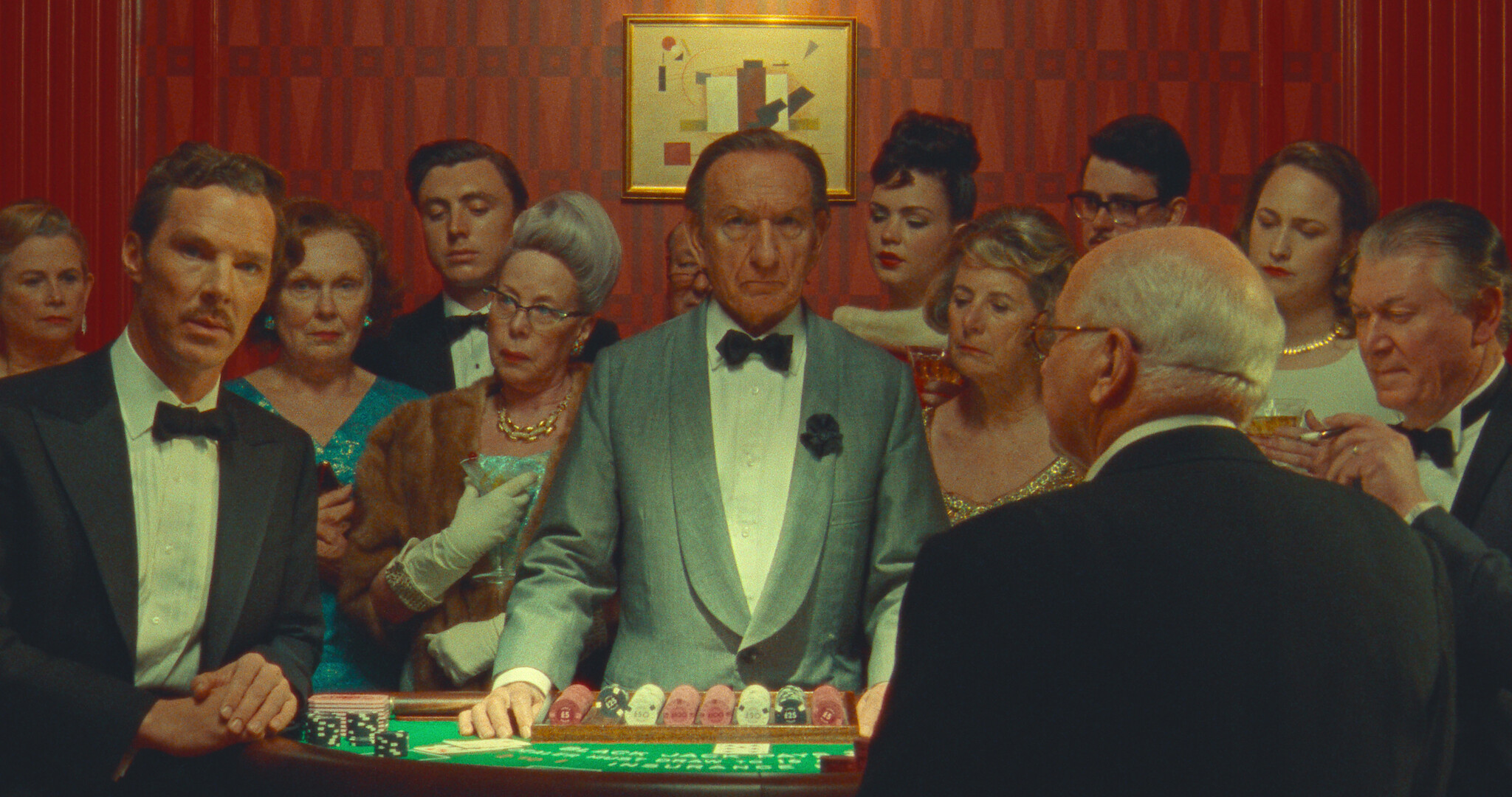
The whole film is like that, beginning with a writer (Fiennes) meant to be Dahl, garreted in his “Gipsy House” writing hut and telling us the story of rich, “greedy” and unmarried posh Henry Sugar (Cumberbatch), a man of no redeeming qualities until he stumbles across this hand-transcribed “book” by Chatterjee in a wealthy man’s book collection and marvels over the idea of how being able to see “without his eyes” could be deployed in cheating the house at his favorite casinos.
The mildly loathesome Henry will train himself, like a yogi, to read the backs of playing cards.
Like a lot of Anderson’s work, it’s dry to the point of parched, deadpan to a deathly degree.
The motor-mouthed narrations are amusing enough until they’re exhausting, as once we’ve gotten Dahl’s point about “all rich people of Henry’s ‘type'” and fallen into the film’s arch style. It’s the clever scene changes, transitions and under-reactions of the players to every event — astonishment at Imad Khan’s skill, Henry’s blase realization he need never lose at blackjack again, changes of heart and matters of life and death — that entertain here.
It’s not among Dahl’s greatest hits or Anderson’s grand meringue delights, but “Henry Sugar” amuses here and there and passes by quickly, unlike the interminable “Asteroid City” and sometimes strained earlier Anderson outings.

Rating: PG, some smoking
Cast: Ralph Fiennes, Ben Kingsley, Benedict Cumberbatch, Richard Ayoade and Dev Patel.
Credits: Scripted and directed by Wes Anderson, based on a short story by Roald Dahl. A Netflix release.
Running time: :40

