
A true story, an Englishman transplanted in clip crazed 1970s Argentina and a little Jonathan Pryce on the side?
This played at the Toronto Film Fest this fall, and Lionsgate cannot wait to release it.
A true story, an Englishman transplanted in clip crazed 1970s Argentina and a little Jonathan Pryce on the side?
This played at the Toronto Film Fest this fall, and Lionsgate cannot wait to release it.
Laurence Fishburne, Julianne Nicholson, Rachel Brosnahan and Jon Bernthal are among the supporting players in this “cryptoanalyst turned assassin/agent” thriller.
April 11.
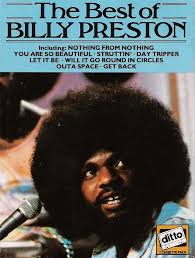
Whenever Ringo Starr is asked about the pianist/organist, singer and “fifth Beatle” Billy Preston, “He never put his hands in the wrong place” is his highest compliment.
One music producer who worked with the two-time Grammy winner marveled at Preston’s ability to “play any song” by just jumping in, “anticipating” correctly every note that needed to come next.
And musicians far and wide sang his praises over his sense of melody, rhythm and timing.
A glorious new documentary about the Gospel, soul, pop and funk singer who toured with the Stones and played with Ray Charles, Aretha Franklin, Little Richard, Neil Diamond and Johnny Cash among others also benefits from great timing.
“Billy Preston: That’s the Way God Planned It” is making the festival rounds hot on the heels of the critically acclaimed “Saturday Night,” a movie documenting the hours leading up to the 1975 premiere of “Saturday Night Live.”
Whatever else that movie has going for it, casting Jon Batiste as Preston, the first-ever musical guest on the show, proves as fortuitous as flying Preston and his band to New York to do “NBC’s Saturday Night” was nearly 50 years ago. Batiste’s Preston steals the picture, providing an electric third act lift much as Preston lifted that premiere episode of what became a long-running series.
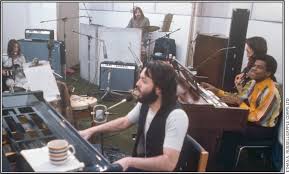
And that film came not that long after Peter Jackson’s heralded “Get Back” documentary, which remembered The Beatles’ embattled final LP and final live “rooftop” performance, “rescued” by the infectiously upbeat musical genius Billy Preston.

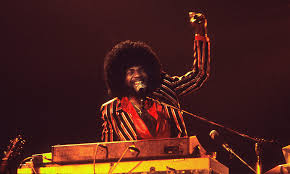

But as Emmy-winning TV director Paris Barclay’s lively and moving new documentary reminds us, Preston’s was a troubled life of triumphs that began before he was in middle school, and tragedies tied to that early fame.
Preston kept his sexuality hidden for most of his life, but was unable to keep his addictions, financial and legal troubles out of the press. He is remembered for that million-watt smile, but intimates tell of his love of Courvoisier and weakness for crack cocaine.
And the fact that he’d talk about Gospel music training, his early encounters and work with Ray Charles and Nat King Cole, but not about touring with Little Richard in his early teens speaks of secrets he carried to his grave.
Barclay interviewed a Who’s Who of musical luminaries, family members, longtime friends and music insiders for “That’s the Way God Planned It,” which takes its title from an early (minor) hit composition Preston put out on the Beatles’ Apple Music.
Generous samples of Preston’s filmed performances turn up, reminding us of the L.A. Gospel keyboard prodigy cast to play the young W.C. Handy in 1958’s “St. Louis Blues,” which led to an early TV appearance with the film’s star, Nat ‘King’ Cole.
At his peak, Preston was the greatest “side man” ever, the fellow who “stole” every recording session and ensemble performance he turned up in, according to his longtime friend and collaborator Eric Clapton. That’s because Preston was “always the best musician in the room,” a producer reminds us.
Hit singles? Did you remember he wrote “You Are So Beautiful,” the instrumental “Outa Space,” “Nothing from Nothing” and “Will It Go Round in Circles?”
His admiring collaborators speak of the effortlessness with which many of his songs were conjured, and Clapton and Starr and others recall how he’d show up at the studio, start picking around the melody and make song after song by some of the icons of his musical era better.
Family members, friends and colleagues talk of the sexuality Preston kept hidden, and singer, actor and gay fashion icon Billy Porter provides context for why that was and how tragic that could be.
Probably molested as a child, Preston in turn faced arrest on that charge much later in life, and “boys” and attractive young men were often in his company but “never talked about.”
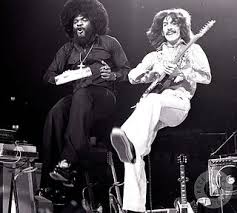
Being the “Fifth Beatle” made him lifelong friends with George Harrison, and a key member of the “Concert for Bangladesh” band assembled for that landmark benefit show in 1971. But Preston’s big shot at the permanent A-list was his title-role turn in the misguided film of “Sgt. Pepper’s Lonely Hearts Club Band,” in which Preston’s sparkling presence arrives too late to save one of the all-time box office flops.
The opening sequences of “That’s the Way God Planned It” will leave the casual music and modern music history fan slack-jawed in awe at Preston’s gifts and the places he showed them off. And the latter acts will move many, as he faced his demons and prison time, with true friends coming to his aid but never filling the void that loneliness, closested isolation and addiction created.
Barclay shows a sure hand at knowing where the fun in his subject is — Mick Jagger learning to tone down his mockery of Preston’s collection of oversized Afro wigs — as well as where the tragedies lie. And he makes sure this most-satisfying biography of the Rock and Roll Hall of Fame member ends on a high note, Preston’s late-life appearance at the Concert for George.
Even in that star-studded event, event-organizer Clapton grouses with a smile, the man at the Hammond B-3 stole the show and “the song I wanted to do.”

Cast: Billy Preston, Ringo Starr, Merry Clayton, Mick Jagger, Olivia Harrison, Rev. Sandra Couch, Billy Porter, Sam Moore and Eric Clapton.
Credits: Directed by Paris Barclay, scripted by Paris Barclay and Cheo Hodari Coker. A White Horse Pictures release.
Running time: 1:44


“In the Summers” is a wistful elegy to the passing of childhood and the recognition and acceptance of the flaws of those who made us.
Alexssandra Lacorazza’s downbeat debut feature follows two California sisters through the ups and downs of their relationship with their Puerto Rican-born New Mexican dad. She invites us to, like the sisters, judge and misjudge their father, and start to understand — by adulthood — the good and the bad in him, and speculate on what’s really going on and how he become who he is.
We size up Vicente (Grammy winning rapper Residente) on first sight — bald, neck and shoulder tattoos, a touch of stubble and taste for smokes. He may be welcoming ten year-old Violetta (Dreya Castillo) and even younger Eva (Luciana Elisa Quinonez) whom his ex has entrusted with him for the summer. But underneath the tenderness and doting dad moments we sense he’s a rough customer.
Living in a nice Las Cruces ranch house he inherited from his mother, he feeds them, lets the sisters swim in the pool and takes them on excursions to stargaze, learn about history and learn to play 8-ball at Carmen’s (Emma Ramos) bar.
The way Dad talks about science and math and explains things like how we have a rough idea of how many stars there are in the galaxy tip us off. Vicente was a smart kid who understands physics and higher math. As he drinks too many beers and teaches them the game “No Stopping” — which involves recklessly lurching through traffic in what might be an inherited Volv — we statt to see what went wrong.
Flashes of temper add to their and our understanding. The world might not have known what to do with a smart Hispanic kid when he was young. The sisters only figure out he’s tutoring local kids in science and higher math years later.
But on return visits, the siblings learn what to avoid around him and to decline his pleas to “trust me” about a lot of things — driving, remembering to pick them up at the airport, etc.
Lacorazza tells this lovely coming-of-age tale in long vignettes, breaking her story into chapters where Kimaya Thais and Allison Salinas, then Lio Mehiel and Sacha Calle take over the roles of Violetta and Eva as they mature into adulthood.
One sister will act-out, fight back, cut her hair short and figure out she’s gay. The other will feel almost abandoned, growing up troubled by what is plainly a less-than-safe environment of parties with short-tempered Dad’s “loser” friends “In the Summers.”
Lacorazza gets affecting performances that are by turns adoring, winsime and hesitant, defiant and confused and eventually simply resigned from the various well-cast young actresses. And in Residente, she finds machismo masking a bitter despair over how life turned out and the limited choices/poor decisions that put Vicente there.
She tells a familiar-seeming story in a new, beautifully crafted and touching way. Set in a little-filmed culture and corner of America, Lacorazza has created a debut feature that checks all the right boxes for what we hope to get from an “indie film.” “In the Summers” announces her as a talent to watch.

Rating: unrated, drug use, sex, drinking, smoking, profanity
Cast: Residente, Dreya Castillo, Luciana Elisa Quinonez,
Kimaya Thais, Allison Salinas, Lio Mehiel, Sacha Calle and Emma Ramos.
Credits: Scripted and directed by Alessandra Lacorazza. A Music Box release.
Running time: 1:34
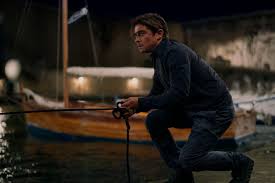


The stakes could not be higher in the thriller “Vanished into the Night.” A father, in debt and going through a divorce, loses his children to kidnappers and must reconnect with a hoodlum from his wayward youth to raise the cash for the ransom.
The father is Italian, and there’s an implied “You how Italians are about their children.” The mother is American, a career woman who wants to get back to her career, and it’s implied that “you know how judgemental American career women can be.”
But there’s little urgency and the stakes never feel as high as you’d think in this twists-aplenty Italian remake of the Argentian thriller “The Seventh Floor.”
Some of that’s by design. The father Pietro, played the terrific Italian star Riccardo Scarmacio (“John Wick: Chapter 2,” “A Haunting in Venice”) reacts to this news as just what he has coming to him.
A messy, underscore-his-shortcomings divorce, his history of gambling an the ruinous gamble that he and his wife could buy a house in suburban Bari (in the south of Italy) and make it a profitable B & B have left him debt in the part of country where debts with the wrong folks can be dangerous. Scarmacio plays Pietro in a resigned panic. He could almost see this coming.
His wife’s panic takes the form of fury. He’ll have to come up with the money himself, and that means reconnecting with an unsavory old friend he keeps at arm’s length. The kids would love to call him “Uncle Nico” (Massimo Gallo), but Dad won’t have it.
Now, he’s got to beg for money from someone he’s shunned. When Nico gives him “a job” to pay for the cash, one that involves his semi-rigid dinghy (motorboat), Pietro’s panic about the kids recedes as he’s got to learn how to carry out a “meet” and “handover” and get back to shore before the Otranto authorities figure out what he’s up to.
There’s a melodramatic weight that hangs on this picture and threatens to smother the life out of it. This contrived incident leads to that one, and so on, with characters responding in ways that defy logic or common sense.
The script hangs on stereotypes, but the one director Renato De Maria accidentally includes is Italian indolence. There’s a lack of urgency that gives the film the feel of something unreal, as if Pietro is experiencing this in shock.
That’s a valid choice. Scarmacio’s Pietro faces violence like a man who’s forgetten how to be violent.
But the veteran British actress Wallis (“The Tudors,” “The Mummy”) struggles to convey panic, rage, motherliness or mystery in her performance. And Gallo’s Nico is written and played as a cartoon mobster — partying, acting over-familiar and failing to make his shunned and irked about it “old friend” convincing.
About the best thing one can say about this broken-watch/ticking clock thriller is its travelogue qualities. Whatever other movies have conveyed about the depth and dangers of organized crime in the south of Italy, “Vanished into the Night” (in Italian and English, with subtitles) makes a great advert for “Visit Scenic Bari.”

Rating: TV-MA, violence
Cast: Riccardo Scarmacio, Annabella Wallis and Massimo Gallo
Credits: Directed by Renato De Maria, scripted by Luca Infascelli and Francesca Mariana, based on the Argentine film “The 7th Floor,” scripted by Patxi Amezcua and Alejo Flah. A Netflix release.
Running time: 1:32
“Saturday Night Live” alumnus Mooney and music video director Evan Winter (credited as co-writer here) dreamed up an alt reality where instead of Bill Clinton & Co. planning for and preventing a cyber meltdown of computers on Jan 1, 2000, civilization parties its way into oblivion.
Dec. 6, this farcical reminder that competent governance matters when it comes to calamities comes to theaters.
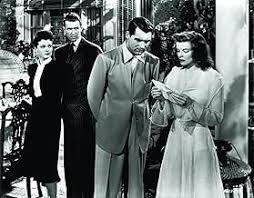
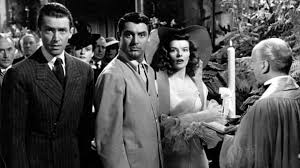
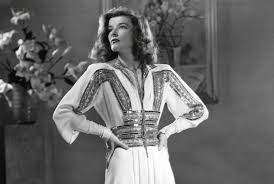
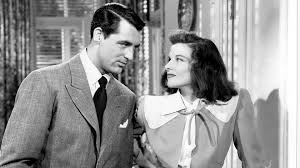

It begins with a screwball tease — a couple, wordlessly breaking up, climaxing with the husband maniacally grabbing the wife by the forehead and shoving her back through the door and onto the floor.
But even though the wife is played by the fiesty fury Katharine Hepburn and the guy doing the over-the-top shoving is Cary Grant, a “tease” is as “screwball” as this gets.
This is “The Philadelphia Story”(1940), dear, not “Bringing Up Baby” (1938). And while more’s the pity that it isn’t, it’s still a shimmering, stately statement on “class” in Depression Era America, and the movie that won James Stewart his Oscar.
George Cukor’s film is a romance that just reeks of old money and Eastern “sophistication,” built around the actress who embodied those traits on and off the screen.
Sparkling wit that transcends one-liners, three big names heading the cast, lush sets and stunning costumes may heighten the sense of theatricality of MGM’s lavish film of the popular Philip Barry stage play of the day.
“Stately” here can stand for “classy” and a tad staid and slow. But Hepburn, Stewart and an underplaying (mostly) Grant and the cream of MGM’s supporting players animate and enliven this romance that keeps us guessing “Who gets the girl?” right up to the nuptials of the finale.
Stewart plays Macaulay “Mike” Connor, a short story writer making the rent by reporting for Spy Magazine and its unscrupulous scoop-obsessed Brit editor (Henry Daniell).
Connor resents being “a society snooper.” “Doggone it, it’s degrading, unDIGnified!”
But Mike and fashionable photographer Liz (Ruth Hussey) have drawn the assignment of crashing the elite nuptials of Tracy Lord (Hepburn) and coal magnate George Kittredge (John Howard). This will be the second marriage for the old money/old family Philadelphian Lord, and editor Sidney Kidd wants to give readers a sordid peek inside this world of extreme, entitled, inherited wealth.
He’s got an “in.” That would be Lord’s ex-husband, C.K. Dexter Haven, played by Grant. He’s to lie their way into the wedding party, and if he’s “getting even with” his ex-wife, he’s picked a fine way to do it.
In that long lost age, old money like the Lords eschewed publicity, “the very idea” of someone “coming into our house with a CAMERA.” Tracy resents any notion that she’s “to be examined, undressed and humiliated…at 15 cents a copy!” But she has no choice.
The class-conscious writer Mike insults everything he sees in these entitled inbreds.
What kind of name is “C.K.Dexter Haven,” anyway? “What’s this room? I forgot my compass!” And don’t let him get on the in-house telephone lines.
“This is the voice of DOOM calling. Your days are numbered!”
Tracy decides to give in and give the reporter and his photographer a caricature of chattering, dithering, dizzy wealth. With her little sister (Virginia Weidler) enlisted, they’ll present a parody of “a rich American female” with an eccentric family throwing a lavish, exclusive wedding.
And if that doesn’t fool them, she’ll try bribery.
“Class” comes up every time we hear the phrase “front entrance,” as in the way only non servants and aristocrats are allowed to enter the mansion. Limos and roadsters and endless changes of clothes and a limitless supply of booze adorn this world. Even divorce was a luxury only the rich seemed able to afford back then.
“The prettiest sight in this fine pretty world is the privileged class enjoying its privileges.”
But liquor was what did in “the ghost of husband’s past,” so Tracy avoids the drink and never misses a chance to put-down Dexter’s biggest failing. His obvious effort to sabotage her wedding with reporters has her wondering if he’s gone off the deep end.
“You haven’t switched from liquor to dope, by any chance, have you Dexter?”
The men refer to Tracy as some sort of “goddess,” a “queen” who can’t let herself be human. With a fiance, an ex and a cynical reporter who might fall under her spell, what IS a girl to do, and who WILL she choose, seeing as how she’s the richest one with all the choices?
It’s enough to drive a body to drink.
“The Philadelphia Story” is a comedy of cute touches and funny scenes interrupted by lectures on Tracy’s personality and personal shortcomings and little intrigues that aren’t all that intruguing.
The “screwball” elements — play-acting wealth, pretending one’s tippling, womanizing (“A PINCHER!”) Uncle Willie (Roland Young) is her scandalized, cheating father (John Halliday), the endless dips in the pool after drinking, the competing agendas and withering insults — tend to come in bursts.
While one wouldn’t call the complications that come up between the best scenes “filler,” the picture shows its age and MGM “gravitas” by lurching along from one ornate setting to the next.
My favorite character and to me the most ingenious touch is having young miss Weidler play Tracy’s sister Dinah as a 13 year-old Hepburn clone — tomboyish attire, brash and witty/wise beyond her years.
“I think that dress hikes up a little behind…”
“No, it’s ME that does.”
Listen to her tear through a Groucho Marx favorite, “Lydia the Tattooed Lady,” at the piano. She almost steals the picture.
What I find clunky in seeing this film again after many years is the mechanical nature of the many possible romantic “pairings,” with Hussey playing a passive wild card to all the men reaching for Hepburn’s Tracy, some for reasons that seem undermotivated.
That which is obvious — the dude with the mustache NEVER gets the girl, unless he’s William Powell — seems too obvious, and the clockwork plotting needs winding as the pace is altogether too stolid for my tastes.
There’s one very romantic scene, and several than are meant to be and just aren’t.
But Hepburn crackles and Stewart blusters and drawls. And Grant consents to be a less amusing third wheel, hectoring Hepburn with serious criticism that doesn’t play as particularly fun, droll or astute, allowing himself to be photographed with lean, lanky Stewart towering over him at times.
They’re all in top form in what is widely acknowledged as one of the comic classics of its era, but a comedy that is more pretty and polished than laugh-out-loud rambunctious.
Perhaps its most telling criticism is the unfairest. “Philadelphia Story” suffers mainly in comparison with the most lauded rom-coms of its day. It’s no “Ninotchka,” “The Awful Truth,” “His Girl Friday” and especially “Bringing Up Baby.” But MGM at its wittiest is at least deservedly in their company.

Rating:”approved,” TV-14
Cast: Cary Grant, Katharine Hepburn, James Stewart, Ruth Hussey, Mary Nash, John Howard, Virginia Weidler and Roland Young.
Credits: Directed by George Cukor, scripted by Donald Ogen Stewart (and Waldo Salt), based on the play by Philip Barry. An MGM release on Tubi, Amazon, etc.
Running time: 1:53



The main draw of a genre film is the promise of cinematic comfort food.
A faintly Byzantine plot, some solid action beats delivered by genre veterans in front of and behind the camera and a few pithy turns of phrase and film fans can get up feeling sated and satisfied — if unchallenged and unsurprised — when the closing credits roll.
“Canary Black” is an almost wholly unsatisfying thriller that seemingly had enough necessary ingredients to comprise a full meal.
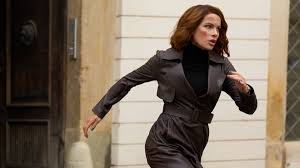
“Underworld” veteran Kate Beckinsale has decades of being a willowy beauty who can still make fight choreography work, however implausible.
The late Ray Stevenson (“Kill the Irishman,” the “Thor” movies) finished off his career of heavies and sometimes heroic heavies with this Euro-thriller, set largely in France but shot in Croatia and Slovenia.
And director Pierre Morel is a genre veteran whose “District B19 introduced “parkour” to action cinema, and whose “Taken” launched Liam Neeson’s third act career in the genre.
But this movie, a pointless, static scramble for a stolen “file” with global peace/survival of Western civilization implications, is unsatisfying on almost every level.
“Canary Black,” a titular pun on a comic book vixen (Black Canary), reminds us that Morel has has no luck reinventing/reviving the careers of anyone not named Neeson. “Peppermint” didn’t re-launch Jennifer Garner’s return to action. “The Gunman” didn’t give Oscar winner Sean Penn a new path to box office relevence.
Stevenson has precious little “action” to carry here, and Beckinsale may be a well preserved, fit and fetching 50something. But the size of the brutes she beats and bowls over here just call attention to the improbality of it all, the necessary stunt doubling and the hair that’s never out of place, always sexily draped over one eye.
Beckinsale plays a recently married (Rupert Friend plays the spouse) CIA assassin blackmailed into stealing this file by the usual all-knowing, all-powerful mostly unseen menace played by Goran Kostic.
She will be compromised, robbed, with her husband kidnapped and her safe house sacked. The agency will consider her a traitor and the blackmailer will not make her task any easier, planting a landmine in one location she’s sure to track down.
Why, exactly? It makes a cool “How’s she get out of THIS?” moment, but makes no sense.
Her boss (Stevenson) will need to believe her story and keep his trigger-happy minions at arm’s length. SUV chases through the darkened Old World streets creates mayhem. And of course there’s an always-vaping handy hacker/gadget guru (Romina Tonkovic) to call on for help, “one last time.”
Stevenson gets a single, chewy line. “Cold war, digital war. Only the ass—es change.”
Beckinsale’s American spy wife-with-a-secret-life gets to brush off her unknowing Brit husband’s pleas for a puppy or two.
“I can’t be trusted to keep something alive.”
And we dash from monumental villainous penthouse complexes to CIA cover-businesses with the clean, pristine Architectural Digest touch of having the entire operation housed in glass cubicle offices.
Even that’s generic in the extreme.
The plot’s cut and pasted from a hundred other films, and while the budget allowed for a few “names” and a little charisma in the supporting cast, Morel, Beckinsale & Co. ignored Hitchcock’s genre epigram at their own peril.
“Good villains make good thrillers.”
Without conceiving, writing and charismatically casting that part, this iffy proposition was never going to work.

Rating: R, violence
Cast: Kate Beckinsale, Rupert Friend, Goran Kostic, Jay Hutchins, Romina Tonkovic and Ray Stevenson.
Credits: Directed by Pierre Moral, scripted by Matthew Kennedy. An MGM release on Amazon Prime.
Running time: 1:43
May 23.



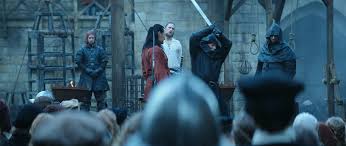
It’s revealing that “Stockholm Bloodbath,” the latest film retelling of a grim moment in history that led to Sweden’s independence, premiered in Denmark. The film’s about Swedish suffering, persistence and pluck, and the Danes are the ones who perpetrated the infamous 16th century massacre that the film is about.
“Bloodbath” is a wildly uneven burlesque of a mass beheading, a jokey, jaunty slaughter with bits of derring-do that aren’t necessarily historical and aren’t particularly satisfying.
It’s the stort of movie you get when the Swedish director of “1408” and “Escape Plan” casts an important piece of Scandinavian history with a lot of Brits in leading roles, films it in English and shoots it in Hungary.
Villains trash-talk, taunt and peacock about, sometimes bathed in blood.
“You really hate the Swedes, don’t you? So...annoying. So full of themselves!”
Our heroine, Anne, played by Sophie Cookson of the cartoonish “Kingsman” espionage actioners, loses her entire family in a pre-massacre massacre, and shows up at the Swedish court in Stockholm where she greets the wife (Emily Beacham) of the head of state (Adam Pålsson) with comical informality.
“My mother and father said to send you their best. But they’re um, dead.”
And if it has a “message,” it’s a backhanded swiped at famed Swedish neutrality — “It you don’t pick sides, you’re sure to come out a winner.”
Well-acted, beautifully designed, costumed, edited and set, with good stunts and effects, it’s an action comedy that fails its subject even as it fitfully entertains.
It’s 1520, and the Swedes have been successfully fending off the Danish domination of the Kalmar Union thanks to the exploits of Sten Sture (Pålsson). But Danish King Christian II, played by Danish star Claes Bang (“The Northman,” “The Square,” “The Burnt Orange Heresey”) is prepared to sack, murder and pillage his way overland until the Swedes in Stockholm surrender.
That’s how Anna’s family is slaughtered and her fiance (Wilf Scolding) is kidnapped. If not for the help of her mute archer friend Freja (Danish nepo baby Alba August, daughter of director Bille), Anna would have been taken, too.
But she’s been paying attention to the comic book cartoonish credits identifying the bad guys. The villains are ID’d as “The Big Danish Guy” (Roland Kollárszky) the sadistic “Sylvestre” (Thomas Chaanhing), “The Evil Guy” (Mikkel Boe Følsgaard), etc.
Anna survives her wounds, nursed by her bridesmaid Freja. She’ll practice her archery and have her revenge, keeping an “In Order of Disappearance” checklist as she hunts them down.
There’s also “The Spy” (Ulrich Thomsen), a member of the Swedish court determined to help himself and “negotiate” Sweden back into the union via treachery. And an anti-independence bishop (Jakob Oftebro) has been freed by the Danes, ready to have his own revenge by advising Christian on the flexible meaning of “heresy.”
The villains are deliciously vile and dominate the screen, and the Swedes, soon led by the wife of the head of state Kristina (Beecham), might be over-matched. But as we follow the exploits of Anna and Freja in this frigid war zone, we have no doubt that right will triumph. Eventually.
The performers are all spot-on, registering a convincing pluck or hammy sadism with revenge on everybody’s mind. They get across the filmmakers’ vision.
But it’s that vision that always feels off here. Perhaps the story’s been told so often up there amongst the beautiful blondes that a bloody action send-up of it is the only “fresh” approach to a sad story of mass murder.
“Stockholm Bloodbath” has fine action beats and furious avenging, but collapses into a sort of resignation about the parts of the tale that must be rendered faithfully.
There’s hope, peeking in around the edges, thanks to the action comedy tone. Bang, Følsgaard, Thomsen and others have license to lampoon. But scenes take on a cringey quality as passive people are being led to the chopping block.
It’s as if the dissonance of the over-the-top horror title label history gave this tragedy threw one and all off, and they didn’t realize the blunder until they premiered their version of the “Stockholm Bloodbath” somewhere other than Denmark.

Rating: R, bloody violence, profanity
Cast: Sophie Cookson, Alba August, Emily Beecham, Jakob Oftebro, Mikkel Boe Følsgaard, Adam Pålsson, Wilf Scolding, Ulrich Thomsen and Claes Bang.
Credits: Directed by Mikael Håfström, scripted by Erlend Loe and Nora Landsrød. A Brainstorm Media release.
Running Time: 1:58


