Movie Review: Bayou Brawler lives to “Rumble Through the Dark”

I’m hard-pressed to think of a screen role Aaron Eckhart didn’t commit to, heart and soul. A-pictures and B-movies, bit parts or leads, he’s present, prepped and accounted for every time somebody yells “Action!”

For his latest, he’s hit the gym, mastered a faint drawl and studied that confused, punch-drunk look of a veteran fighter whose memory and very consciousness comes and goes as he staggers towards 50. Stoop-shouldered, he leans so far into his gait that it’s like he’s stalking a foe, or about to fall down in the process. It’s a lovely, lived-in performance.

“Rumble Through the Dark” is a Bayou brawler noir, a film about a back alley fighter who never really “put on the gloves.” Anybody who keeps brass knuckles in his pocket isn’t a “boxer,” and probably never was going to be.

Jack Boucher’s last name isn’t the only source of his nickname. “The Butcher” the Cajuns and their neighbors call the guy with the French surname to suit his profession. Jack makes a mess out of his foes, except when he’s paid to take a dive. And even then, he makes a punishing show of it, making them pay to “fix” the fight.

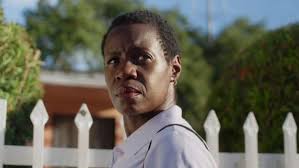
Jack’s in hock to the madam and bookie they call Big Momma because of course they do. Marianne Jean-Baptiste, who broke through with Mike Leigh’s “Secrets & Lies” nearly 30 years ago, brings a world weary/worldwise menace to a character others speak of warily, as she has a habit of branding a “$” sign on those who owe her money.

Jack fights and he gambles. He wakes up and passes back out again. He’s spending an awful lot of time trapped in memories of childhood abandonment, experiencing flashbacks of the stepmother who took him in and who taught him to stand up to bullies with extreme prejudice.

In Louisiana, having a “lesbian mom” is going to get you teased. Got to be tough to deal with that.

Just as Jack thinks he’s going to get square with Big Momma thanks to a lucky turn or ten of the roulette wheel, he loses the cash. Annette the Tattoo’d (fleshy, inked-up Bella Thorne) lady in a traveling carnival is the one who finds his winnings.

Filmmaking siblings Graham and Parker Phillips take their movie’s sweet time getting the carny with the cash and “lots of questions” in the same truck with the bloodied, broke brawler who might have the answers.

Yes, their picture dawdles. They give screen time for supporting players like Ritchie Coster, as Baron, who runs the seedy carnival, Mike McColl as a greedy carny/mechanic and Christopher Winchester, as Big Momma’s muscle, to make their marks.

And they give Jean-Baptiste almost all the best lines.

“I wish you knew how bad I wanna put you outta your misery.” Fight or don’t fight. You might get hurt if you do, you WILL get hurt if you don’t.”

“I can’t figure out whether you’re gettin’ braver or dumber.” To her, he’s just a guy prone to “rumble through the dark, chasin’ something he ain’t never gonna catch.”

The Phillips (“The Bygone” was theirs) allow director of photography David J. Myrick the time to light for mood — gloom, poverty, downmarket despair — and compose one immaculate shot after another. This modestly-budgeted indie is so gorgeous to look at you hope Martin Scorsese doesn’t see it. “Killers of the Flower Moon” has the air of a movie shot on a cell phone by comparison.

That “dawdling” thing gets in the way of this simple, sometimes trite and even corny narrative. This is a B-movie by genre — a “Big Fight” picture — by tropes and by design. Yet the Phillips never let a single spare scene get across a plot point when five long, often wordless and evocative ones will do.

But it’s never less than watchable. And Eckhart rewards the obvious care and time it takes to make a film look this polished, gritty and immersive by giving these young filmmakers every penny’s worth in every take. Thorne makes the most of a role that’s downmarket, but sentimental.

And Jean-Baptiste takes a stereotypical character and makes her pop off screen, playing a woman with agency, an eye for spectacle, an unforgiving streak and a branding iron she’s not shy about heating up when the need or the sadistic urge arises.

Rating: R, grisly, graphic violence, profanity, smoking

Cast: Aaron Eckhart, Bella Thorne, Ritchie Coster, Christopher Winchester, Mike McColl and Marianne Jean-Baptiste.

Credits: Directed by Graham Phillips and Parker Phillips, scripted by Michael Farris Smith. A Lionsgate/Screen Media release.

Running time: 1:54

Posted in Reviews, previews, profiles and movie news | Comments Off on Movie Review: Bayou Brawler lives to “Rumble Through the Dark”

Movie Review: An activist fights predatory multi-nationals in Chile — “Sayen: Desert Road”


“Sayen: Desert Road (Sayen: La Ruta Seca)” is a Chilean B-movie thriller about the further adventures of activist/investigator and freedom fighter Sayen, a two-fisted Mapuche woman plunging into a Big Conspiracy destroying her people and and enriching the corrupt in her native Chile.

We met the title character, played by Indigineous action heroine Rallen Montenegro, in “Sayen,” the story of how she was radicalized when murderous multinational corp-hired goons killed her wise grandmother, sending the title character on a quest for revenge and justice.

“Desert Road” has her breaking and entering, torturing, fighting and digging her way towards the top of this water-stealing, lithium-minining, politician-buying pyramid. She is a woman who has shaved her head to show us how serious she is on this mission. She has her grandmother’s spirit, embodied in an Andean Condor, to guide her.

Sayen has been labeled a “terrorist” by the compliant media, which buys into the spin that GreenCorp, its villainous boss Maximo Torres (Enrique Arces) and bought-and-paid-for Chilean senator (Alfredo Castro) are putting out there. Disappearances and murders are laid at her feet, not theirs.

Hunted and hounded by company muscle, chased on foot, motorcycle and ATV through the Atacama Desert, she relies on her native wits, stamina and fighting skills to save her.

There is help along the way — her Mapuche researcher friend Jose (Camilo Arancibia) is back from the first film. Another woman, Quimal (Katalina Sánchez) pitches in on getting Sayen safe houses and getaways as she sniffs around for the truth.

The villains call her “the Indian” (“dusky woman,” in Spanish, but this is dubbed on Amazon) as she tries to foil their plans for sucking up the desert’s aquifer to mine lithium for the batteries that will power the “green” or at least “greener” future.

Director Alexander Witt’s sequel never feels like anything more than a placeholder film for I guess a third installment in this trilogy.

The action beats are solid, but character development is pared down from the introductory film. Unseen third act “allies” and the elusive, still unseen Mr. Big (Fisk) are hinted at.

But for everything resolved here — and precious little is — more that must be resolved in the finale is introduced and left hanging.

The dialogue, situations and heavies are B-movie formulaic and utterly unsurprising.

Montenegro helps make Sayen a compelling character with an unusual, seldom-filmed point of view. But the movie pulls her punches. I’d love to see her as a more ruthless avenger, frankly.

In any event, if all involved were hoping they’d serve up enough to keep viewers interested enough to await the third film in this saga, they failed.

Rating: unrated, violence, profanity

Cast: Rallen Montenegro, Enrique Arce, Katalina Sánchez, Camilo Arancibia, Eyal Meyer and Alfredo Castro

Credits: Directed by Alexander Witt, scriped by Leticia Akel and Paula del Fierro. An MGM/Amazon Prime Video release.

Running time: 1:33

Posted in Reviews, previews, profiles and movie news | Comments Off on Movie Review: An activist fights predatory multi-nationals in Chile — “Sayen: Desert Road”

Movie Review: “The Marsh King’s Daughter” is tested by her upbringing in this wilderness thriller

Karen Dionne’s Crimson Scribe-award winning, best-selling novel “The Marsh King’s Daughter” earns a sturdy, suspenseful big screen treatment by the director of “The Illusionist” and “The Upside.”

Neil Burger benefits from having a compelling lead — Daisy Ridley — and one of the Best Villains of Our Time, Ben Mendelsohn, as her antagonist teacher/father, a back-to-the-woods murderer and kidnapper.

If the story feels cinematically familiar, perhaps you’re thinking of “Where the Crawdads Sing” when you’re also remembering “Leave No Trace.” A child, brought up Davey Crockett style, “raised in the woods so’s (she) knew every tree,” finds herself calling on that knowledge when tested by a life-and-death situation that also reveals much about the woodsman who raised her.

We meet Helena when she’s ten, growing up off the grid in the wilds of Michigan’s Upper Peninsula. Helena, played by Brooklynn Prince (“The Florida Project”) at this age, is an impressionable Daddy’s girl who skips homeschooling and housework with mom (Caren Pistorious) for any chance to wander the woods with Dad.

Father Jacob is a gentle but unsentimental teacher and taskmaster.

“If you were afraid, running for your life, where would you go?” “Where no one could see me.”

Giving her the shot at a deer they’ve been stalking makes her ask, “What if I miss?” “Then we go hungry tonight.”

A hungry mother wolf eyes her as the meal she might very well be and earns Father’s sternest lesson.

“You must always protect your family.”

These often wordless reveries in the woods come with a lesson, and often with a test. Pass or fail, “Little Shadow” earns a Native style tattoo about the experience from her dad.

And then the day comes when she might start to figure things out, why her mother is so unhappy and distressed, why her father gets rough with her. A stranger sees them and that triggers a getaway. Mom has to blurt out “I was kidnapped” and incapicate the confused and furious child to escape the marksman/monster who has held them both captive.

Years pass, and Helena (Ridley) has a little girl of her own, a college professor husband (Garrett Hedlund), a Jeep XJ, cinematically appropriate transportation for a U.P. college professor’s family and an anonymous life in the same corner of the world where she grew up.

Even her husband doesn’t realize she’s the notorious “Marsh King’s Daughter.” And then the Marsh King busts out of prison.

Burger and screenwriters Elle Smith and Mark L. Smith abandon some of Dionne’s novelistic devices, giving “Him” and “The Daughter” names straight away, etc.

The story’s contortions to avoid being predictable often come to naught in the film, as there’s only path this tale can take and still deliver something like “The Hollywood Version.” But Burger & Co. maintain suspense and make us guess at how far they’ll take things, as a coyote who chews off his own leg is laid out as allegorical foreshadowing and the ultimate endorsement of the father’s “There’s nothing more pure than the instinct to survive” lesson.

Ridley is properly alarmed, brave and stoic as Helena. The accent may not be “U.P.” if there is such a thing. But she’s credibly American and properly rawboned, woodlore competent and understandably secretive. Gil Birmingham stands out as the sheriff who had a hand in “rescuing” Helena and her mother, and became a big part of her life. Hedlund makes do with a largely thankless role, a husband with no “agency” in his wife’s severest trial.

But this is Mendelsohn’s movie. Whenever he goes a stretch without playing a big screen heavy, it just underscores how good he is at it when he returns to the Dark Side. Here, his father-figure is a man of mystery. We don’t know how he came to be the woodlands incel who kidnapped a woman and raised a daughter to be just like him.

Mendelsohn makes us believe in this roughhewn Jacob every second he’s on the screen. We don’t need to know his back story. He just “is.” Never over-the-top, always cold-blooded and rational, this is a role all but novelized with Mendelsohn in mind.

The predictability of much of what we see unfold here isn’t an asset. “Marsh King’s Daughter” can feel perfunctory, lacking the interior life that a novel gives characters. But the settings, the striking cinematography, sharp, suspense-heightening editing of the action beats and the stars lead this Marsh King’s Daughter out of the swamp.

Rating: R, violence

Cast: Daisy Ridley, Ben Mendelsohn, Gil Birmingham, Brooklynn Prince, Caren Pistorious and Garrett Hedlund.

Credits: Directed by Neil Burger, scripted by Elle Smith and Mark L. Smith, based on the novel by Karen Dionne. A Lionsgate/Roadside Attractions release.

Running time: 1:48

Posted in Reviews, previews, profiles and movie news | Comments Off on Movie Review: “The Marsh King’s Daughter” is tested by her upbringing in this wilderness thriller

Movie Review: A Morose Romance tested by “Fingernails”

“Fingernails” is a romantic curiosity with a touch of sci-fi, a film that puts The Observer Effect in a human relationships context. That’s the physics phenomenon/theory that you change something merely by the act of studying or “observing” it.

This Christos Nikou tale imagines a not-really-alternate reality in which loneliness has reached the “crisis” stage, science has allegedly discovered a chemical compatibility test that requires a full, yanked-out fingernail to be processed and two co-workers at a counseling “Love Institute” start to wonder if they’re with Mr. or Ms. Right, thanks to mutual attraction, no matter what science tells them.

Can “true love” be tested by yanking and cooking fingernails? Can any romance stand up to cold, hard scientific or pseudo scientific scrutiny?

It’s the sort of movie you get when an off-center Greek filmmaker co-writes and shoots an Anglo-American produced romance in the overcast fall of Ontario. It’s just a tad…off.

Only the players give it any hint of warmth or heart, because this dry-to-the-point-of-parched “love story” is hellbent on avoiding that.

Jessie Buckley stars as Anna, a school teacher who some while back “tested positive” with her longtime beau, Ryan (Jeremy Allen White). But as their relationship has settled into routine, he feels the freedom to unemotionally note anything he doesn’t like. And when he’s not around, she’s free to admit that she’s “sacrificing” little things about herself to indulge him.

They mix and mingle with other couples, the “tested” and the untested. Although the movie limits this alternate reality by leaving out all of the reasons for our global epidemic of loneliness and romantic ennui — “media” is limited to nature documentaries and old movies, “social” media apparently doesn’t exist — Nikou immerses us in a world of brittle relationships and the fragile people trapped in them, or struggling to find one that “tests positive.”

Anna’s journey truly begins when she abandons her chosen profession for a job at The Love Institute, whose founder (Luke Wilson) wants to go beyond the breakthrough fingernail-testing that takes “the risk out of love” and do therapy and exercises with couples that “make the bond of love stronger.”

The “tests” would be amusing bits of comic quackery in another filmmaker’s hands. The “smell” test has couples urged not to bathe for a day or two, show up, strip to their underwear and wear a blindfold to discover if they can work the room, and sense their beloved through smell.

Underwater “one minute of eye contact” while holding one’s breath in a pool? Measuring partners’ reactions to “Notting Hill” in a local cinema (with Our Founder wanting to amp that up by staging a fake fire in the theater to gauge reactions and whether or not partners put their lovers ahead of themselves) is another.

Tandem skydiving? Sure

But Anna is paired-up with the cynical, wry trainer Amir, who seems to see through the crackpottery of it all. He notes precautions to take with the underwater exercise.

“Don’t want anyone dying on us...again.”

As Anna loves to ask people about their romances, their “how you met” stories, Amir invents a corny one about how he met his Natasha, and admits the joke. Because that’s what cynics do.

We can see Anna break out in Buckley’s adorable crooked smile, the spark between them as they work with inspiringly-devoted young lovers and worrisome, untested other couples. And that’s contrasted with the drab, incurious love life Anna faces at home at the end of every day.

She even tries to trick Ryan into taking this or that test, a trite sitcom plot device, but at least one that promises something lighter.

But Nikou — you just knew a “Dogtooth” trained Greek whose quirky first film was titled “Apples” was going to make a movie for Apple — isn’t having it. There’ll be little lightness here, and when there is, it’s as if he resents having to include it.

The entire production feels a tad stiff, as if he’s scientifically market-tested how he can approach this (a LATE third act single moment inclusion of a same-sex couple) and just checking off boxes along the way, making a movie that feels like a product of the alternate reality he’s presenting.

But Buckley, of “Lost Child” and “Wild Rose,” and Ahmed (“Sound of Metal,” “Nightcrawler”) make the characters more interesting than the scripted story they appear in. There is a hint of romantic warmth here, and it all comes from them.

Rating: R, a bit of violence, profanity

Cast: Jessie Buckley, Riz Ahmed, Jeremy Allen White and Luke Wilson

Credits: Directed by Christos Nikou, scripted by Christos Nikou, Sam Steiner and Stavros Raptis. An Apple TV+ release.

Running time: 1:53

Posted in Reviews, previews, profiles and movie news | Comments Off on Movie Review: A Morose Romance tested by “Fingernails”

Movie Review: Reality and VR collide in the indie Action Rom-Com “Love Virtually”

That critic’s rule that you’ve got to meet every film on something resembling its own terms in order to give it a fair shot gets a severe test with “Love Virtually,” an indie action rom/com that’s part live-action, part CGI simulated “VR” avatars and their lives of digital desperation.

With a narrative, characters and dialogue that lurch between “inside gaming” jokes and jargon and flippant “old folks” reactions and responses to it, it never congeals into anything one would care to embrace, even if we could find something to grab hold of. But “Love Virtually” — the title’s a pun on “Love, Actually” — is an interesting indie cinema exercise, a failure that might have a natural audience in midnight showings at online gaming conventions, or streamed at “virtual” versions of such things.

As the pandemic rumbles on, this obsessed gamer who goes by “Roddy Danger” (Peter Gilroy) is too distracted to hang onto his virtual and real-life girlfriend Kimberly (Paige Mobley) and finds himself frantic to win her back in VR.

His cheat code to that might be via her just-“canceled” “Beverly Hills Bitches” influencer/cousin Clarissa (Nikki Howard), who has her own problems thanks to posting a paid endorsement of a “mud mask” beauty product the day the rest of America was posting the same black square to show solidarity with Black Lives Matter as the George Floyd murder protests were ramping up.

Clarissa’s therapist (Cheri Oteri) might have words of advice. But she’s also distracted, having a virtual affair with some avatar who could very well be her therapist husband (Stephen Tobolowsky) in disguise.

Then there’s the V-ball (virtual hoops) star La Monte (Vincent Washington) who got canceled for cavalierly infecting half the NBA by mocking the virus as he touched a bunch of microphones (Helllooo Rudy Gobert) whose agent Barry (Ryan O’Flanagan) is dealing with that, Daddy issues and a neglected girlfriend (Ksenia Valenti) who takes up with an AI “Chatbot” Paul F. Tompkins) in revenge.

Hapless Roddy has one last shot at winning Kimberly back from his nemesis, successful gamer Kalvin Kluck (director and co-writer L.E, Staiman). That will have to happen at the exclusive virtual Club Kaboom, where all our characters are headed as this picture makes that its destination where every storyline is to be resolved.

A kid gaming savant, murderous Russian hackers, assorted single scene nerds and other subplots clutter this 85 minute movie’s script and make it all too easy to say “Who cares about ANY of them/ANY of this?”

The film’s obvious issue is its budget, but that relates to how hackneyed the situations are and how thinly drawn the character “types” turn out to be.

Throw a lot of money at this and you’d get bigger name actors. But as they’re mostly seen in VR, what would be the point? Sell the script to a big distributor and they’d rewrite it completely to try and excise the most trite elements.

But the sight gags and joke-packed dialogue have their moments.

“The Dark Web? Is that a Black Lives Matter thing?”

“Stop being such a little girl!” agent Barry’s macho/closeted dad (Tom Virtue) barks. “You’re like Timothee Chalamet in ‘Little Women!'”

Roddy met Kimberly as he virtually rescued her from a virtual slip-and-fall accident at the virtual “Hole Foods” supermarket.

Etc.

Generously meeting this mess on its “own terms” leads to the judgment that there’s an idea or two here that might find a better home in a better script with a bigger budget.

Rating: unrated, VR/CGI simulated violence, date rape, sex, gunplay

Cast: Peter Gilroy, Cheri Oteri, Paige Mobley, Vincent Washington, L.E. Staiman, Ryan O’Flanagan, Harper Frawley and Stephen Tobolowsky.

Credits: Directed by L.E. Staiman, scripted by Cheston Mizel and L.E. Staiman. A Premiere Digital release.

Running time: 1:24

Posted in Reviews, previews, profiles and movie news | Comments Off on Movie Review: Reality and VR collide in the indie Action Rom-Com “Love Virtually”

Netflixable? “Sister Death” tells us how we got to “Veronica”

As it closes in on 100 years since the Spanish Civil War, Spanish cinema is still debating the conflict, its lasting scars and the Catholic Church’s role in it — as victim of “leftist” reprisals, or as an authoritarian religion aligned with other authoritarians — fascists, monarchists and the like.

“Sister Death” is an interesting Civil War-related attempt at back-engineering a prequel to the teen-haunted-by-a-nun thriller, Paco Plaza’s “Veronica.”

That 2017 film, set in 1991, was about a spectral “Hermana Muerte” (“Sister Death”) who pursued the title character after a seance. The new film tells us what a nun who came to teach at Veronica’s school went through after the Spanish Civil War, and what she finds out happened at a convent school during that cataclysm.

“Sister Death” is a mash-up of horror tropes trotted out in many other films — a triggering solar ecclipse, scary nuns, an over-matched noviciate, symbolic game of “hangman” and a child tormented by “the girl,” with the student’s hair as a singular source of vulnerability.

As a stand-alone film, it’s moody and spooky, if a bit hard to follow. It’s ambitious in the way it wades into the Civil War and its violence, and clumsy in its attempts to tie itself into “Veronica.”

But those recycled tropes have a little less sting than they might. The frights are too often of the “It was only a nightmare” variety.

An extraordinary event near the end of the Civil War turns a little girl in a remote mountain village into a “miracle child,” one with visions of the Virgin Mary. Ten years later (1949ish), the child is the 20ish Sister Narcissa (Aria Bedmar), a novice clothed in white ready to teach the students at a convent school with a troubled past.

The girls boarded there labor in the convent’s laundry, a Catholic scandal in some countries, and are easily rattled by the callous Sister Julia (Maru Valdivielso), a martinet singularly unimpressed by Narcissa’s “Miracle Girl” past.

But Mother Superior (Luisa Merelas) is a fan. So Narcissa has a job and her work cut out for her, winning over and teaching her students in the face of strange, supernatural goings-on and a climate of fear that the girls develop over “The Girl,” an apparition they’ve heard of and start seeing for themselves.

Little Rosa (Sara Roch) becomes the spectre’s target.

Sister Narcissa starts to piece together a dark secret the place is keeping, one about a long dead Sister Socorro, and how that might (supernaturally) “explain” what’s happening.

Spanish TV actress Bedmar does a decent job of suggesting realistic human reactions to experiencing the extraordinary. It’s a more nuanced performance than is common in horror, partly explained by Sister Narcissa’s past. As a child, she was exposed to “miracles.” So the supernatural threat here is terrifying, but taken at face value.

The effects are modest and get the job done — characters “floating” on a dolly into a shot, a simple novice’s veil and habit that attack the young nun wearing them.

But it’s all too familiar to be very frightening in the wake of so many “Scary Nun” stories. And the Spanish Civil War flashbacks, which Narcissa “experiences” in dreams or hallucinations, are both graphic and murky in who caused what and why that created a Monster Nun Ghost seeking vengeance.

Connecting all of it to “Veronica” seems more cute than necessary or useful.

Rating: TV-MA, bloody violence, sexual assault, suicide

Cast: Aria Bedmar, Maru Valdivielso, Luisa Merelas, Sara Roch,
Chelo Vivares and Sandra Escacena.

Credits: Directed by Paco Plaza, scripted by Jorge Guerricaechevarría and Paco Plaza. A Netflix release.

Running time: 1:31

Posted in Reviews, previews, profiles and movie news | Comments Off on Netflixable? “Sister Death” tells us how we got to “Veronica”

Movie Review: Commandos Pettyfer and Rathbone face the Terrors of “Black Noise”

The easiest “tell” when you’re trying to figure out if what you’re watching is a B-movie or something further down the action budget alphabet is in the effects.

How do the gunshots look and sound? How realistic is the bloody makeup? How convincing are the bullets to the head/skull explosions?

Lots of filmmakers know they can get their film financed if they line up a couple of B-list or lower stars, actors years past their peak popularity. But few are able to follow through and scrounge up good makeup and effects cash as well.

Heads burst and pistol barrels are pushed against craniums for a self-administered head-shots in “Black Noise,” a C-movie starring Alex Pettyfer (“Magic Mike,” the “Endless Love” remake) and Jackson Rathbone (“Twilight”). And the results are second-year-in-film-school bad.

The players make the best of this “Havana Syndrome” thriller about private commandos sent to save rich folks from an exclusive resort island where something or someone is putting deafening noises in their ears and triggering memories in their minds to gruesome effect.

Everybody in the five person “team” (Pettyfer, Rathbone, Eve Mauro, Wayne Gordon and Sadie Newman) is troubled and ripe for sonic attack and flashbacks to some earlier trauma.

It’s a good thing the island’s collection of rich folks who were the first assaulted seem to have been all but wiped out, as this C-Team Six Five is pretty wrapped-up in their own issues, start to finish.

Rathbone rolls out a Southern drawl as the team’s tech guy. Pettyfer and others put in the time to look like they know what they’re doing with firearms.

But there’s no urgency, no sense the narrative is propelling us forward and no real surprises as we watch the team endure shattering memories that mess with their heads and Our Hero tries to explode-the-heads of the terrorists/personal demons/aliens or whoever is pulling the strings.

With cardboard characters and lines like “No one is safe. No one,” it’s hard for anybody to work up much enthusiasm for their performances, relying on simple professionalism to carry the day. The script isn’t utter trash, but it’s close.

And then the post-production effects are layered in, and any effort made on set makes one hope that all involved at least got a nice paid working vacation to St. Kitts and St. Nevis out of it. From reading the trades, other actors were going to take some of these roles, and thought better of it.

Rating: R, graphic violence

Cast: Alex Pettyfer, Jackson Rathbone, Eve Mauro, Wayne Gordon and Sadie Newman

Credits: Directed by Philippe Martinez, scripted by Sean-Michael Argo, Philippe Martinez and Leigh Scott. A Saban Films release.

Running time: 1:26

Posted in Reviews, previews, profiles and movie news | Comments Off on Movie Review: Commandos Pettyfer and Rathbone face the Terrors of “Black Noise”

Movie Review” Awkwafina and Sandra Oh hunt for sisterly laughs in “Quiz Lady”

You have never seen Sandra Oh like this.

The “Sideways/Killing Eve/The Same Storm” dramatic star has given us a dose of deadpan, here and there. But in “Quiz Lady,” she vamps through a ditzy, unfiltered and comically mercurial turn as a never-quite-focused older sister without letting us sense one moment of restraint.

Oh turns star Awkwafina, in the title role, into the film’s straight woman in a story of sisters, racial stereotypes, family baggage and overcoming the little voices inside our heads that hold us back.

Not that Jenny, Oh’s failed actress turned life-coach, holds anything back. Ever.

The film is a sputtering, miss-or-hit affair that never finds its footing or a tone that works. Documentarian Jessica Yu (“Last Call at the Oasis,” “Misconception”) struggles with an uneven script peppered with low-hanging fruit gags, implausible set-ups and a random blast of drug humor, and completely blows the Big Finish that the title “Quiz” promises us. And no anti-climax, Big Cameo and seriously lame closing credits “what happened to” atones for that.

But we get what we can from Oh and Awkwafina’s chemistry, Will Ferrell’s sweetly amusing take on an idealized Alex Trebek-like game show host and trying-too-hard-and-it-shows performances by Jason Schwartzman as a smarmy contestant and Tony Hale as a one-joke “Ben Franklin Inn” proprietor in period costume, spectacles and bald cap.

Awkwafina is Anne, a solitary cubicle drone and loner who dotes on her pug and lives for her nightly ritual since childhood, “Can’t Stop the Quiz,” hosted by avuncular if a tad squishy host Tony McTeer (Ferrell) who “will be right here” tonight and every weeknight the wide-ranging quiz, complete with a “charades” segment, is on.

Anne rattles through answers to seemingly every bit of geography, geology, pop culture and sports history McTeer chirps out.

Oh’s Jenny, eight years or so older, catches up with Anne at a low point.

“Are you living in your car?”

“I’m focusing all my energy on manifesting the life I want!”

Flashbacks, scattered quite randomly throughout the film, show us the unhappy childhood that pointed them in different directions. Flaky Jenny ditched her dog and their gambling-addict mother years ago. Now she’s back and crashing at Anne’s place.

That’s when she notices her sister’s acumen at “Can’t Stop the Quiz.” That prompts Jenny to secretly record and post video of Anne’s savant-like trance prattling through answers. That video goes “viral,” and sets us on the path of seeing Anne on her favorite show, meeting her bow-tied idol, McTeer, and facing off with the show’s reigning champ, an insufferable McTeer wannabe played by Schwartzman and based on a certain “Jeopardy” champ turned host.

I’m reaching the point where I wonder how screenwriters (Jen D’Angelo, “Hocus Pocus 2”) can look themselves in the mirror in the morning knowing they’ve written the 479th “goes viral” screenplay twist of the past two years.

But sure, let’s double down on that with a “mom’s fled to Macau leaving gambling debts” that get Anne in trouble with Mom’s bookie, Ken (Jon ‘Dumbfoundead’ Park) who kidnaps her dog and sends cutesy-threats to her about what he’s doing to the pooch.

Ferrell is a delight in his few scenes, and Awkwafina is getting to be an old hand at the downtrodden, slumped-shouldered young woman with loneliness issues. It’s all most people let her play.

Holland Taylor has a moment — and only one — as a grumpy neighbor.

But this is Oh’s show, playing a flake too quick to yell “Racist,” but ready to play the “Eastern medicine,” “Old Chinese saying” cards and ask “Do you know how hard it is to be an Asian woman in this country?”

No, none of that is exactly “out there.” It’s all just familiar enough to mute the effect of one of the best things about a comedy that is desperate enough to toss in drug humor to give it edge, and struggles to make even that easy laugh come off.

Rating: R (Some Drug Use and Language)

Cast: Awkwafina, Sandra Oh, Jason Schwartzman, Holland Taylor, Tony Hale and Will Ferrell.

Credits: Directed by Jessica Yu, scripted by Jen D’Angelo. A 20th Century Studios release on Hulu.

Running time:

Posted in Reviews, previews, profiles and movie news | Comments Off on Movie Review” Awkwafina and Sandra Oh hunt for sisterly laughs in “Quiz Lady”

Classic Film Review: Kenneth More keeps a stiff upper lip in the class war comedy “The Admirable Crichton”

What a shock to the British system the satire “The Admirable Crichton” must have been when it premiered on stage in 1902.

Written by J.M. Barrie, the Scottish novelist and playwright who had himself quite a year in 1902 — producing “Crichton” for the stage and introducing “Peter Pan” in a novel that he’d turn into a play two years later — it had a hint of 19th and 20th century boogeyman Karl Marx in its class-upending story of a “Downton” era English servant, shipwrecked with his master’s family on a desert island and proving himself not only their equal, but their superior in every way in terms of social usefulness, intelligence, humility and compassion.

The very idea! A man in “service” showing enterprise, intelligence, natural “leadership” and useful life skills in the face of the dead weight nobility and inherited wealth?

You can get a taste of that original jolt in director Lewis Gilbert’s fine 1957 film adaptation of “Crichton,” which made the perfect vehicle for Stiff Upper Lip star Kenneth More. He so embodied the character’s ever-so-polite/ever-so-English way that the argument that maybe this “class” thing they were so obsessed with was reaching its overdue end in the wake of the trauma and social upheaval that followed World War II seemed ever-so-reasonable coming from him.

In the film, Crichton is the fastidious, class-conscious/class-enforcing butler at Loam Hall, a great house in the National Trust mold, in the employ of the widowed Lord Loam (Cecil Parker), a liberal intent on teaching his three spoiled and beautiful daughters ( Sally Ann Howes, Mercy Haystead and Miranda Connell) a lesson in “equality.”

It’s 1905, and the suffragette movement is all the rage. But in Loam Hall, the young ladies are being lectured that “no one (is) better than anyone else” by their father. He even takes that so far as to throw a household staff and nobility mixer, a “tea,” whish aside from making more work and lots of awkwardness for the servants who have to make it work and make small talk with their “betters,” it will almost certainly wreck oldest daughter Lady Mary’s plans to announce her engagement to the stiff Earl of Brocklehurst (the English actor Peter Graves).

But as in the later “Downton Abbey,” this Lady Mary has a confidante on the household staff. Crichton is just as apalled at this “equality” exercise.

“I’m ashamed to be seen speaking to you, my lady”

He may get an ironic “You’ll do what you’re TOLD” from his lordhsip, but he does what he can to insulate Mary from the disapproval of her fiance’s very conservative mother (Martita Hunt).

But he’s not there to intervene when a more headstrong younger daughter Agatha (Connell) is arrested in a suffragette dustup in London. There’s nothing for it but to suggest a sojourn at sea for the family, “yachting” away from the scandal in the South Seas in their steamboat Bluebelle.

Crichton is dragged along, with his affectionate special project, cockney maid Eliza, played by Diane Cilento. They’ll ensure the lord and his ladies are kept in comfort as they weather the storm of “scandal.”

The ship sinking in a real storm is another matter. And when they’re cast ashore, the intrepid Crichton simply cannot protect Lord Loam, his daughters, the Reverand Treherne (Jack Walting) and Agatha’s snobby suitor Ernest (Gerald Harper) from the slow realization that they can’t “order” and “class” their way out of this, and in point of fact, that they’re lazy and useless drains on society to a one.

The film, an expansion of the play in terms of settings and added characters, is memorable for its gently-underscored radical politics — when Italian filmmaker Lina Wertmüller used the story as inspiration for her 1974 classic “Swept Away,” she made the protagonist a communist who exercises sexual dominance over an overwhelmed upper class woman — and its wit.

Crichton gets one and all off the yacht in the storm, awakening his lordship, who is nothing if not irked.

“This is a FINE time of night to be shipwrecked!”

Crichton saves Eliza from the sinking yacht and gets her and himself on board, only to be told that he should be on the “staff” lifeboat.

“Shall I withdraw, sir?”

On sighting land, he is informed that this isn’t necessarily good news.

“But we can’t go ASHORE like this!” the under-dressed ladies huff.

The story’s so familiar — even “Gilligan’s Island” leaned on it — that you can guess the rest. Crichton, born to “service” and appreciated at home by his betters as a man who “knows everything,” sets about keeping them alive and reluctantly establishing a new “natural” order — competence and enterprise and usefulness over “class.”

And he finds himself pursed by Eliza and Mary and even others as “the Guv’nor,” the boss of this situation, builder of huts, maker of fire, provider of wild boar and deer dinners.

The film provides a template for all the “Upstairs/Downstairs””Gosford Park/Downton Abbey” tales to follow. The class system is exposed not only for its upward-mobility-inhibiting nobles. The servants themselves mimic this via their own “valet” vs. “coachman” and “cook” heirarchy.

“Crichton” is a film of soundstages — some very fine storm-at-sea “tank” work — and Bermuda locations that serve up a few too many freshly-planted palm trees, if we’re honest.

And the film’s 1950s British context gives it a muzzled feeling, with a finale that has a whiff of “lost our nerve, Guv’nor” about it. It’s a tad dated, but the performances, the dialogue and the Technicolor production values — freshly-planted-palms aside — make it timeless.

This is the gold standard of a story that’s been filmed four times, a movie that still lands its droll laughs well over 100 years after the play was written, still finds the fun in the idea that the people who think themselves superior simply aren’t.

“Crichton’s” very British title was changed to “Paradise Lagoon” when it played in the U.S. It was so popular in the U.K. that More was summoned to star in a West End musical version that flopped in 1964.

There’s a funny lump of trivia that connects this film to the James Bond franchise. Not only did writer-director Lewis Gilbert go on to direct classics such as “Alfie” and “Educating Rita,” he was behind the camera for “You Only Live Twice” with Sean Connery as Bond, the best of the Roger Moore Bond pics “The Spy Who Loved Me” and the ruinously-expensive “Moonraker.”

John Glen, a sound editor on “Crichton,” was Gilbert’s successor as James Bond’s “house” director, helming “For Your Eyes Only” and “The Living Daylights” — lesser Roger Moore and Timothy Dalton titles in the long-running series.

And Cilento, the Aussie actress who had major roles in “The Wicker Man” and “Tom Jones” and who does such a fine job of being Cockney and “vulgar” in “Crichton,” was Sean Connery’s first wife.

More, a World War II veteran (Royal Navy) was already well on his way to embodying that World War II “keep calm and carry on” droll British unflappability on the screen. He’d bring it to such WWII films as “Sink the Bismarck!” and “The Longest Day.” And he was named a Commander of the British Empire for his long career on stage and screen.

Looking back on it all, one can consider More’s near perfect turn as the witty and “admirable” Crichton his finest hour.

Rating: TV-14

Cast: Kenneth More, Diane Cilento, Cecil Parker, Sally Ann Howes, Jack Watling, Gerald Harper, Miranda Connell, Mercy Haystead and Martita Hunt

Credits: Scripted and directed by Lewis Gilbert, based on the J.M. Barrie play. A Columbia release on Tubi, Amazon and Youtube, etc.

Running time: 1:33

Posted in Reviews, previews, profiles and movie news | Comments Off on Classic Film Review: Kenneth More keeps a stiff upper lip in the class war comedy “The Admirable Crichton”

Movie Review: In this heat wave, “The Elderly (Viejos)” don’t suffer alone

The Spanish thriller “Viejos,” aka “The Elderly,” is a creepy, doom-laden sci-fi parable that doesn’t quite close the deal, a film of slow-building suspense whose climax lacks the clarity of intent and the level of terror in the performances to pay off.

But filmmakers Raúl Cerezo and Fernando González Gómez give us something to chew on, even if they haven’t wholly digested their ideas themselves.

Heat waves are always tragedies for the elderly, especially in the under-air-conditioned corners of a climate-changed planet.

Such a Spanish heat wave is the backdrop to this story of old people seemingly going crazy and dying, with the young, “who never listen” to them, missing the signs that something grimmer and less explicable is in play.

The thermometer is just under 110 (42 degrees Celsius) when Rosa (Ángela López Gamonal) hears the forecast, takes the measure of her past, her present and the future and leaps to her death in front of silent witness neighbors and her husband, Manuel (Zorion Eguileor), staring in sweat-stained but understanding shock at her action.

She got tired of “hearing” (in Spanish with English subtitles) one surmises. What? Her grief-stricken son Mario (Gustavo Salmerón) doesn’t get it.

“It’s the static noise, the magnetic waves,” his father tries to explain.

The audience’s surrogate in this story might be Mario’s rebel teen daughter Naia (Paula Gallego). She gripes to her boyfriend Jota (Juan Acedo) how “gross” old people’s lives are. “Nobody listens to you” when you’re old.

Jota may have a clue, too. “Old people know what’s coming,” he reassures her. They aren’t scared, or at least Jota insists he won’t be.

But there’s something not right about the seniors of the city right now, and Manuel could be a case study in what it might be. He’s not grieving, not really in shock and yet not “right.” Not at all.

He obsesses over transistor radio parts, resists moving in with Mario and his disapproving second wife Lena (Irene Anula). And as much as he “relates” to his granddaughter, his query about Naia’s dead mother is telling, or would be if the curious teen was on the same wavelength.

“Does she talk to you at night?” grandpa wants to know. Because he’s sure “Rosa,” his late wife, is still around and “coming back.”

The sanest character in the lot might be pragmatic Lena — pregnant, dealing with a teen who likes reminding her she’s “not my mother” and a husband who insists on taking his scary dad in at this moment of crisis.

All will be tested as the temperature steadily rises into the 120s, grandpa’s behavior grows more dangerous and nobody seems to grasp the gravity save for Lena.

I put a lot of stock in actors getting across the meaning of a scene, the level of threat or simple misery (heat-caused, in this case) their characters must feel. And that hits you as “off” early on in “The Elderly.”

The seniors are suffering, but Mario — an unemployed AC installer who has no work because “the country’s broke” — just escapes to the bar downstairs, Lena sweats and frets and Naia just changes outfits and takes grandpa’s side in all things, especially when the phrase “nursing home” is trotted out.

That blunts the narrative’s effectiveness, and seriously undercuts the climax. Character reactions are either amusingly unrealistic or simply passive and frustrating.

The climate change heat allegory would have been enough to drive the plot, but the script reaches for something more cryptic that the “You never listen to me” elders are responding to. That doesn’t need to be explained, but the way the third act unfolds, a little something to grab hold of that’s “realistic” would’ve helped.

The violence is jolting enough, if zombie-movie slow in most cases.

And while the gloom never lifts and the suspense finds a foothold just often enough to maintain interest, the climax is a serious stumble and makes one wish the ending had been worth all that slowly unraveled before it.

Rating: unrated, graphic violence, sex, nudity, profanity, smoking

Cast: Zorion Eguileor, Paula Gallego, Gustavo Salmerón, Juan Acedo, Ángela López Gamonal and Irene Anula

Credits: Directed by Raúl Cerezo and Fernando González Gómez, scripted by Javier Trigales, Raúl Cerezo and Rubén Sánchez Trigos. A Dark Star release.

Running time: 1:33

Posted in Reviews, previews, profiles and movie news | Comments Off on Movie Review: In this heat wave, “The Elderly (Viejos)” don’t suffer alone