Netflixable? “In the Shadow of the Moon,” the murders begin

shadow2.jpeg

Dystopian and topical as hell, “In the Shadow of the Moon” lacks nothing to be a science fiction film that “speaks to our times.”

It’s a murder mystery that holds our interest long after the mystery — mysteries — have revealed themselves to us, if not our intrepid hero.

Still, the film’s failings, knocked out by two first-produced-film screenwriters, connect to its perceived strengths in ways that are just too pat to ignore.

The viewer is always two steps ahead of it, and it’s SO topical, speaks so directly to America on the cusp of an impeachment, as to (hopefully) be instantly dated, holding little interest for future generations of Netflix streamers.

Boyd Holbrook is Tommy, a Philly cop whose wife (Rachel Keller) is expecting a child just as he hunts for a way off the graveyard shift. “Detective’s just around the corner,” he reassures her on the night that a little slice of Hell breaks loose in Philly, in 1988.

A bus driver, a concert pianist and a short order cook die, each in gruesome fashion — their brains bleeding out from their orifices.

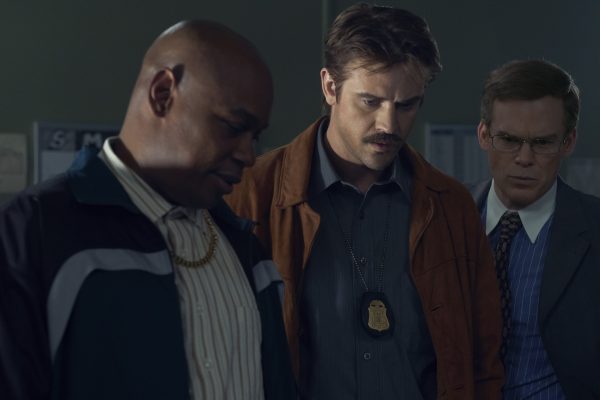
Officer Lockhart (Holbrook, of “Logan” and “The Predator”) arm-twists his partner (estimable screen vet Bokeem Woodbine) into ignoring the chain of command and chasing the clues that connect these deaths on a single night.

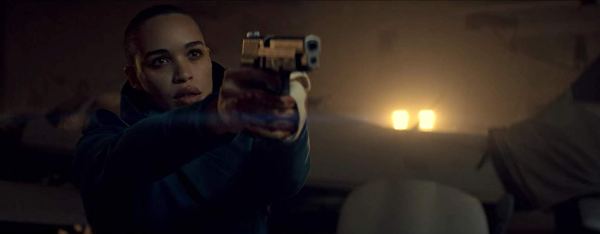
That leads them to the mysterious “black woman in a blue hoodie.” And this wily escape artist and trained fighter (Cleopatra Coleman of TV’s “Last Man on Earth”), with her gadget for putting punctures in her victims, gives away the game.

Or rather she does via the script’s opening scene. Usually, you can mention anything up to the one third to halfway through point of a movie and not be guilty of a “spoiler.” Not here. The prologue and our first hard look at the “villain” are blunt, obvious “tells.”

Opening her mouth finishes the job.

“Hello, Thomas. Is this where it happens?”

Lockhart and his partner Maddux get their promotions to detective, and then nine years later, the same crap hits the fan, with a killer sporting the same MO.

The now-grizzled detectives ignore the Cameron-esque warnings of a physicist (Rudi Dharmalingam) who speaks of the same “Moon” of the film’s purloined title — the same as a fine documentary about the Apollo program — and get deeper into the mystery, with more victims to connect to the original crimes.

And this continues to happen every nine years as this “epic” tale unfolds.
shadow5

Director Jim Mickle did the little-seen horror movie “We Are What We Are” and does entirely too little here to hide his cards. “Moon” manages to throw a feint or two at us in its opening act, and Mickle stages and shoots a couple of really good chases. The first act is far and away the best act of the movie. Pacing is a problem exacerbated by the film’s easily solved Big Mystery.

The casting pays off, with Holbrook and Woodbine in a battle of wits against Lockhart’s brother-in-law, a detective (“Dexter’s” Michael C. Hall) on the force who lets two beat cops beat him to the crime-solving punch.

And if you’re a genre fan, as I am, you’ll stick around even if the 110 minute movie shows you “the future” before 30 minutes have passed.

Despite my relief that my “Oh hell, this isn’t about vampires, is it?” fear was unfounded, I still found “In the Shadow of the Moon” a watchable failure, at best.

2stars1

MPAA Rating: TV-MA, violence

Cast: Boyd Holbrook, Cleopatra Coleman, Bokeem Woodbine, Michael C. Hall

Credits: Directed by Jim Mickle, script by Geoff Tock, Gregory Weidman.  A Netflix release.

Running time: 1:55

Posted in Reviews, previews, profiles and movie news | Comments Off on Netflixable? “In the Shadow of the Moon,” the murders begin

Movie Preview: “Burning Cane” is the quintessence of sugar-cane-country indie melodrama

Perhaps the biography, the background, the fact that a 19 year old filmmaker directed this, will overwhelm it with hype.

That could turn this atmospheric, setting-centric debut feature into this year’s “Beasts of the Southern Wild” or “Florida Project.” That’s a double-edged sword.

Wendell Pierce is the big name in the cast, a nice break and what looks like his most challenging role in ages. Karen Kaia Livers, Dominique McClellan and Braelyn Kelly are also in the cast of “Burning Cane,” opening Oct. 25 in limited release.

Posted in Reviews, previews, profiles and movie news | Comments Off on Movie Preview: “Burning Cane” is the quintessence of sugar-cane-country indie melodrama

Movie Review: Sometimes, a “Wallflower” can’t be saved

wall3

Can this mass murderer be saved?

That’s the rhetorical question of “Wallflower,” a dreamy docudrama about a Seattle mass shooting that is equal parts evocative and provocative.

The “dreamy” part is the setting. This 2006 shooting happened at a rave after party, and writer-director Jagger Gravning goes to great pains in taking us inside Seattle’s rave scene of the day. Whatever else it has going for it, “Wallflower” is the most immersive, critical and flattering picture of the Techno Fans/Friends of Molly ever.

Jumping back and forth in time, losing itself in the asexual sensuality of a vast, supportive crowd, each member dancing with her or himself — lost in MDMA, mushroom and marijuana augmented bliss — “Wallflower” parks a future mass shooter (David Call) in their ranks.

And they reach out to him, welcome him and try to encourage him to embrace their version of chill and mellow.

“You look kinda bummed out,” Noob Girl (Hannah Horton) says, expressing concern.

“We’re trying to create a safe space,” explains Strobe Rainbow (Atsuko Okatsuka, the stand-out in this cast), a lesbian trying to assauge the “bummed” one’s natural suspicions. Young women and underage girls are in the mix, stoned enough that if other ravers don’t look out for each other (they do), seem like rapes waiting to happen.

It’s just that there’s no erasing his general paranoia. “What’s really going on in here?” he asks, more than once.

His permanent scowl didn’t keep the stoner-philosopher Link (Conner Marx) from inviting him, on first meeting, to the rave in the first place, and then to the after party, Sharpie writing the address on his arm, where our would-be killer tries his worst not to fit in.

“I brought enough ammunition for ALL of you,” he hisses into a mirror in a flash forward, as he fetishizes his firearmsloads up his “street sweeper” shotgun and dons his bandoliers loaded with shells.

Tip to America’s gun dealers. Young, frowning white guy in a hoodie wants bandoliers, and/or 100 round magazines for his semi-automatic weapon? Might want to call the cops.

Gravning, with his time skipping — “five years before” the film’s “present,” and years after it — is underlining the blamelessness of the victims here.

The film’s humor comes from the level of conversation one overhears from the juice-boxed, hydrated and apparently inexhaustable ravers and they come down from their all-night “peaking” — mainly at the after-party.

Inane chatter about “D.W. Griffith’s ‘Intolerance'” and things of an arty-ethereal nature dominate conversations. Hard relationship counseling? That’s only for much later, long past the peak.

Link goes on and on about time. “The universe became very CLEAR to me,” he pontificates, although the “I was really high” footnote is all we need to hear.

“It’s sooo not cool that it’s cool” declares the teen who names herself “Noob Girl” amongst the group that includes Optima Prime, Shroom Fairy, Cheshire Kitty and Power Ranger. “I take a lot of Molly ironically,” she rationalizes.

The “sketchy” interloper wanders from room to room, gets embraced and kissed by the friendly stoners and samples a “shroom” himself from the lazy Susan of drugs in Link’s basement.

“Why are you just sitting there like a creeper?” is the rare challenge he hears. Considering his awkward come-ons to various women (none of the onanistic hedonists there seem the least bit interested in hook-ups), he gets off easily.

Call’s “murderer” is a brooding one-note character and is never humanized by the flashing back and forward shown here. The film gives him the luxury of judging the behavior of the others, but not the viewer.

We’re entranced by the pulsing, self-generated light show (glow sticks, glowing hula hoops, glowing gloves) of the rave, the Woodstock Revisited innocence of its inhabitants.

“Wallflower” is a “docudrama,” and while there are righteous reasons for not naming the murderer here, it also excuses any inaccuracy or point-of-view bias the filmmaker might introduce.

But Gravning gives us a fever dream of blameless remorse, guiltless survivor’s guilt and a broken Montana soul that was lost long before he was invited into a world that he chose to shatter, lost at the very moment he stopped in a gun shop and asked for bandoliers.

3stars2

MPAA Rating: unrated, graphic violence, drug abuse, profanity

Cast:  David Call, Atsuko Okatsuka, Conner Marx, Hannah Horton, Cequoia Johnson, Molly Tollefson

Credits: Written and directed by Jagger Gravning. A Passion River release.

Running time: 1:24

Posted in Reviews, previews, profiles and movie news | Comments Off on Movie Review: Sometimes, a “Wallflower” can’t be saved

Movie Preview: Will “The King’s Man” be better than “Kingsman:Golden Circle?”

Hard to tell, based on this latest trailer. A February sleeper?

Posted in Reviews, previews, profiles and movie news | Comments Off on Movie Preview: Will “The King’s Man” be better than “Kingsman:Golden Circle?”

Netflixable? Mackenzie Davis has the title role, and journey, in “Izzy Gets the F— Across Town”

izzy1

The Canadian actress Mackenzie Davis was “This year’s tall, willowy and funny blonde” oh, about five years ago — in the midst of a run that included TV’s “Halt and Catch Fire” and movies that peaked with “The Martian” and “Tully.”

She’s the co-star of the next “Terminator,” remade as a new Charlize Theron in action mode.

“Izzy Gets the F**k Across Town” is an LA ramble of a comedy, an indie version of a hundred other “Get Him to the Greek,” “Saving Silverman” romantic comedies.

She plays Izzy. Her ex-fiance is about to marry a former friend. She’s pissed. She’s woken up in a stranger’s bed, her catering waitress faux-tux uniform covered in wine stains. Her car’s been in “the shop,” “shop” here meaning a stoner friend’s off-the-books “garage” for weeks. She has no money, has worn out her welcome with the friends she’s staying with.

And she needs to “get the f–k across town” to this engagement party/pre-nuptials event.

The movie is about that jaunt, and Mackenzie Davis, still in that ruined uniform, calling in favors nobody owes her, collecting a beater of a car that may never get fixed, swiping a Schwinn, refusing bus rides, catching a lift with a onetime client’s (Haley Joel Osment) “girlfriend” (Alia Shawkat), “but first, I’ve just gotta make this one stop (B& E?), shrieking “F–K!” at every fresh foulup, as Izzy.

That’s it. That’s the movie.

izzy2

Davis is perfectly pleasant to spend time with, has a nice series of meltdowns as we pick up on what brought her to LA, her “peak” moment (years before, a musical showcase at South by Southwest), and the swath she’s cut through a side of LA the movies rarely show.

“Cyrus” and “The Big Lebowski” are two slices of that “dull, sprawling suburbia gone to seed” Greater Los Angeles. But even their versions of the “seedier, duller side” are funnier than this, which looks as if it was filmed, pretty much start to finish, at 7:20 on a Sunday morning.

The video game director turned writer-director, Christian Papiernak, was worth taking a flier on with this close-to-home, shot on the cheap comedy.

But it didn’t pay off. Not many scripted funny moments, and the funny folks involved rarely rise above them.

That makes “Izzy Gets” the classic “Let’s try this” on Netflix, Amazon, Hulu or what have you, a film that starts feebly, gets its feet under it, but never goes anywhere.

1half-star

MPAA Rating: unrated, adult situations, profanity

Cast: Mackenzie Davis, LaKeith Stanfield, Haley Joel Osment, Alia Skawkat, Carrie Coon, Annie Potts.

Credits: Written and directed by Christian Papierniak. A Shout! Factory release.

Running time: 1:26

Posted in Reviews, previews, profiles and movie news | Comments Off on Netflixable? Mackenzie Davis has the title role, and journey, in “Izzy Gets the F— Across Town”

Book Review — “Funny Man: Mel Brooks” gets at the wit and the warts of the legendary comic, playwright and filmmaker

It’s no secret that many of the great comics are and were never the most pleasant people to deal with.

I remember a confab of critics I was part of in a hotel bar in LA one time when we started swapping notes on “the worst” interviews we’d ever been a part of. “Early Jerry Seinfeld,” before the vast wealth, before the mellower years AFTER “Seinfeld,” was hands-down the consensus winner.

And that was before I tracked down Jackie Mason for a phoner. Rude, bitter and a bigot, to boot.

mel2

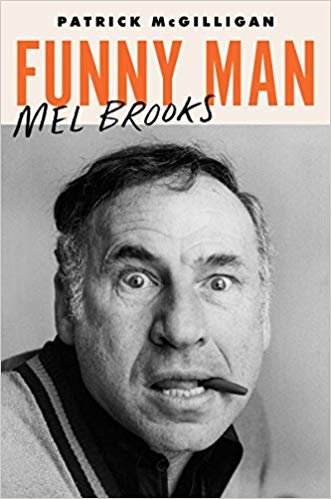
Patrick McGilligan’s “Funny Man: Mel Brooks,” punctures some of Mel Brooks’ lovable, “always on” manic public persona. It’s a classic “warts and all” biography, that taps into the published and unpublished memoirs of his “Club Caesar” colleagues — the writers, some of whom became famous a lot earlier than Brooks (playwright Neil Simon, playwright and curator of TV’s “M*A*SH” Larry Gelbart, Carl Reiner and”Bye Bye Birdie” and “Hello Dolly” librettist Michael Stewart) on Caesar’s various 1940s, 50s and ’60s TV shows — as well as court records, letters and reminiscences.

Arrogant, ill-tempered, a “credit thief” without peer, brown nose, “serial cheater” and “deadbeat dad” are the descriptions that make one flinch in the book. Yeah, he’s lovable and now in his ’90s, but maybe the anecdotes and spin that he’s woven into his life story are largely bunk.

Or at least exaggerated.

He got his big break by becoming Sid Caesar’s clingiest acolyte, paid to be a sidekick and eventually Sid’s personal writer even though he regarded many “real” comedy writers as “typists.” He was a “talking writer,” his colleagues (Carl Reiner is the most charitable) suggest, antic while bouncing off the walls of the writer’s room, grabbing others’ ideas and pitches as his own by attempting to “top” them. Couldn’t be troubled to write them down. He was too busy kissing Caesar’s behind.

Sometimes he did top them. A lot of times, he just collected more than his share of credit for the funniest bits. This became his MO throughout his career — cheating other writers out of credits.

But he learned the business on those early TV shows, transitioned to theater, where he failed several times, failed and failed again in Hollywood before he finally created his own breaks and uh, learned to TYPE.

The portrait of Brooks that emerged from the movie “My Favorite Year” and the Neil Simon play “Laughter on the 23rd Floor” was entirely too sweet, naive and charitable, in other words.

He paid his penance, though. He “wrote” for Jerry Lewis. Briefly. Got a taste of what somebody like the man he was then was to deal with from the other side of the equation.

One of Brooks’ biggest breaks was his “2000 Year Old Man” shtick, born as an impromptu party routine with lifelong pal Carl Reiner (check out the “Comedians in Cars Getting Coffee” with Brooks and Reiner. Still going.).

That led to sequel LPs that kept him going before his TV and film career and all that followed blew up.

And more directly, it led to his share of the credit for an Ernest Pintoff Academy Award winning short film. This 1963 short is still the funniest embodiment of “Everybody’s a critic” I’ve ever seen, shown on art film cinema screens for years and underscoring Brooks’ lifelong antipathy for critics — TV, theater and film.

He basically improvised the material, did a couple of takes of “watching” the “art film” depicted, and they edited together his funniest responses.

McGilligan points to the role Johnny Carson, a contemporary of Mel’s and a huge fan, played in making the behind-the-scenes “talking writer” famous for being funny before he got Get Smart” (written with Buck Henry, with Brooks taking more of the credit than he deserved), and then his long-dreamed-of “Springtime for Hitler” (the working title) film, “The Producers,” was financed, produced and directed by tantrum tossing Mel.

Carson gets “The Tonight Show,” the unknown Brooks becomes a favorite guest. That helped keep his name out there, his antic funnyman image in the public eye, until his big “Producers” break.

After those breakthroughs, as McGilligan notes, Brooks leaned on all those Sid Caesar shows and their 1950s writers’ room creations — movie parodies, silent film sendups — to become the King of Comedy in the 1970s.

When he ran out of those recycled ideas, including recycling a “Robin Hood” parody for TV, Brooks was lost. A remake (“To Be or Not to Be”) looked like his last hurrah.

Until taking “The Producers” to Broadway made him the grand old man of the theater he’d long wanted to be.

McGulligan has books about Clint and Jack Nicholson, the Hollywood Black List and Hitchcock under his belt. So he’s used to doing research without actually interviewing the book’s subject. Mel’s spun his image so well and so long, that distance certainly helped here.

“Funny Man” (Thorndike Press) is good book, an easy read that is well researched and annotated, and one that benefits from not having extensive Brooks cooperation and “control.” He didn’t kvetch his way out of this one.

Posted in Reviews, previews, profiles and movie news | Comments Off on Book Review — “Funny Man: Mel Brooks” gets at the wit and the warts of the legendary comic, playwright and filmmaker

Weekend Box Office: “Judy” overperforms, “Abominable” hits its mark

DreamWorks’ underwhelming “Abominable,” which stands to make most of its money in China, managed nearly $21 million on its opening weekend in the US, the weakest Dreamworks opening in decades.

“Downton Abbey” plucked another $14.5 from the swells buying tickets this weekend.

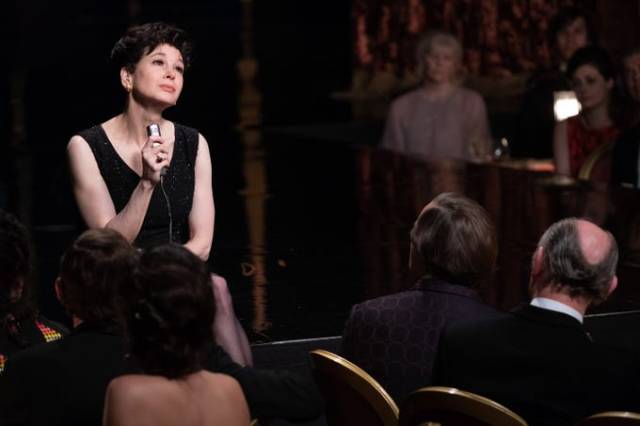
And the Judy Garland Near the End biopic “Judy” did a robust $3 million and change on a fraction of the screens that the big pictures are playing on.

Oscar contender? Maybe.

https://www.boxofficemojo.com/weekend/chart/

Posted in Reviews, previews, profiles and movie news | 1 Comment

Movie Preview: Dakota Johnson and Armie Hammer discover the horrors of “Wounds”

This Annapurna picture is warning a Hulu release.

It looks creepy enough to merit theatrical, but Oct. 18 Hulu lets us decide if smaller screen is enough.

Posted in Reviews, previews, profiles and movie news | Comments Off on Movie Preview: Dakota Johnson and Armie Hammer discover the horrors of “Wounds”

Movie Review: Depressed Frenchmen synchronize their lives “Sink or Swim”

sink2

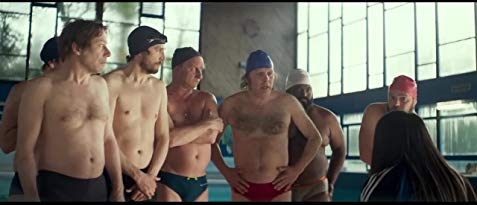
Did you see the British comedy “Swimming With Men?” It was a twee but melancholy Rob Brydon/Jim Carter vehicle, a “Full Monty” set against a synchronized swimming story.

“Sink or Swim” is the same movie, more or less, set in France. They don’t credit each other, don’t share a screenwriter and came out at roughly the same time — last year.

They share a story arc, story beats and the characters are eerily similar if just different enough to dodge EU plagiarism lawsuits.

Coincidence or not, if you’ve seen the first (released in the U.S. first), there’s no need to see the second, unless you’re polishing up your French or have an undying passion to see anything Mathieu Amalric or Guillaume Canet star in.

Both are about downtrodden men who bond in the pool, underwater and in the locker room or bar after practice.

Everybody is dealing with something. Men tend to suffer the trials of life — a long bout of unemployment, a failing business, a job that is being replaced by a computer, unhappy or strained marriages — by themselves.

As in “The Full Monty,” their self-esteem is boosted when they are given connections, a purpose and a far-fetched goal.

Truth be told, the best bits of both might get one combined me toscript in the general ball park of “Full Monty.” The French/Belgian co-production tries more ideas out, and is almost half an hour longer to prove it. Like the characters it portrays, neither “water ballet” comedy truly stands up on its own.

Amalric (“The Diving Bell and the Butterfly”) is Bertrand, father of two, long-unemployed, with a most indulgent wife (Marina Foïs) and a far less indulgent, contemptuous teen.

He has to bike to job interviews because his wife is supporting them and needs the car. He’s in the habit of piling his daily depression pills into his bowl of cereal for breakfast.

A flyer recruiting swimmers for this “team” at the local pool gets his interest. He walks in just as Laurent (Canet, recently seen in “Non-Fiction,” but in “Farewell,” “Joyeux Noel,” and many other films) is throwing another tantrum.

Laurent is forever on edge and venting his frustration onto others for it. We get a hint of why when we see him chew out a doctor working with his stuttering son. That marriage is not long for this world.

The chipper Thierry (Philippe Katerine), “Titi,” maintains the public pool, a lonely, loveless man who still manages a smile in a life without hope.

Marcus (Benoît Poelvoorde) is older, delusional about the pool selling business he’s under water in. Simon is a divorced, 50ish rock guitarist who serves at his daughter’s high school cafeteria, embarrassing her no end. And so on.

Everybody here is dealing with something. That includes the upbeat, nurturing (to outside eyes, anyway) coach, Delphine (Virginie Efira). She reads the guys poetry as part of the coaching, and she’s very protective of this support group.

“What the hell are you doing here?” she demands of Bertrand, before counseling all seven swimmers to “find our inner woman.”

Delphine used to be a competitive synchronized swimmer. Her past, “an incident,” is why she’s doing this, now.

The men must develop grace and practice holding their breath. And once they discover, online, that they’re not alone, they have another goal.

This business of men taking up a women’s sport (the subject of some abuse) has taken hold all over Europe (in Britain, too, of course). The “world championships” will be in Norway.

sink4

“Swimming with Men” did a much better job of setting up the “discovery” of the sport and the team. “Sink or Swim” is more obvious in its “The Full Monty” borrowings.

Truthfully, the French film manages a grin or two in the first hour. But its first real laugh is when a furious wheelchair-bound martinet (Leïla Bekhti) shows up to take over the training.

Amanda puts the “slap” into slapstick and the tough love into pushing Team France.

“We just want to take part,” they plead. “Miss Ironsides” isn’t having it.

“Sink or Swim” goes down for the second time before she shows up, and founders for the third time despite her arrival.

It’s well-acted and broadly sympathetic, but a time-killer of a comedy that kills too much time for its own good.

2stars1

MPAA Rating: unrated, profanity, pill abuse

Cast: Mathieu Amalric, Guillaume Canet, Benoît Poelvoorde, Virginie Efira, Marina Foïs, Leïla Bekhti, Philippe Katerine

Credits: Directed by Gilles Lellouche, script by Ahmed Hamidi, Julien Lambroschini and Gilles Lellouche. A Level Film/Studio Canal release.

Running time: 1:59

Posted in Reviews, previews, profiles and movie news | Comments Off on Movie Review: Depressed Frenchmen synchronize their lives “Sink or Swim”

Documentary Review: “QT8: The First Eight Films of Quentin Tarantino”


Here’s a career retrospective documentary that began life as “21 Years: Quentin Tarantino,” and was finished a few years ago (2017) — brushed up, repurposed, re-titled and released on the heels of a very successful run of “Once Upon a Time…in Hollywood.”

Footage from the trailer to “Once Upon a Time…in Hollywood” was added to the coda of a film that considers Quentin Tarantino’s Hollywood films, from “Reservoir Dogs” to “The Hateful Eight.”

It leaves out Tarantino’s first feature-length directing and co-writing credit, 1987’s “My Best Friend’s Birthday.”

“Not canonical?” OK.

So,  he’s nine films into his career — “Reservoir Dogs,” “Pulp Fiction,” “Jackie Brown, “Kill Bill Vol. 1.,” “Kill Bill Vol. 2,” “Inglourious Basterds,” “Django Unchained,” “The Hateful Eight” and “Once Upon a Time…in Hollywood.”

That means leaving out “Death Proof” from “Grind House,” which “QT8″ covers,  and his contribution to another anthology,” Four Rooms,” which “QT8” ignores.

And then there were his “True Romance” and “From Dusk Til Dawn” scripts, the story for Oliver Stone’s “Natural Born Killers.”

So purists will have a lot to bicker about before the credits to “QT8” roll on this Fathom Events Oct. 21 release (at a theater near you).

And I’ve burned through hundreds of words just getting past the inaccuracy/problems with the title.

Filmmaker Tara Wood — she also did a “21 Years: Richard Linklater” documentary — doesn’t interview Tarantino for the film. She uses quotations by him and the barest slivers of footage of him, on sets, etc., and lots and lots of interviews with actors who have worked with him, or owe their careers or “comebacks” to their association with “QT.”

So it’s not exactly a critical reconsideration of the filmmaker’s work, a deep dive into his biography to connect it to the work. Nobody’s here to challenge the assertion that he’s “the voice of his generation.”

But no matter. What is here is fun, enlightening and entertaining.

One Tarantino quotation that sticks out — “If you love movies enough, you can make a good one.” You can’t argue that he doesn’t, and even a hater would have to give it to him that he has.

The actors take us through the Tarantino universe, the connections between this guy in “Reservoir Dogs” and that one in “Pulp Fiction,” the possible kinship of bad hombres from “The Hateful Eight” to bad hombres in films set later.

Michael Madsen, who launched his career with “Reservoir Dogs” and still managed to turn down the Travolta role in “Pulp Fiction,” remembers telling the writer-director, “I don’t want to be killed by Tim Roth! Who’s HE?” (“Reservoir Dogs”).

And Roth taunts Madsen back over the actor’s refusal to do his sadistic little Golden Oldies torture dance in “Dogs.”

The film breaks into chapters — “Chapter 2: Badass Women & Genre Play.”

We get a taste of Tarantino’s influences, Kubrick’s “The Killing” and Ringo Lam’s Hong Kong thriller “City on Fire.”

And stars like Robert Forster marvel over Jackie Brown’s long, romantic walk out of prison towards his character in “Jackie Brown” — “They never DO that.” Christoph Waltz talks of how Tarantino “uses filmic vocabulary,” Jennifer Jason Leigh opines that “He writes strong women like nobody’s business” and more than one performer confirms his on-set demeanor, how he speaks in “movie shorthand.”

A good take will earn an “Ok, we GOT that. But we’re gonna do ONE more. Why? Because we LOVE making movies!”

Eli Roth, Lucy Liu and others speak of screenplays “that read like a novel…He’s adapting his own novels to the screen,” of how he writes scripts in longhand “because you can’t compose poetry on a computer.”

Kurt Russell, the great stuntwoman/actress Zoe Bell, and many others speak.

Nobody talks about the QT crutches, how unwatchable his movies can be merely by removing the offensive language (“American Movie Classics” my arse!) and the easy laughs the Samuel L. Jackson profane and un-PC soliloquies provide.

The indulgent longueurs (most emphatically overdone with Brad Pitt in a car in “Once Upon a Time…”), the inane and dated pop culture debates — in every film save for “The Hateful Eight” — the junk TV and Z-movies referenced.

Listen to Steve Buscemi’s Mr. Pink talk about what he “deems” to be true, and wonder how many low-life thugs you’ve ever heard use words like “deems.”

And Harvey Weinstein hangs over Tarantino and “QT8,” an animated ogre (literally) who was exposed (in Oct. 2017) just as this documentary was being finished, a stain on Tarantino’s legacy that he has acknowledged and been self-critical about.

It’s not the definitive Tarantino documentary in the way works about John Ford, Woody Allen, Hitchcock, Kubrick and others have been. But with Tarantino long threatening to get ten films in the can and make a graceful exit, stage left, it’s good enough to suggest the rough framework of such a retrospective.

Only a smart aleck would point out, “But with ‘My Best Friend’s Birthday’ that makes it ten feature films ALREADY made, without counting the long shorts “Four Rooms” and “Death Proof.”

Because that might deprive us of a Quentin Tarantino “Star Trek” movie.

2half-star6

MPAA Rating: unrated, violence and profanity

Cast: Samuel L. Jackson, Christoph Waltz, Michael Madsen, Lucy Liu, Tim Roth, Diane Kruger, Jamie FoxxJennifer Jason Leigh, Kurt Russell, Eli Roth and Zoe Bell.

Credits: Written and directed by Tara Wood. A Wood Entertainment/Fathom Events release.

Running time: 1:40


Posted in Reviews, previews, profiles and movie news | Comments Off on Documentary Review: “QT8: The First Eight Films of Quentin Tarantino”